What did we get up to this week? More epistolary techniques for Zoom clubs and junk journal progress at school clubs!
Welcome parents, carers and young writers. Every week I will post here what we have been up to in writing clubs. The clubs are categorised by day so if your child attends a Tuesday club, for example, simply scroll down to Tuesday to see what we covered this week!
Monday
Monday mixed-age Zoom club – We continued our epistolary techniques topic this week. This time they were asked to write something using one of more epistolary techniques, except news reports, as we did those last week. They could write something to tie in with on-going stories, or they could respond to one of the following prompts:
Write a piece that uses one or more epistolary techniques.
PROMPTS:
Some parents are disagreeing about something their children have been accused of
A lost pet poster leads to some unsavoury accusations
A missing persons case is either helped or hindered by online speculation
Two people arrange to meet up after years apart and for dramatic reasons
A school project leads a student to discover something strange about their town
A famous band relives their best and worst moments
A family chat descends into chaos
Well done to everyone in the group – we had some fantastic responses!
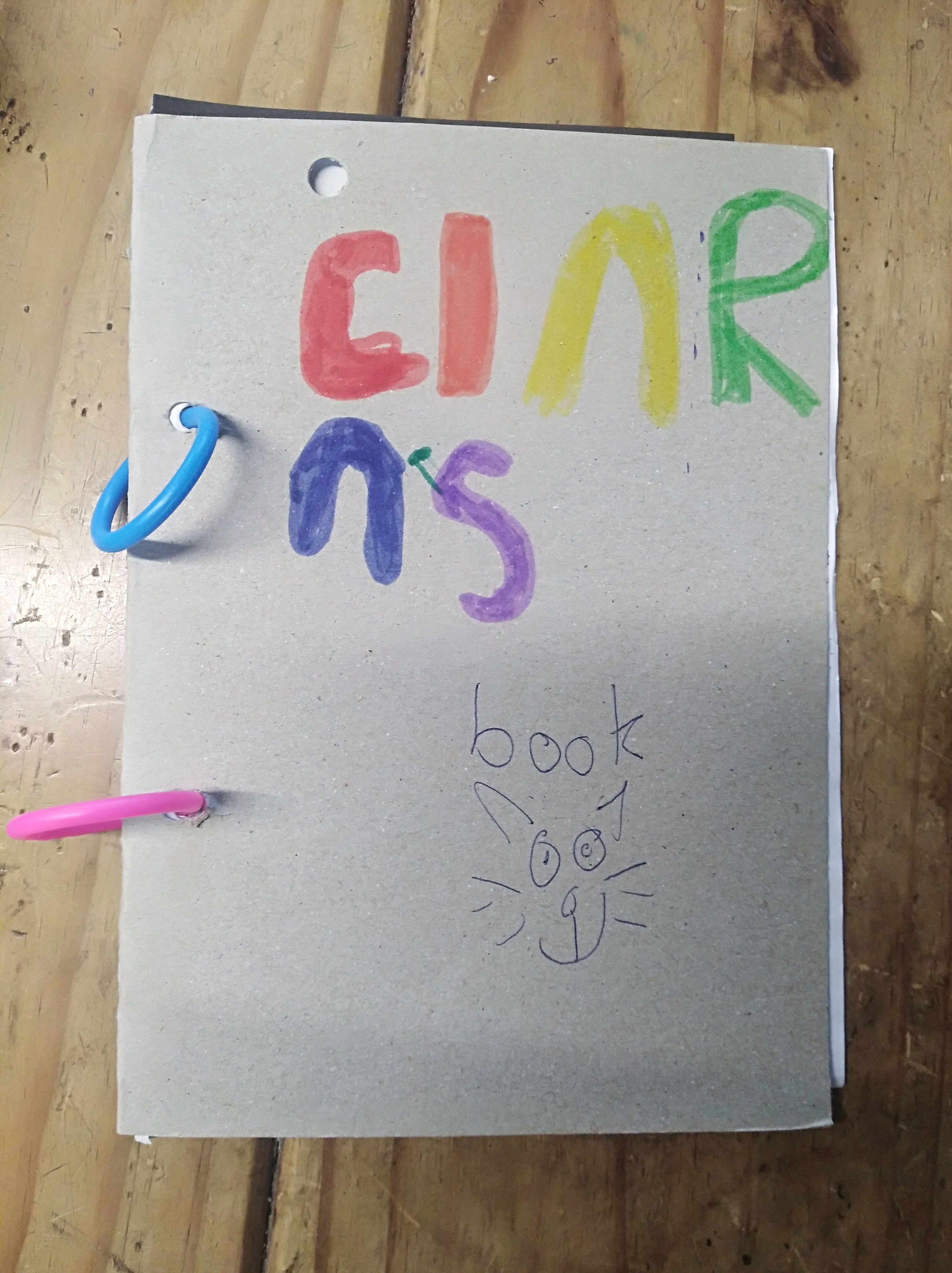
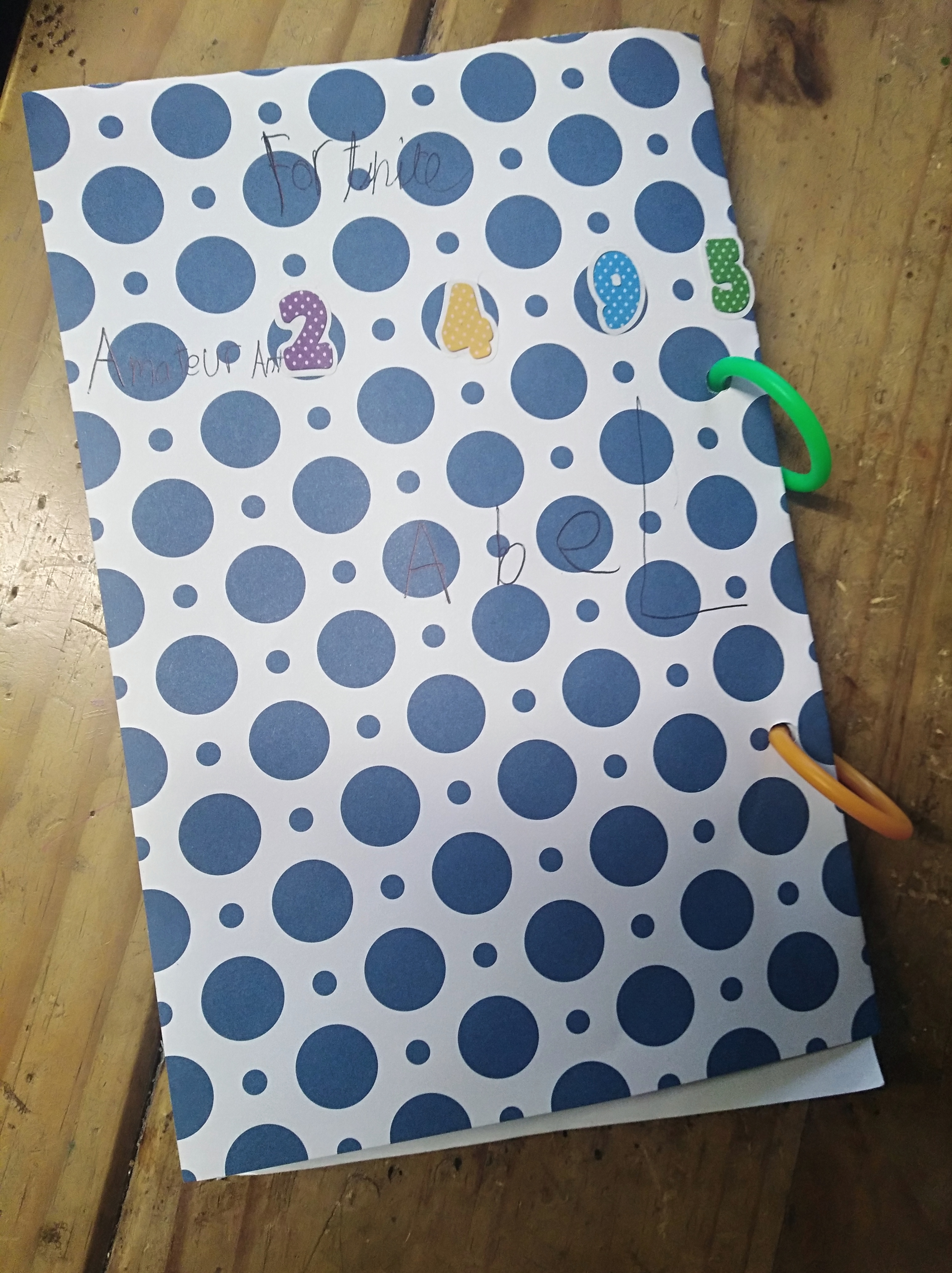
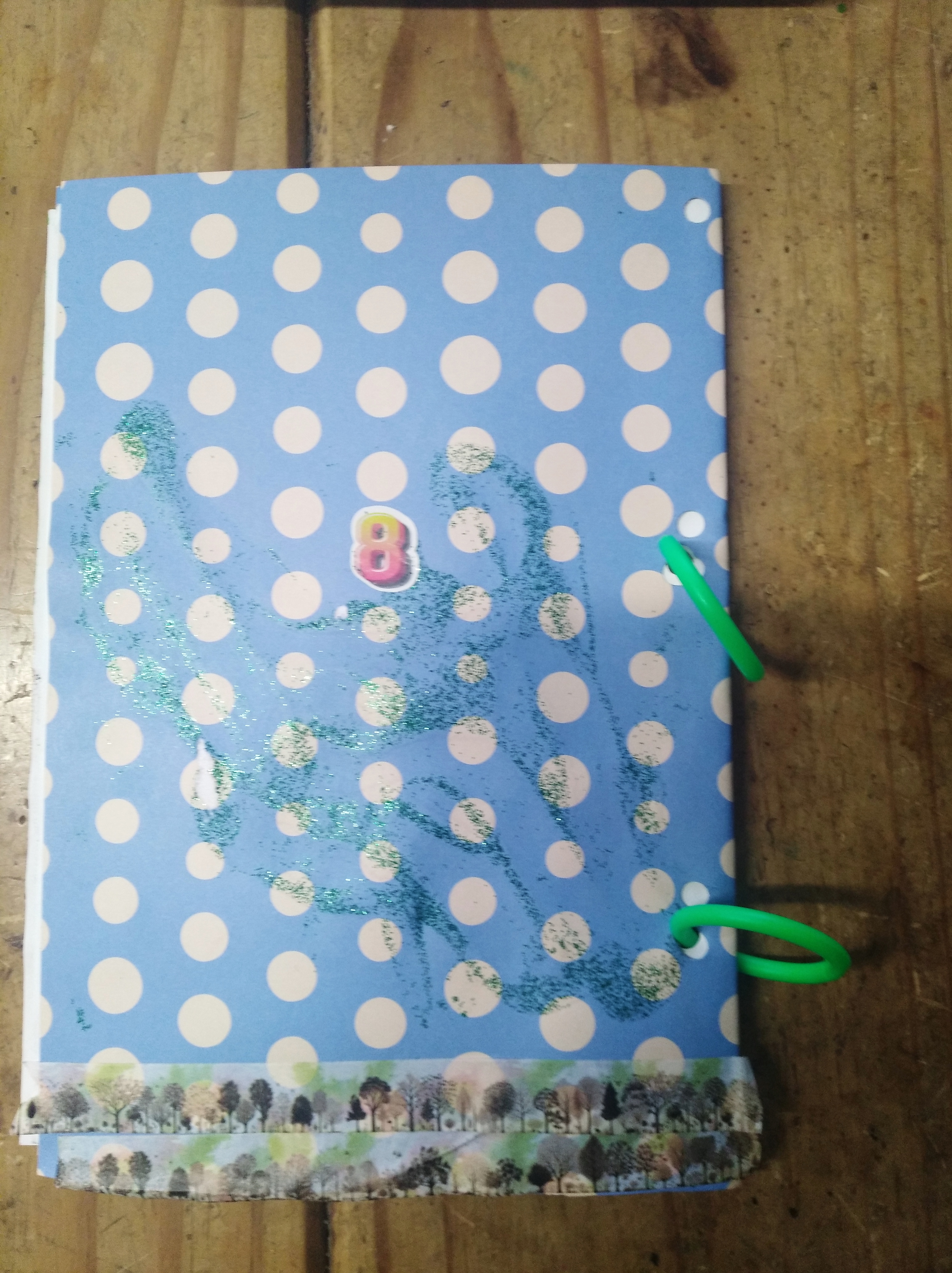
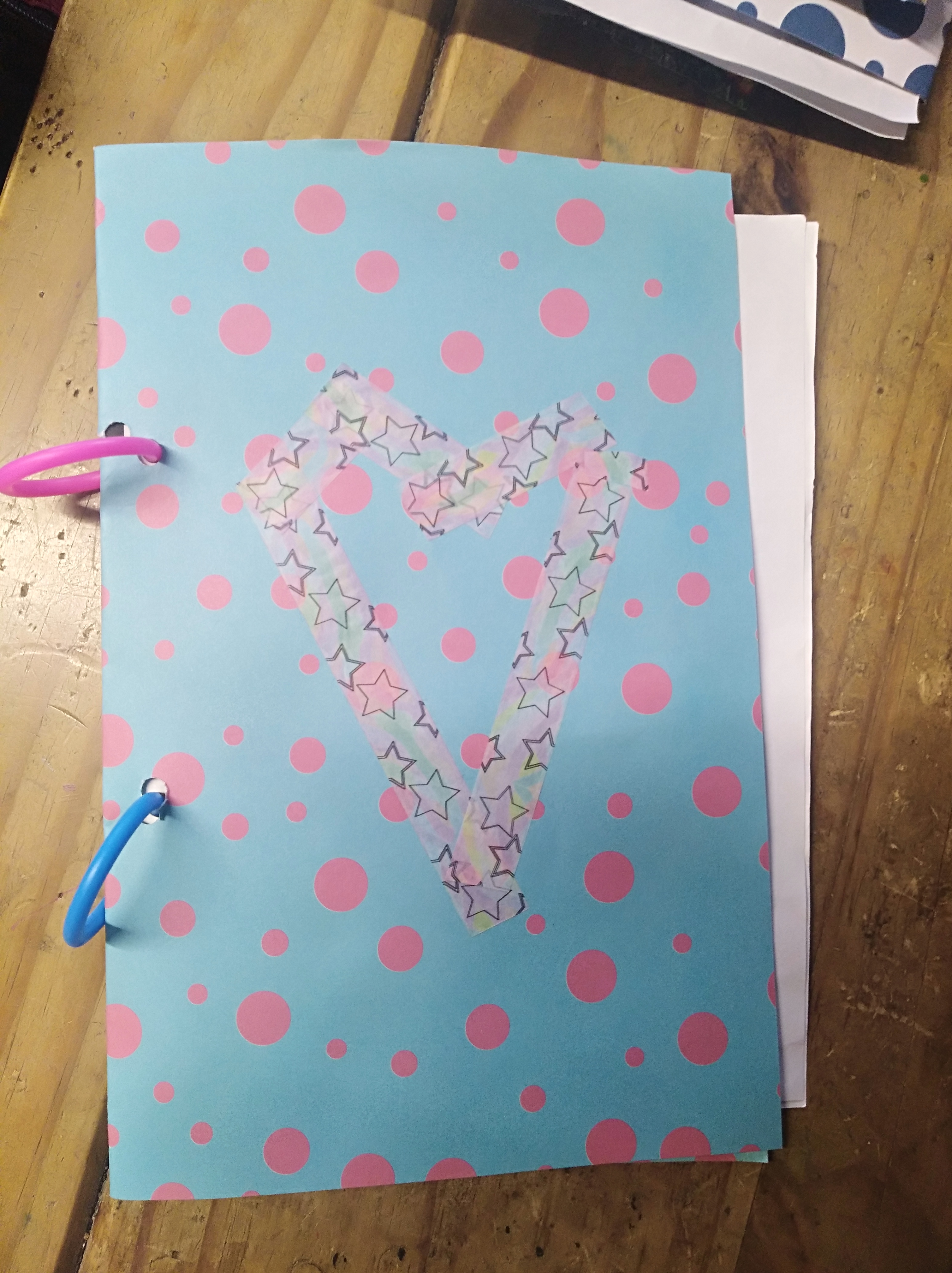
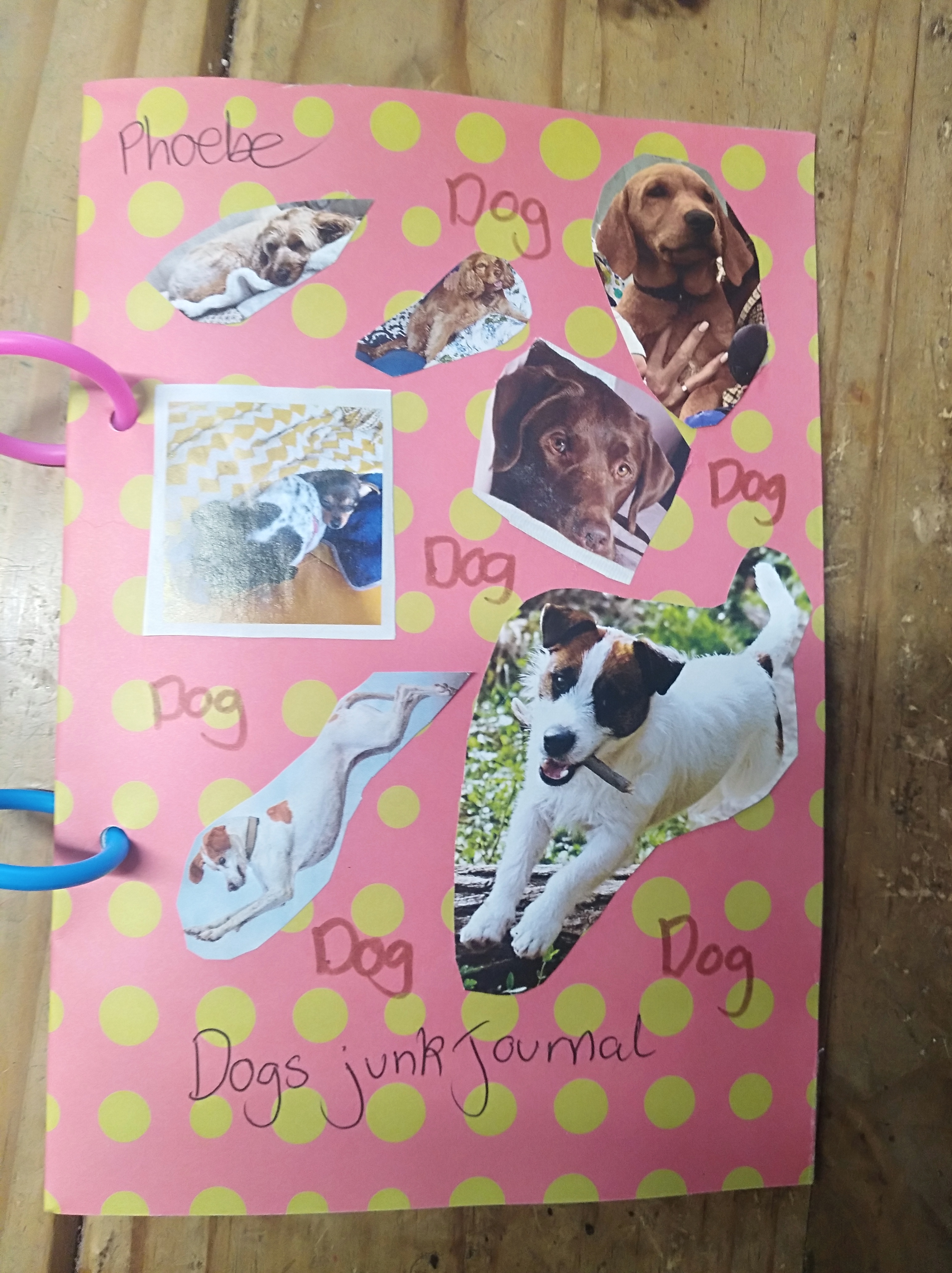
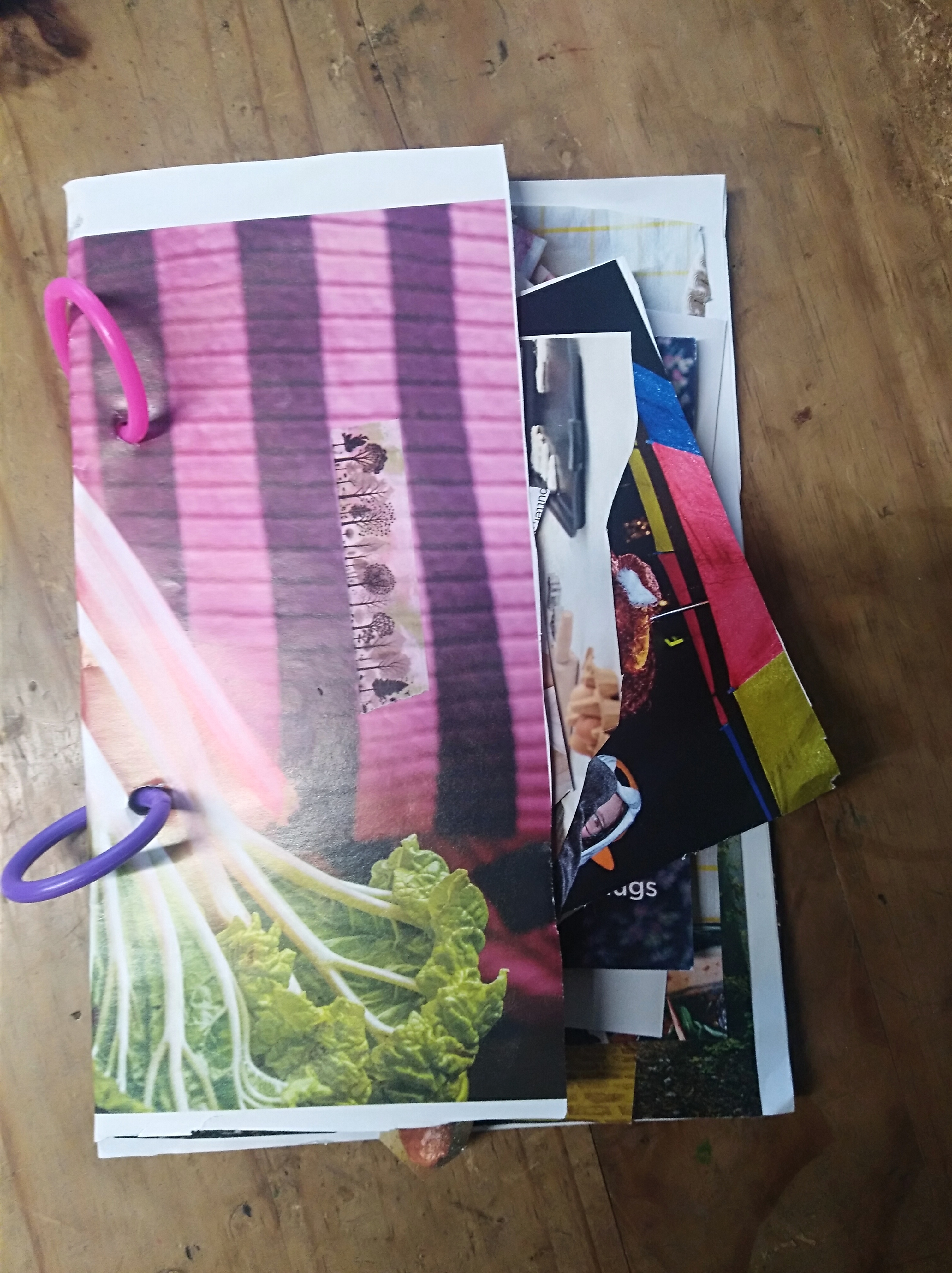
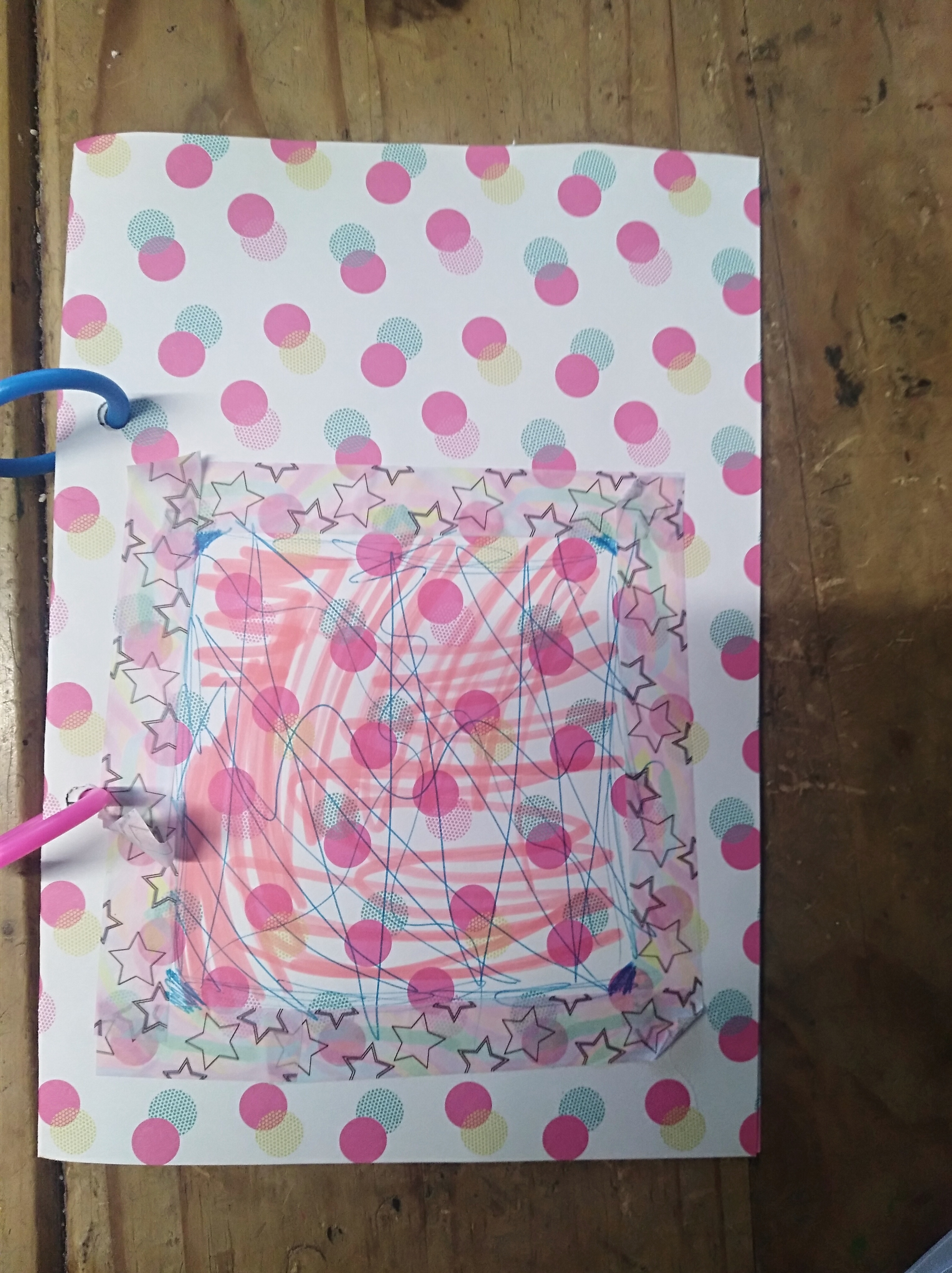
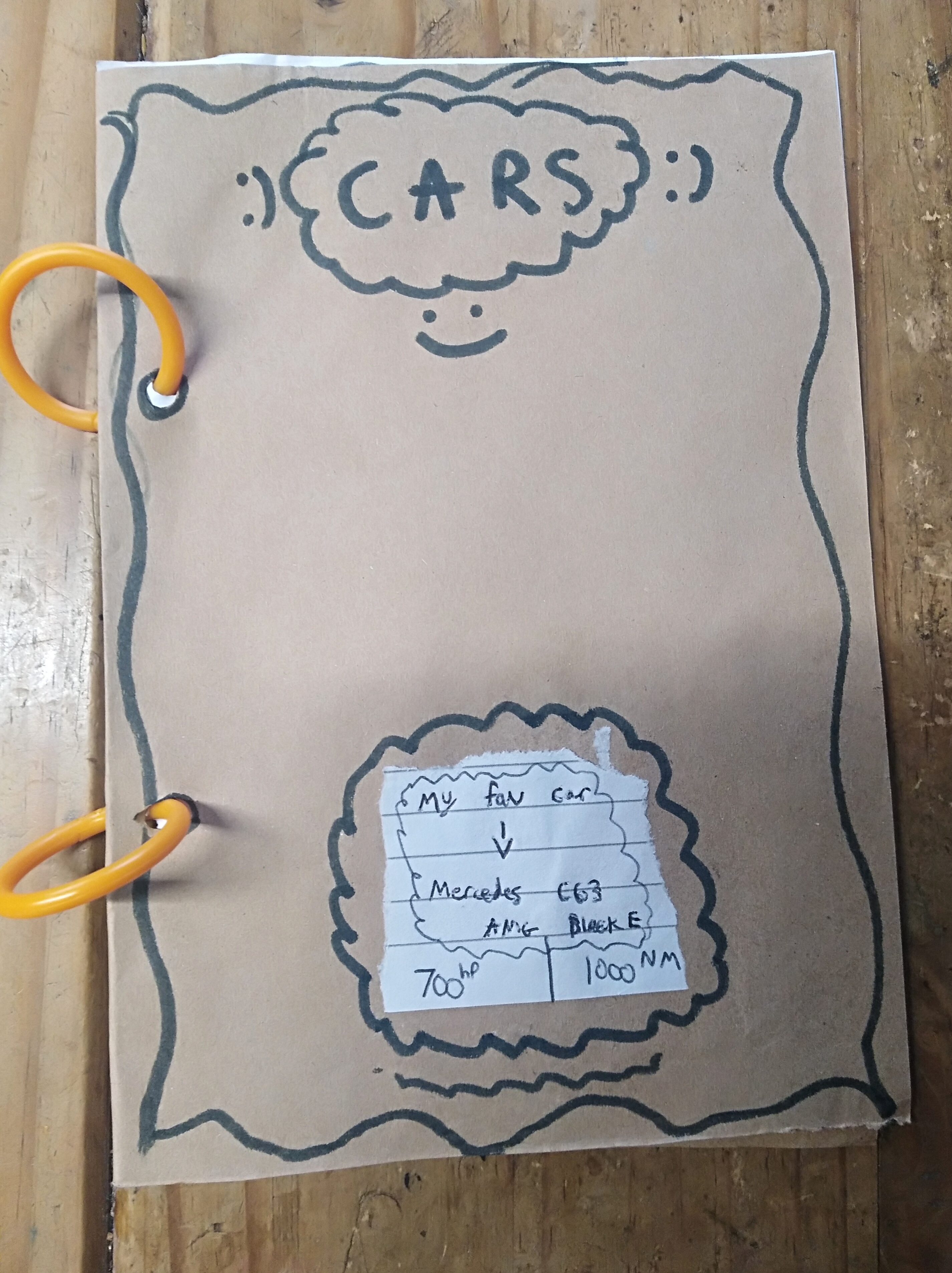
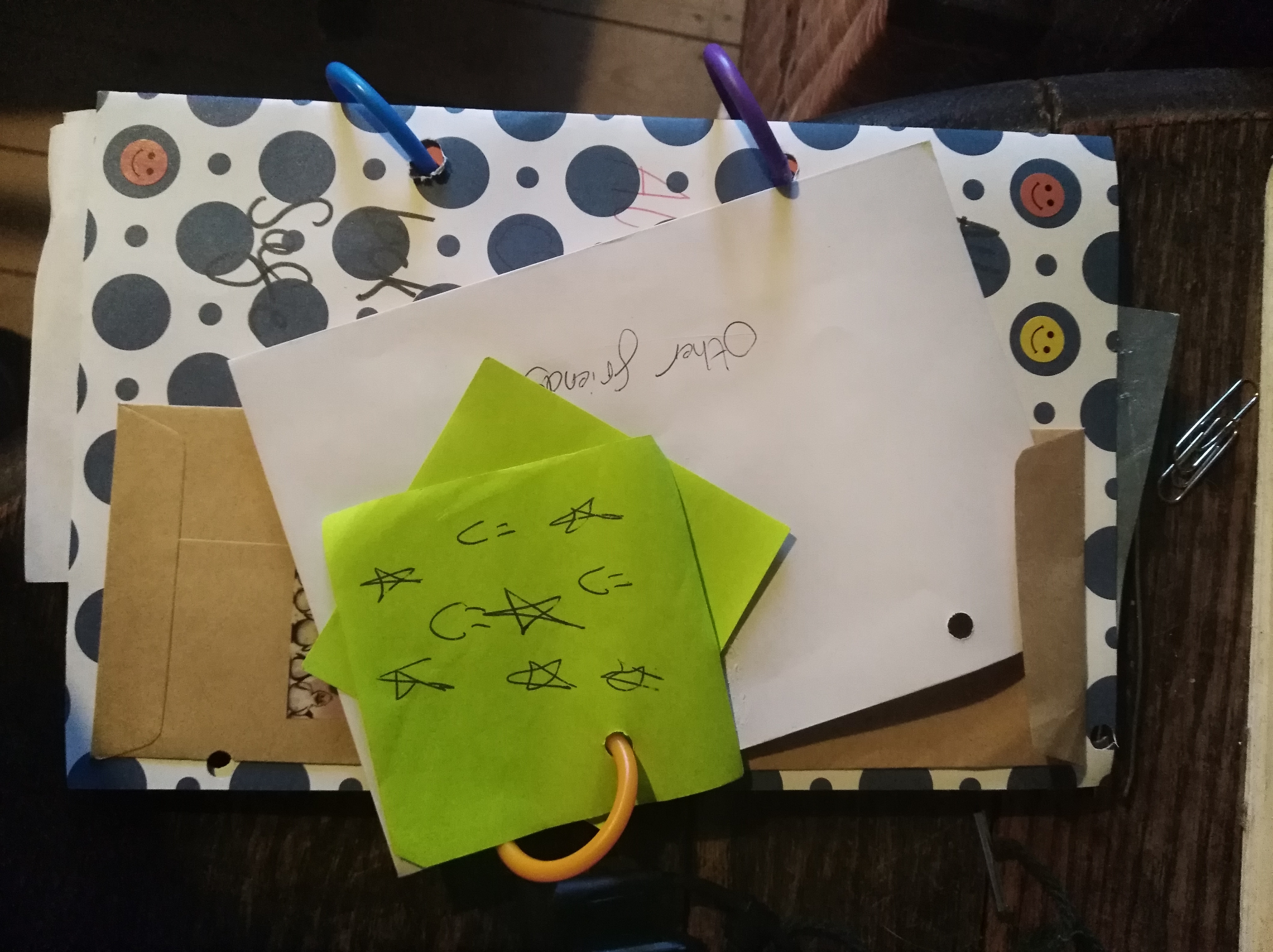
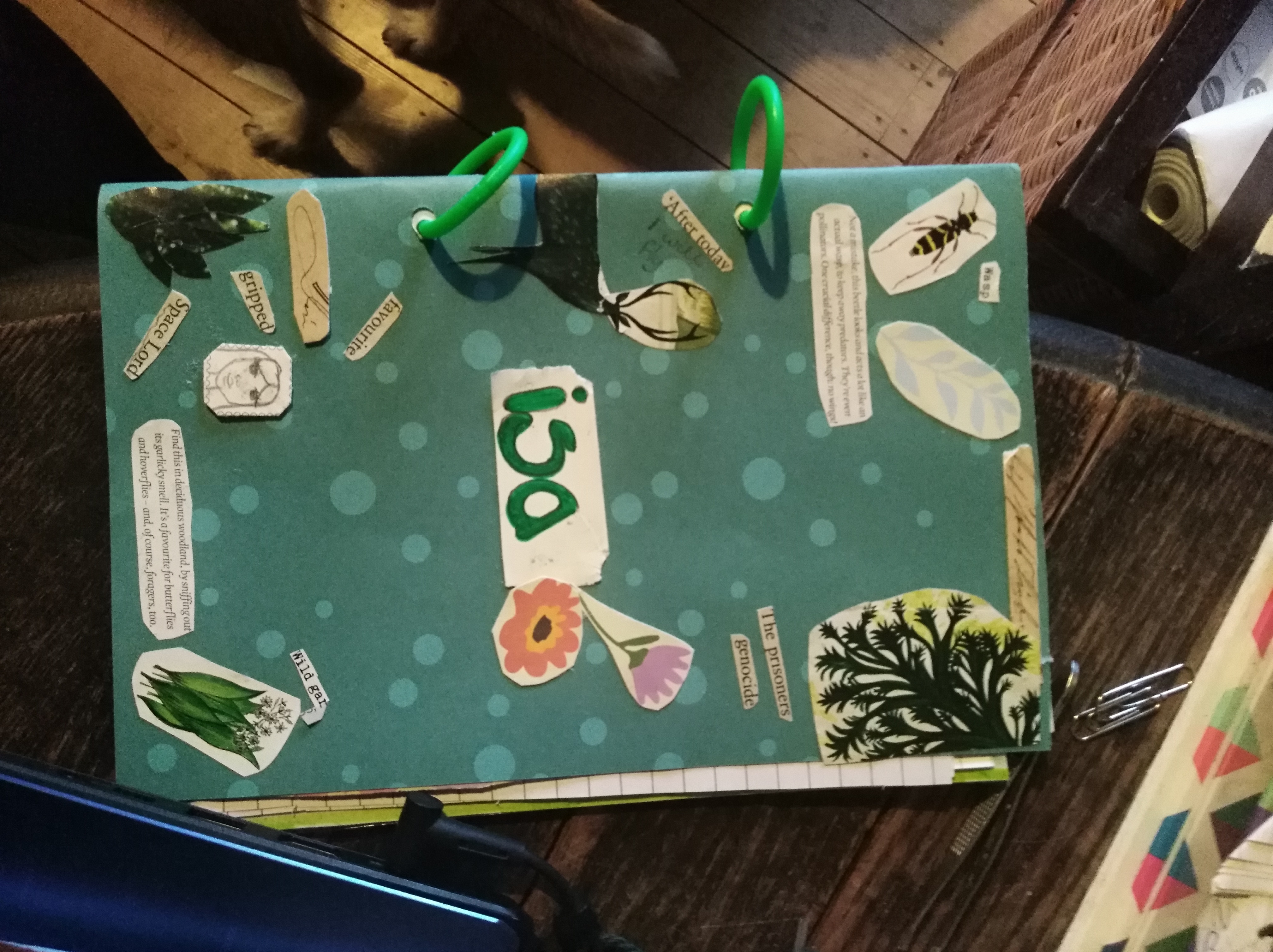
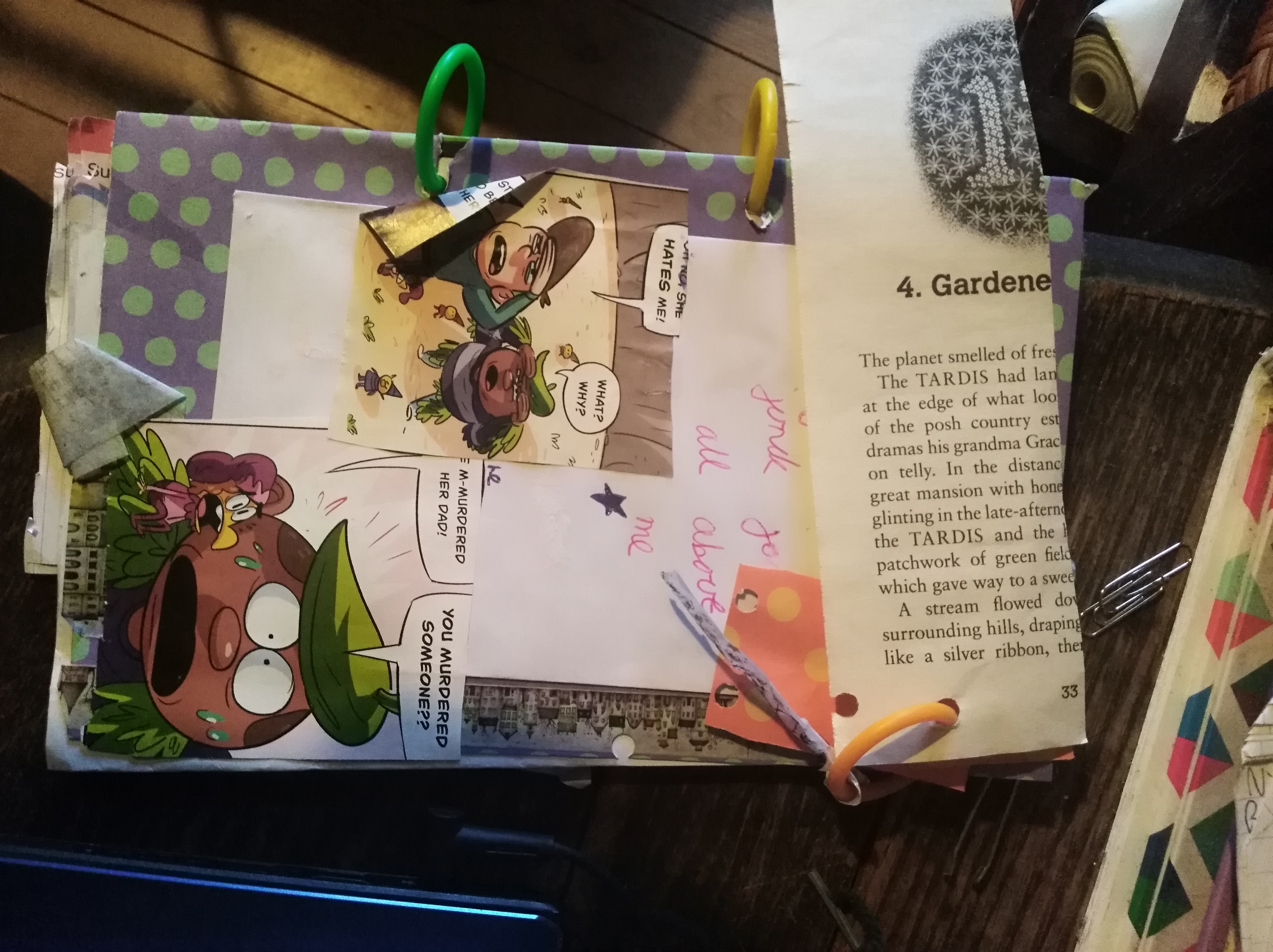
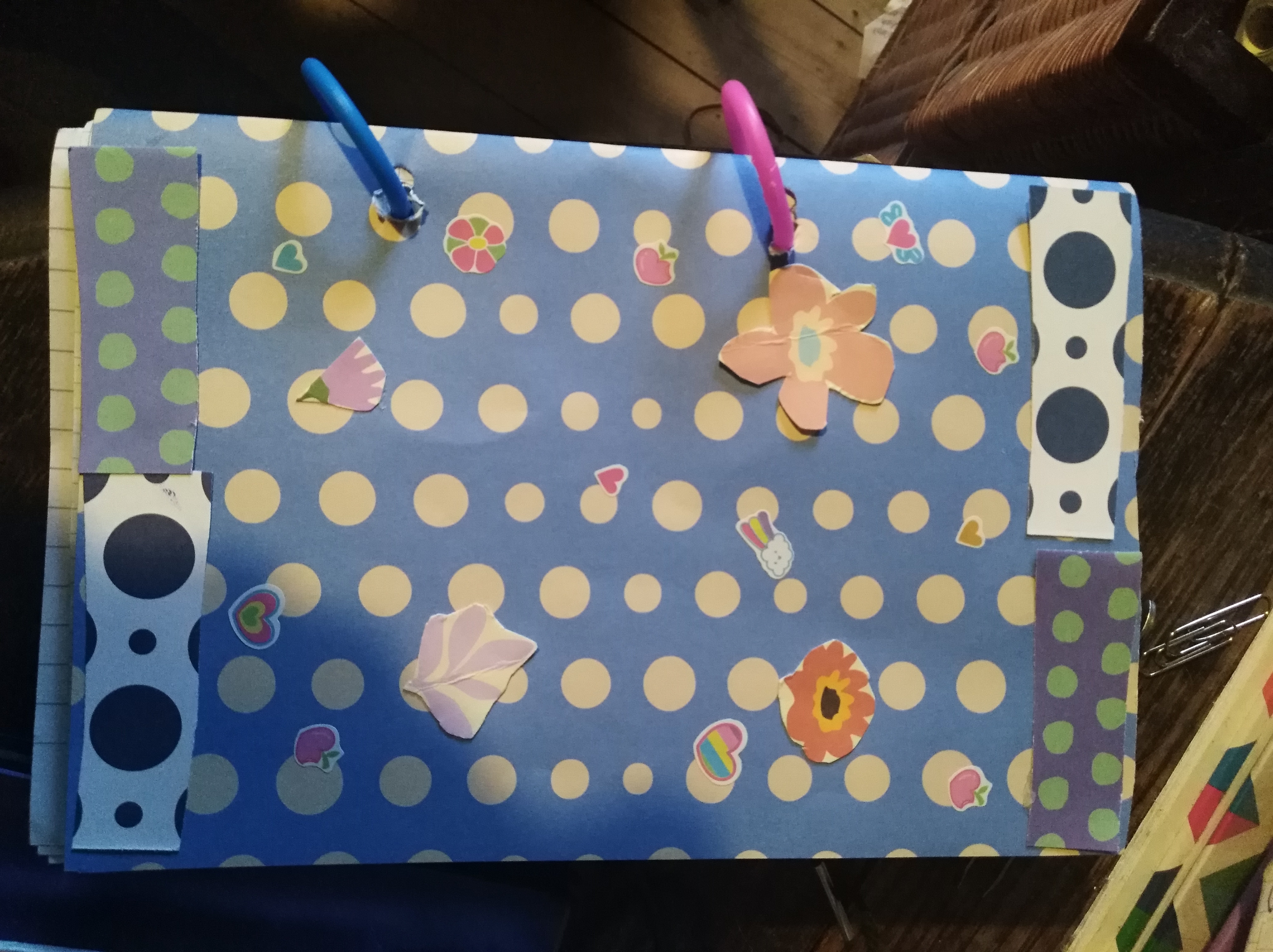
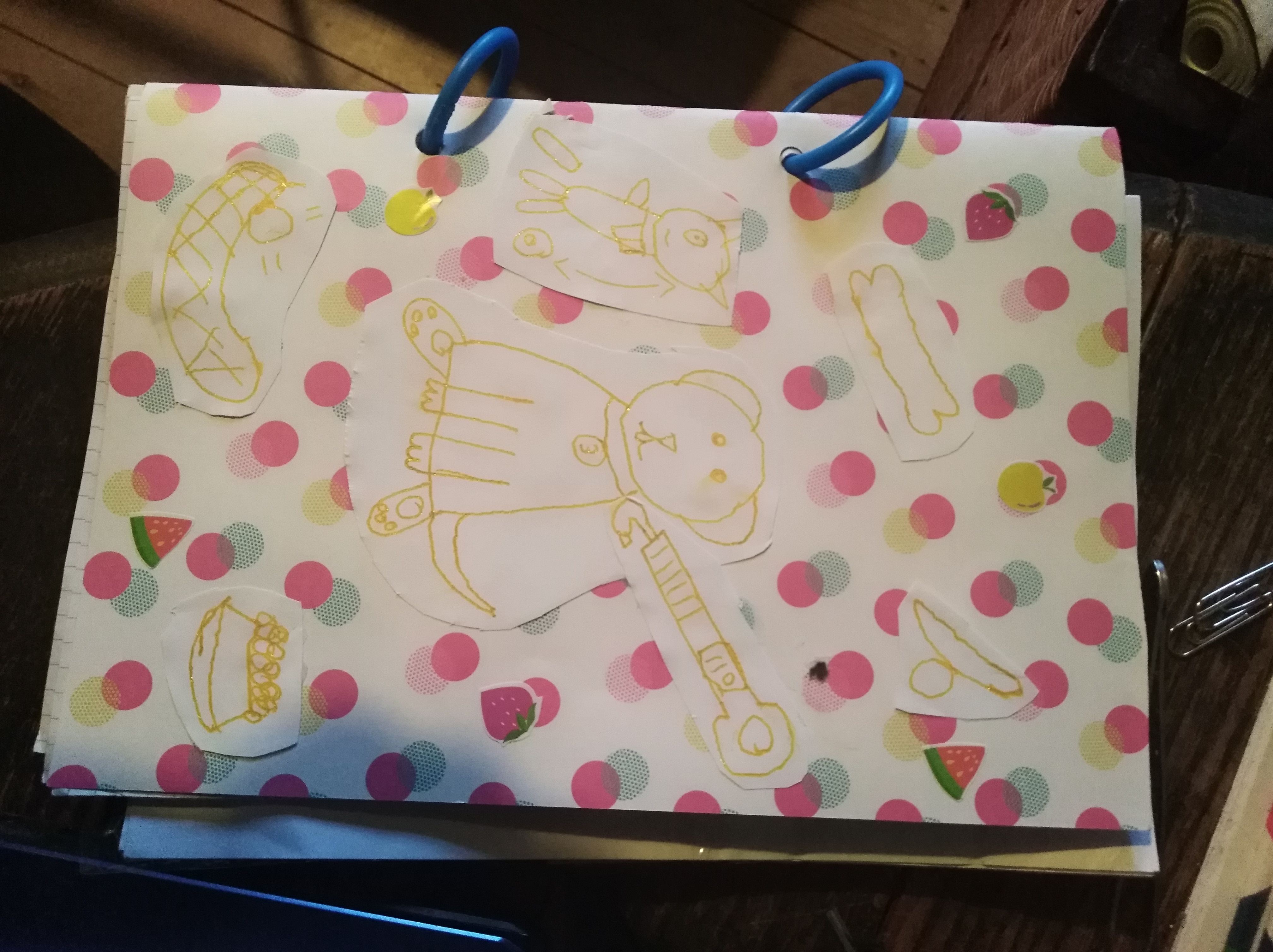
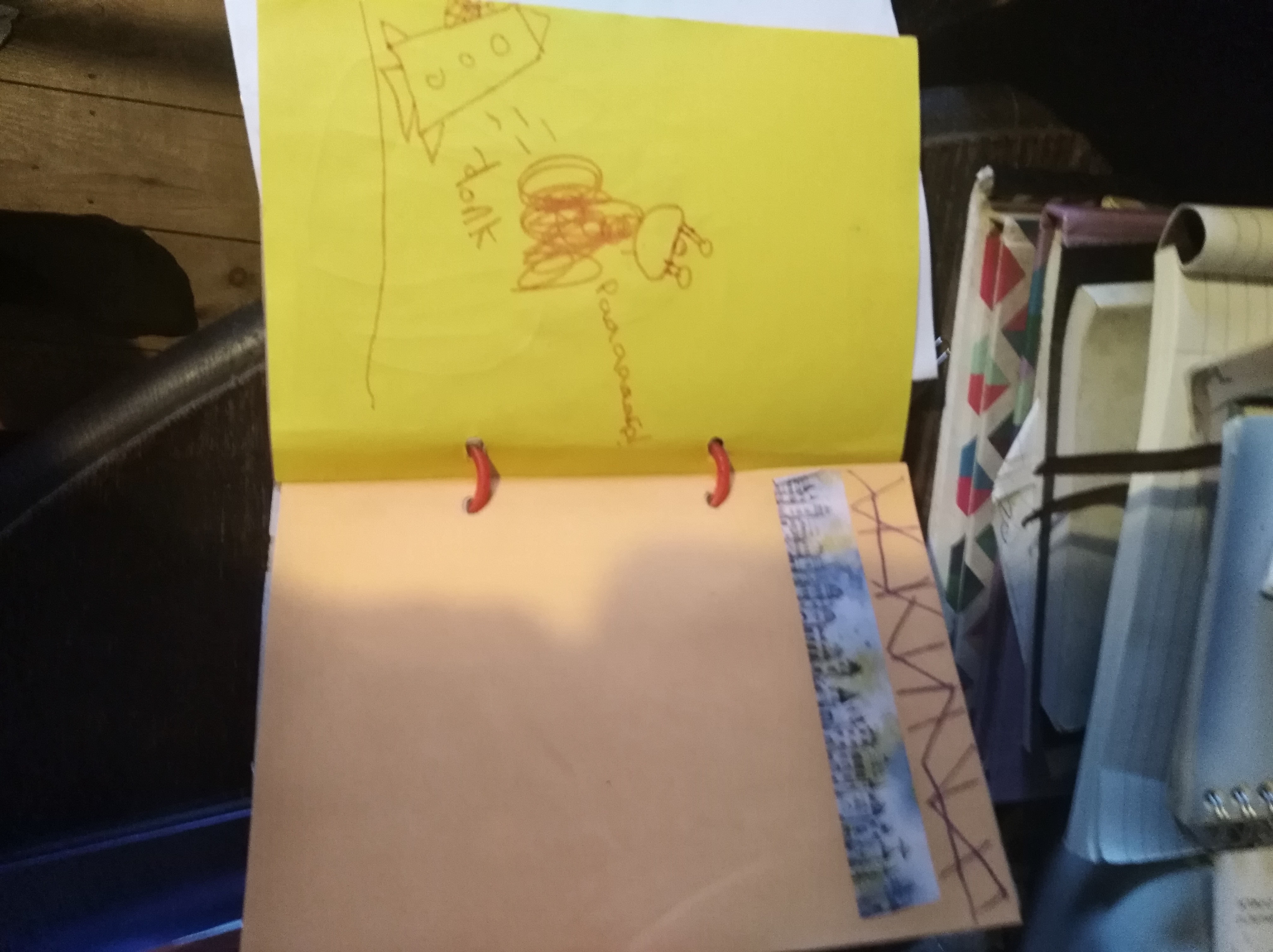
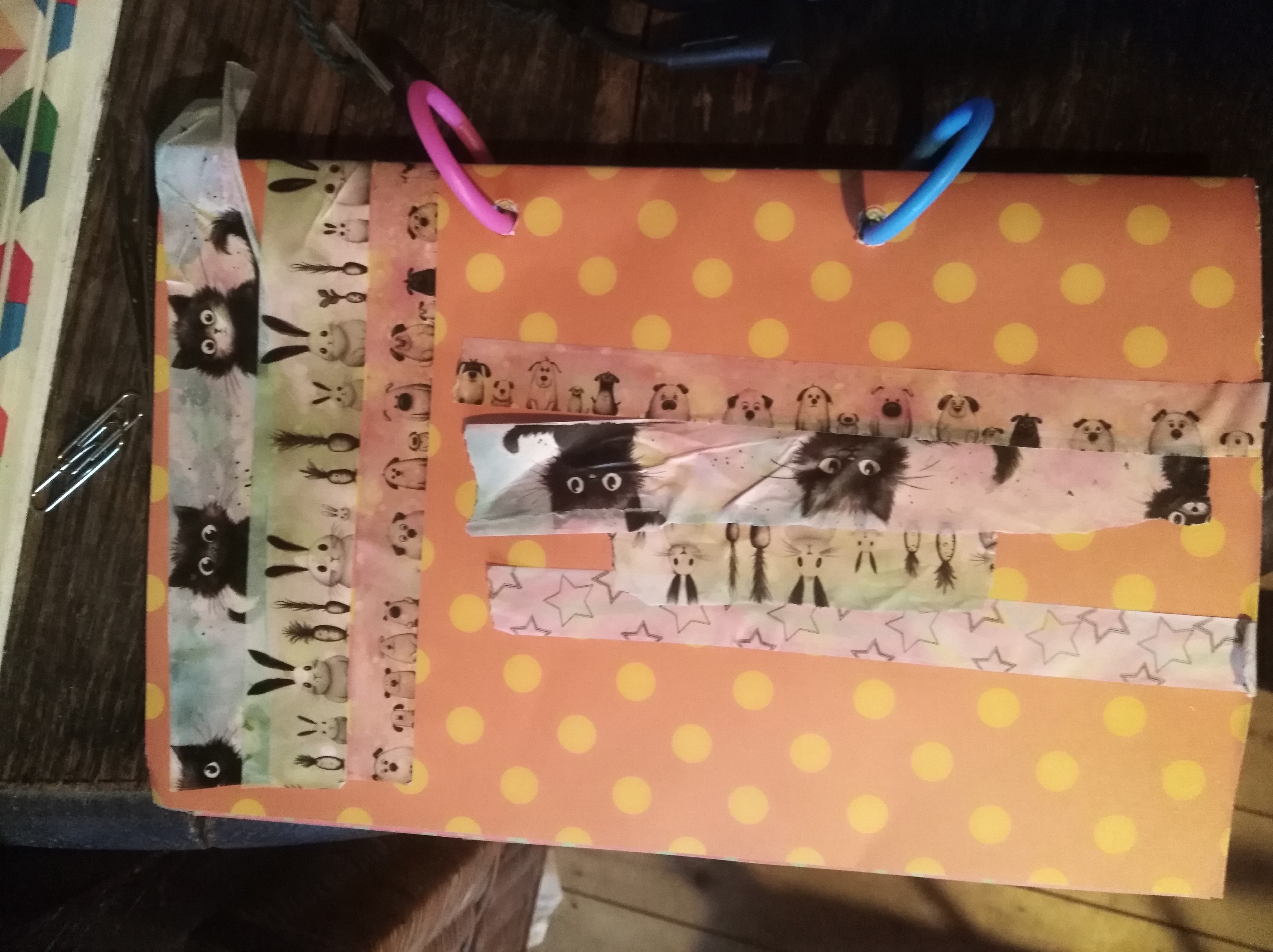
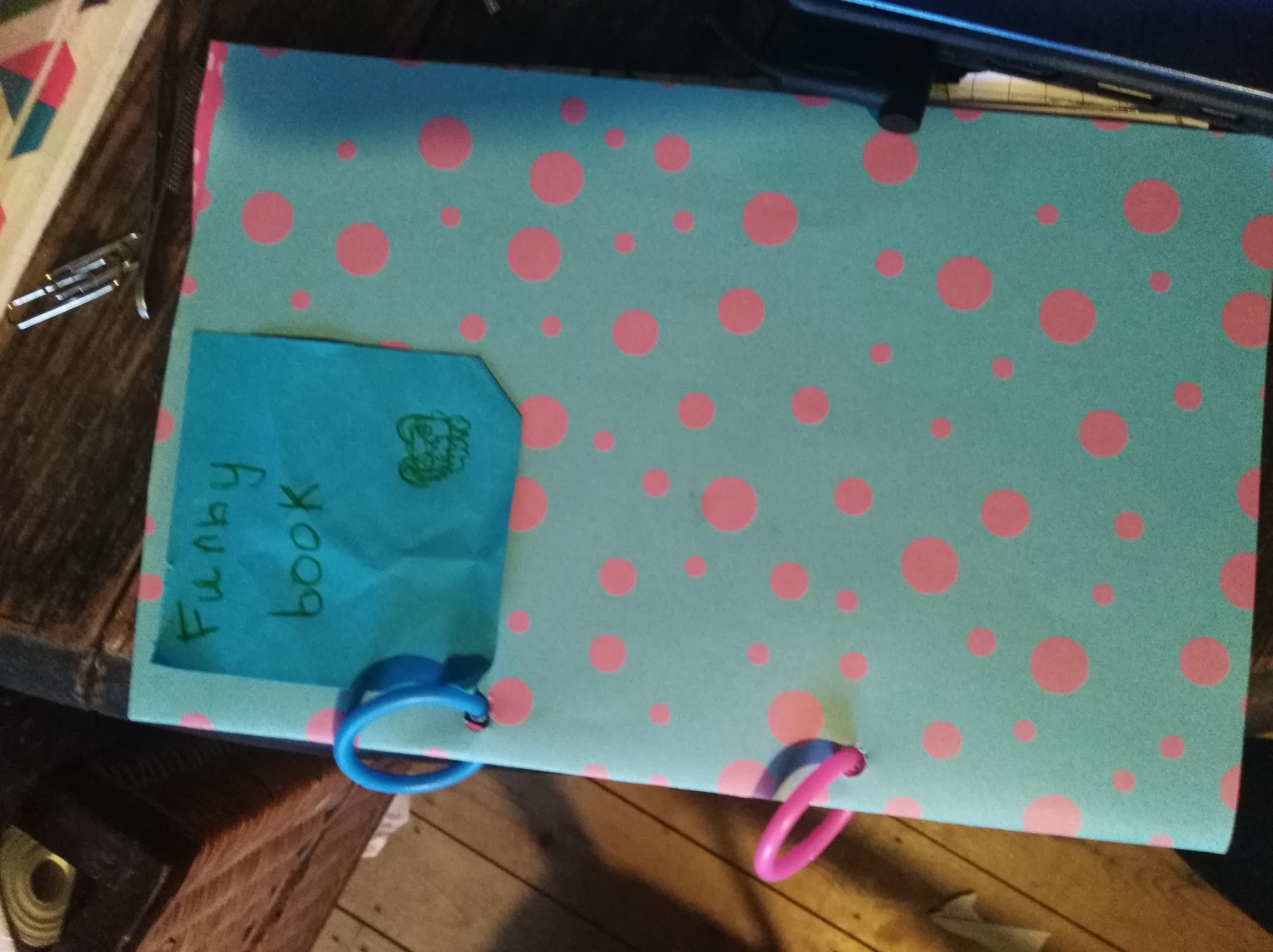
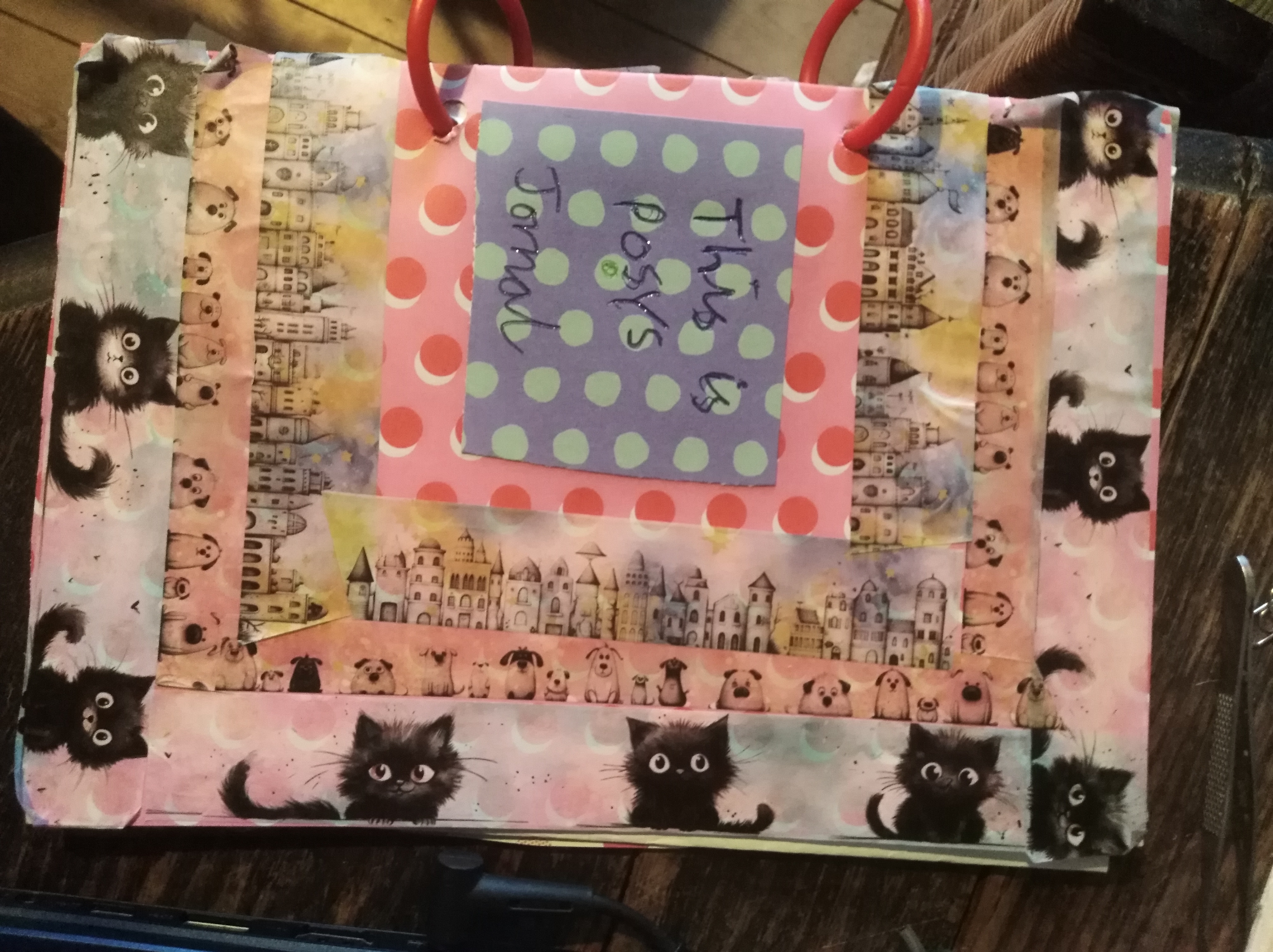
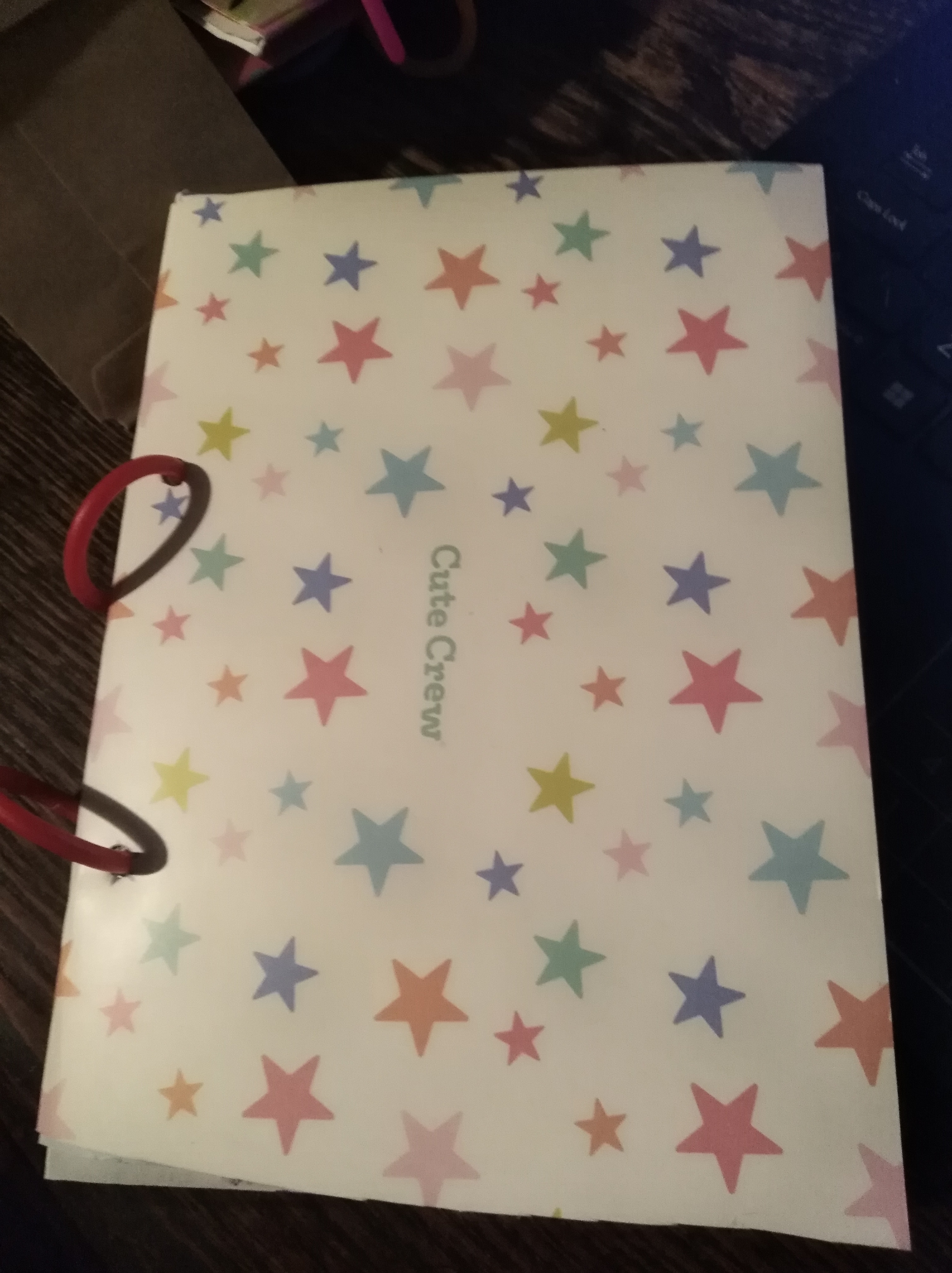
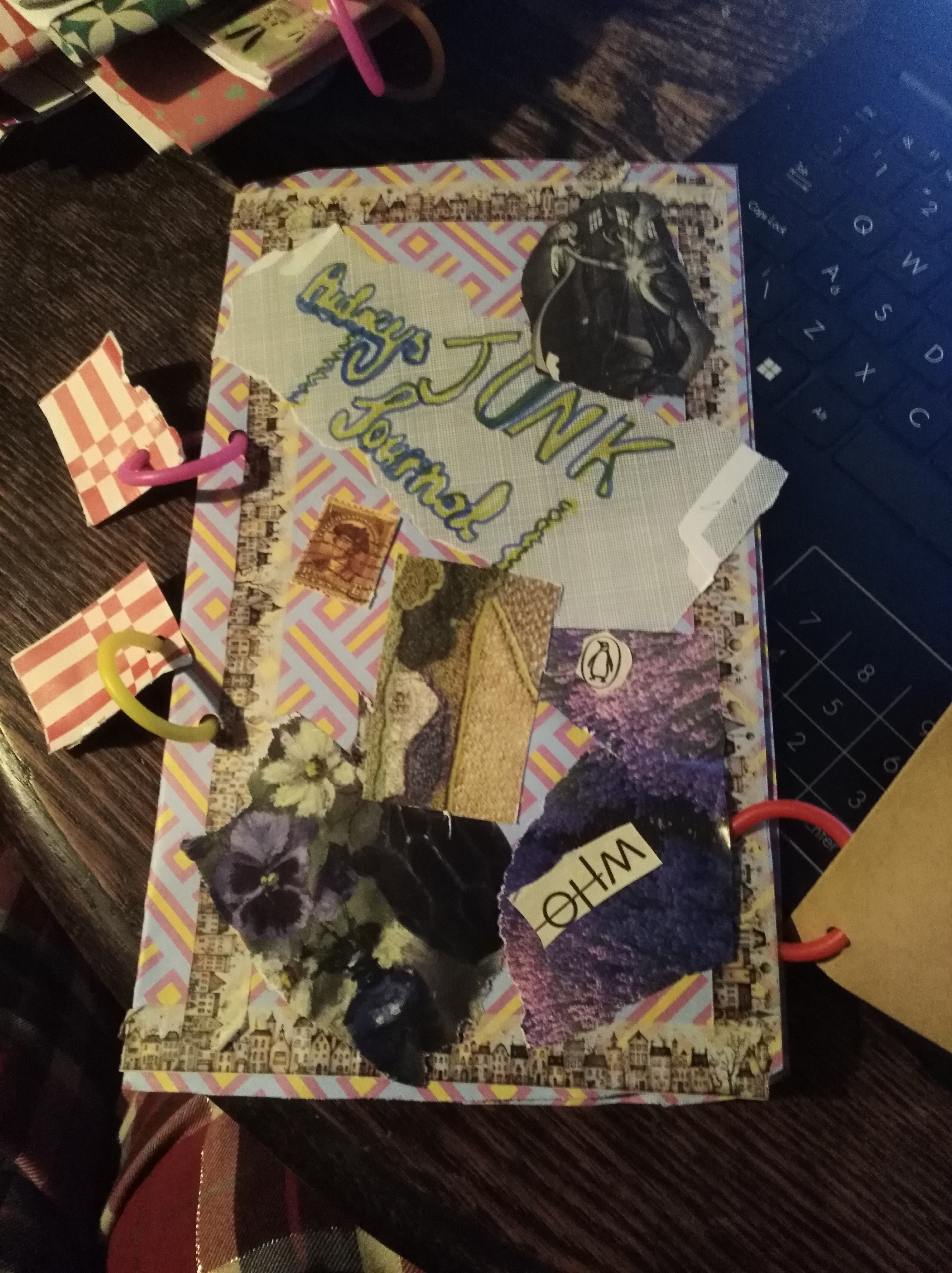
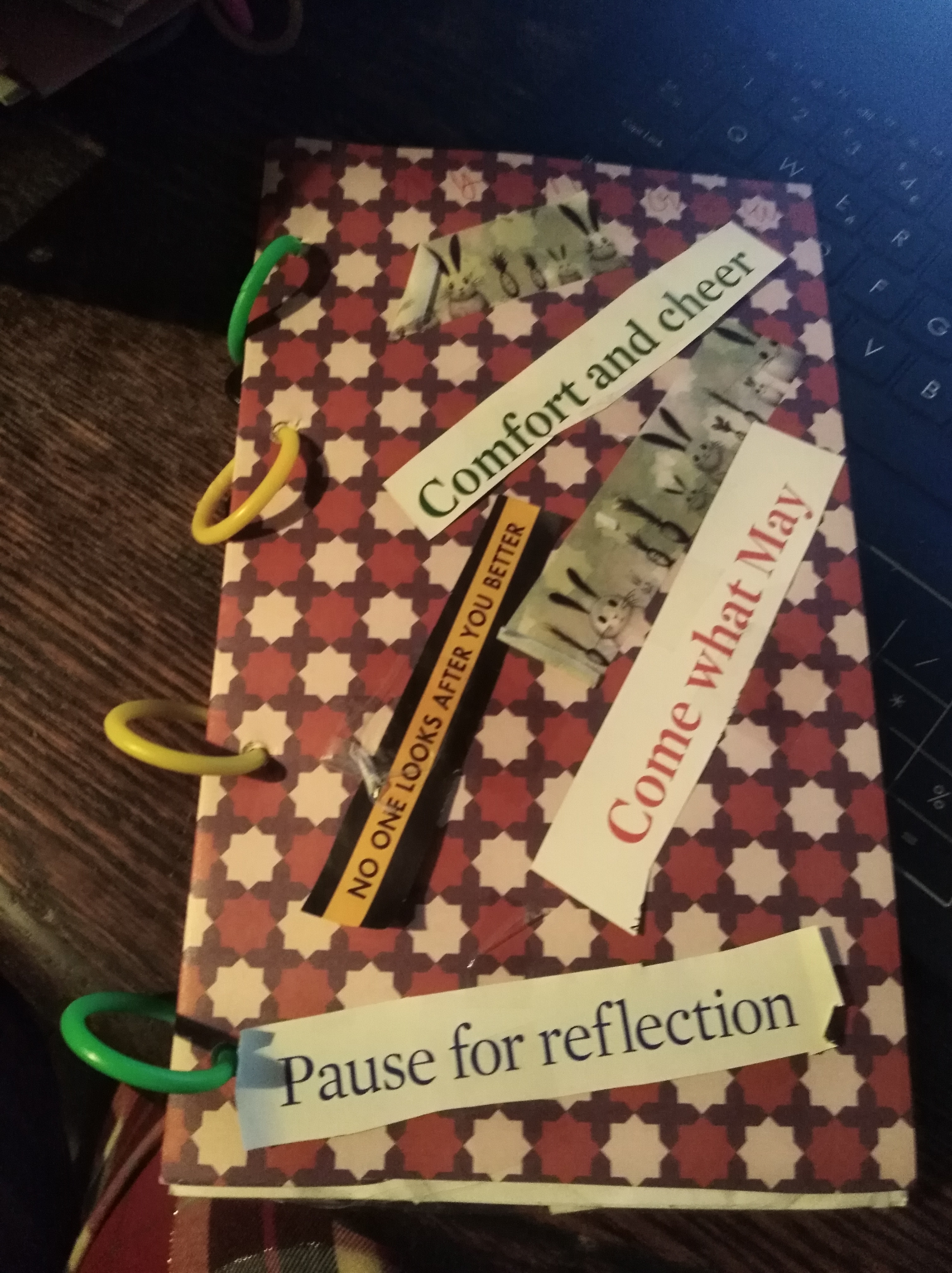
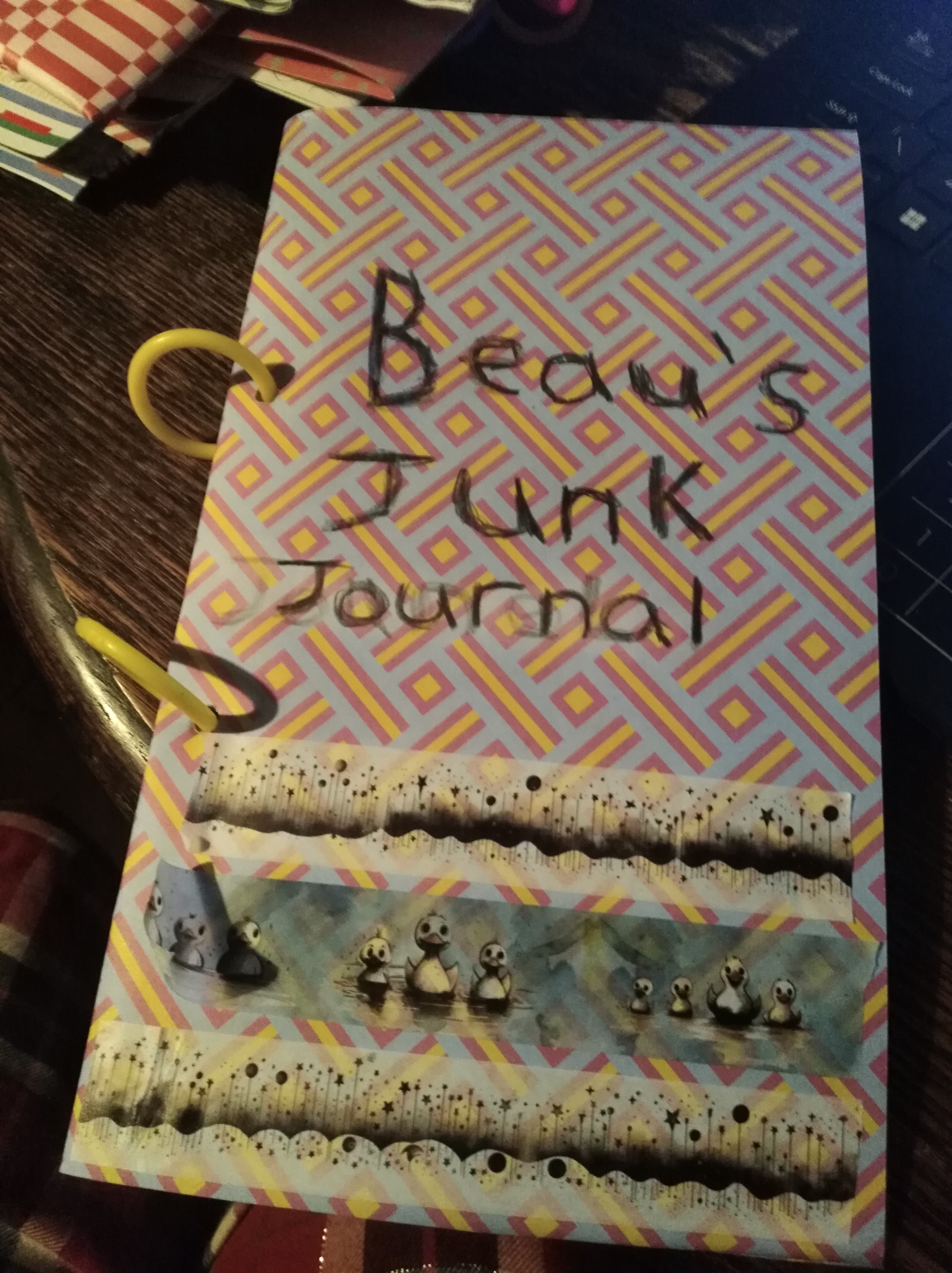
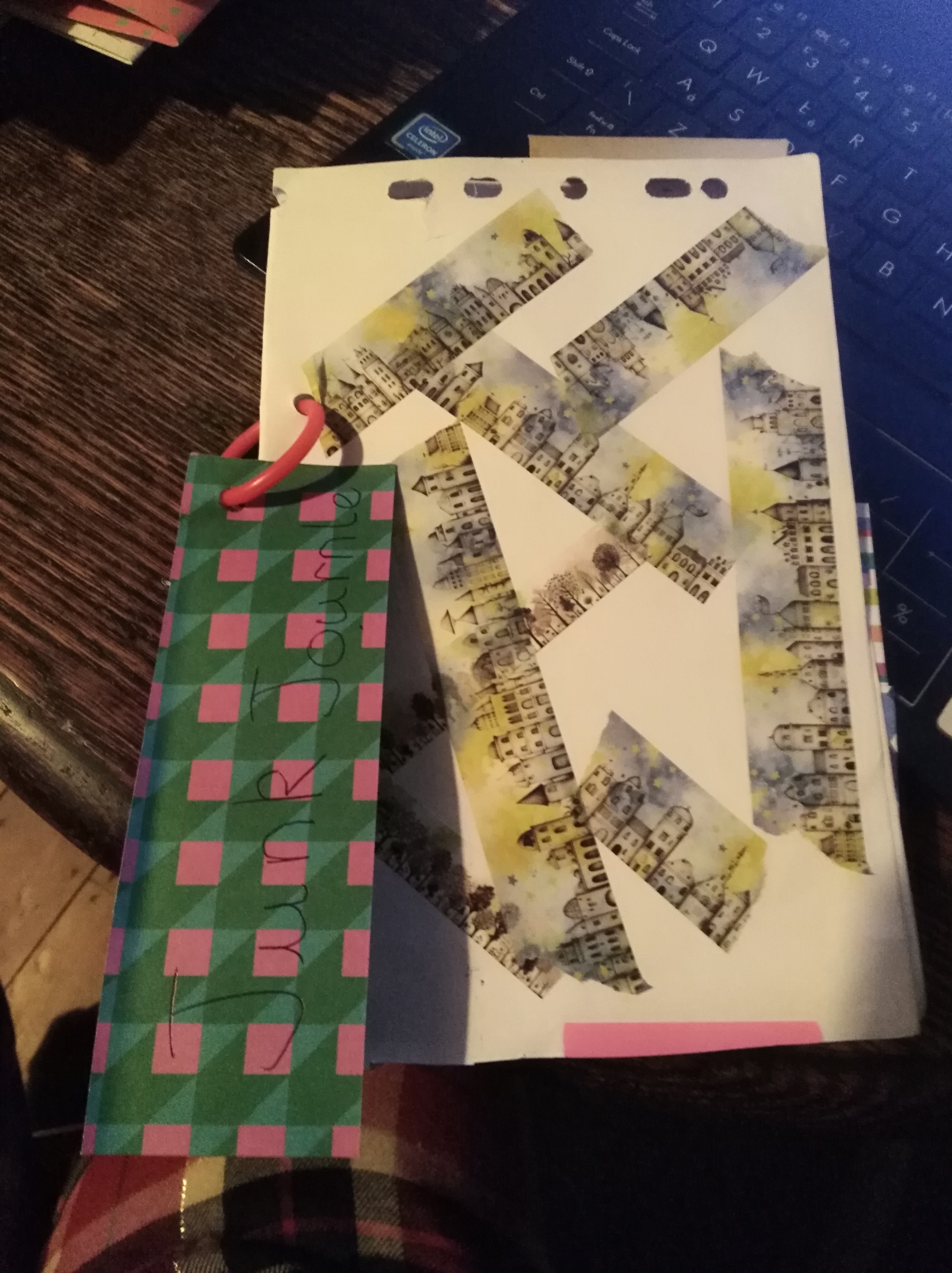
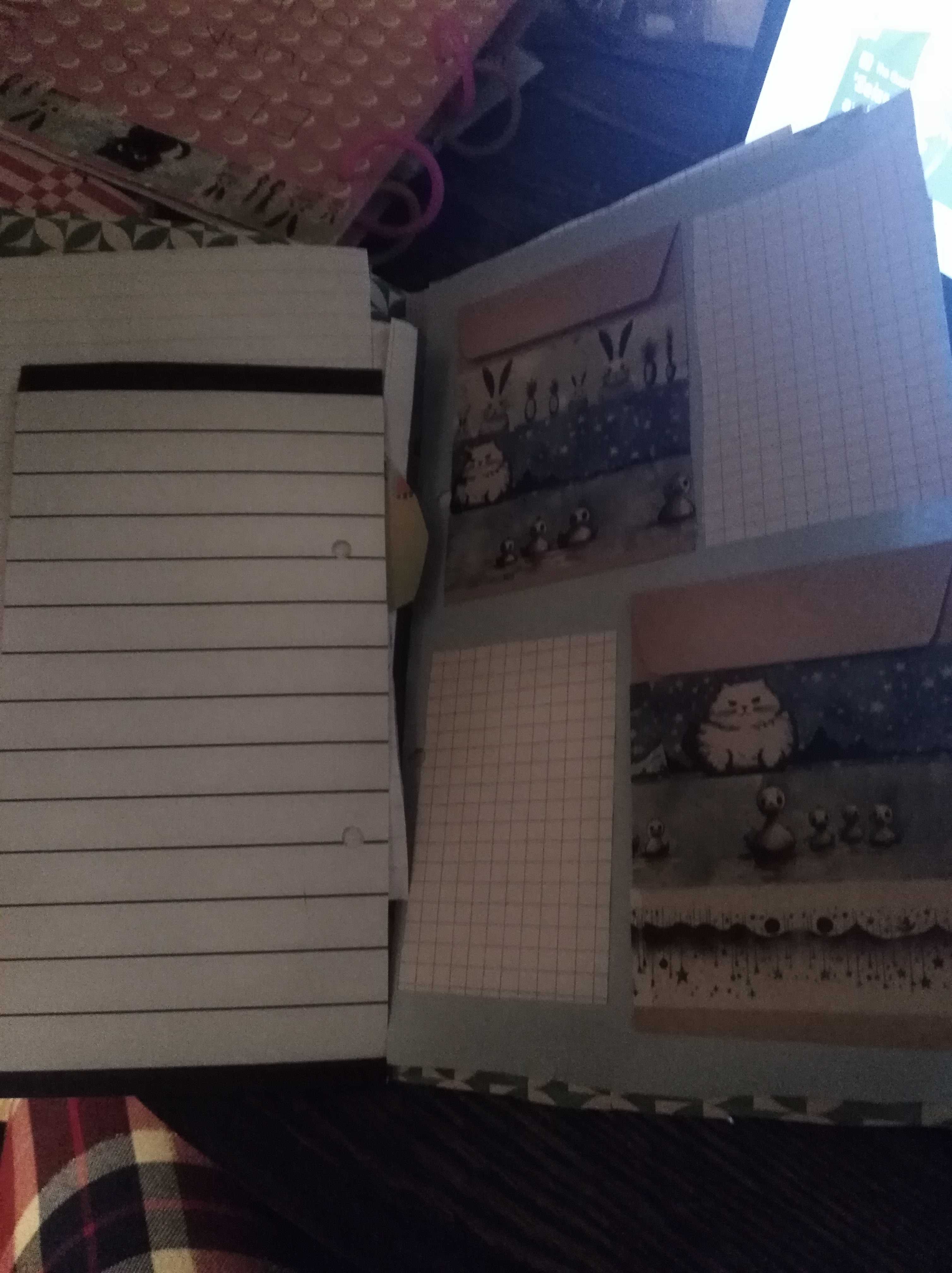
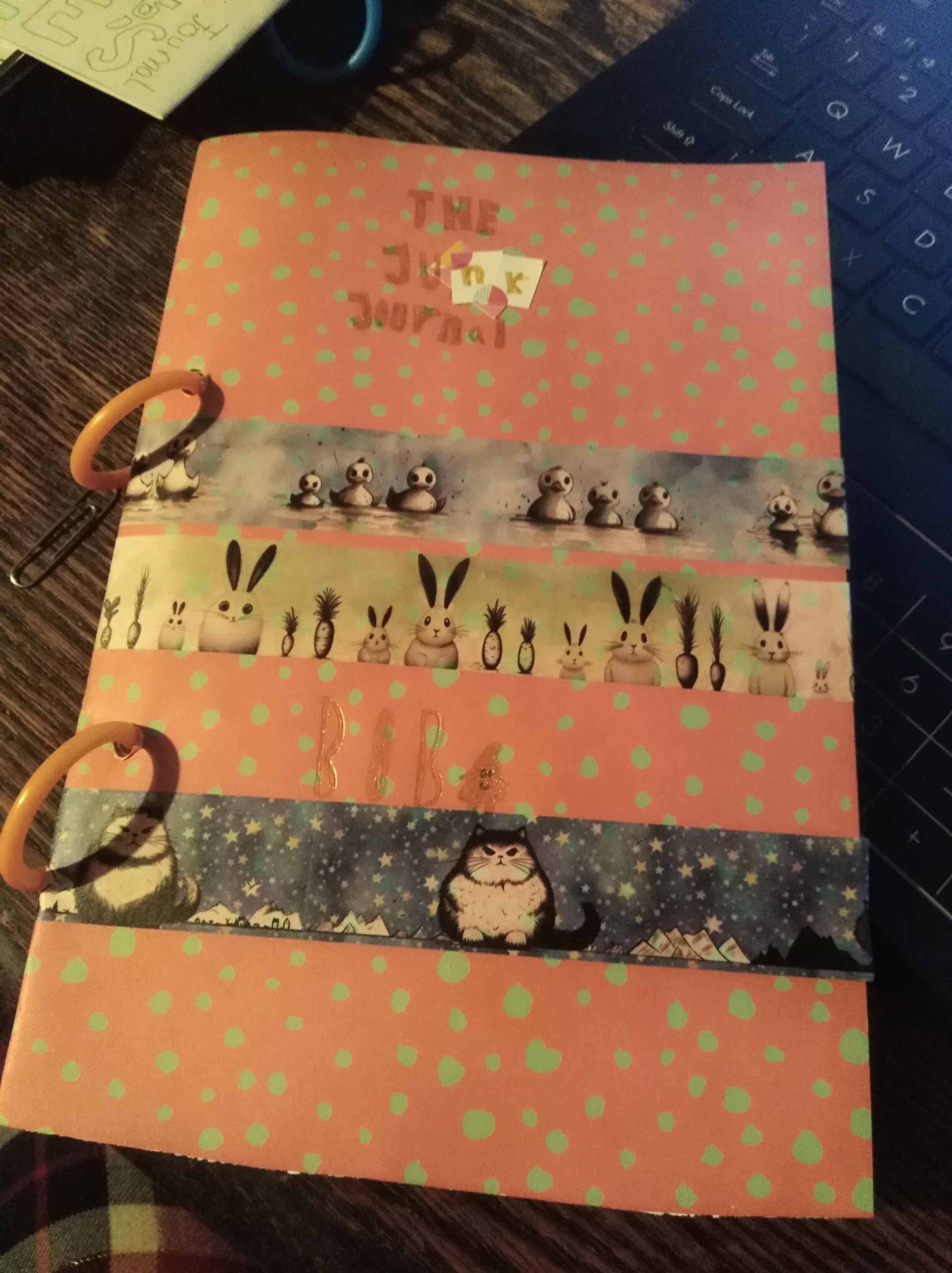
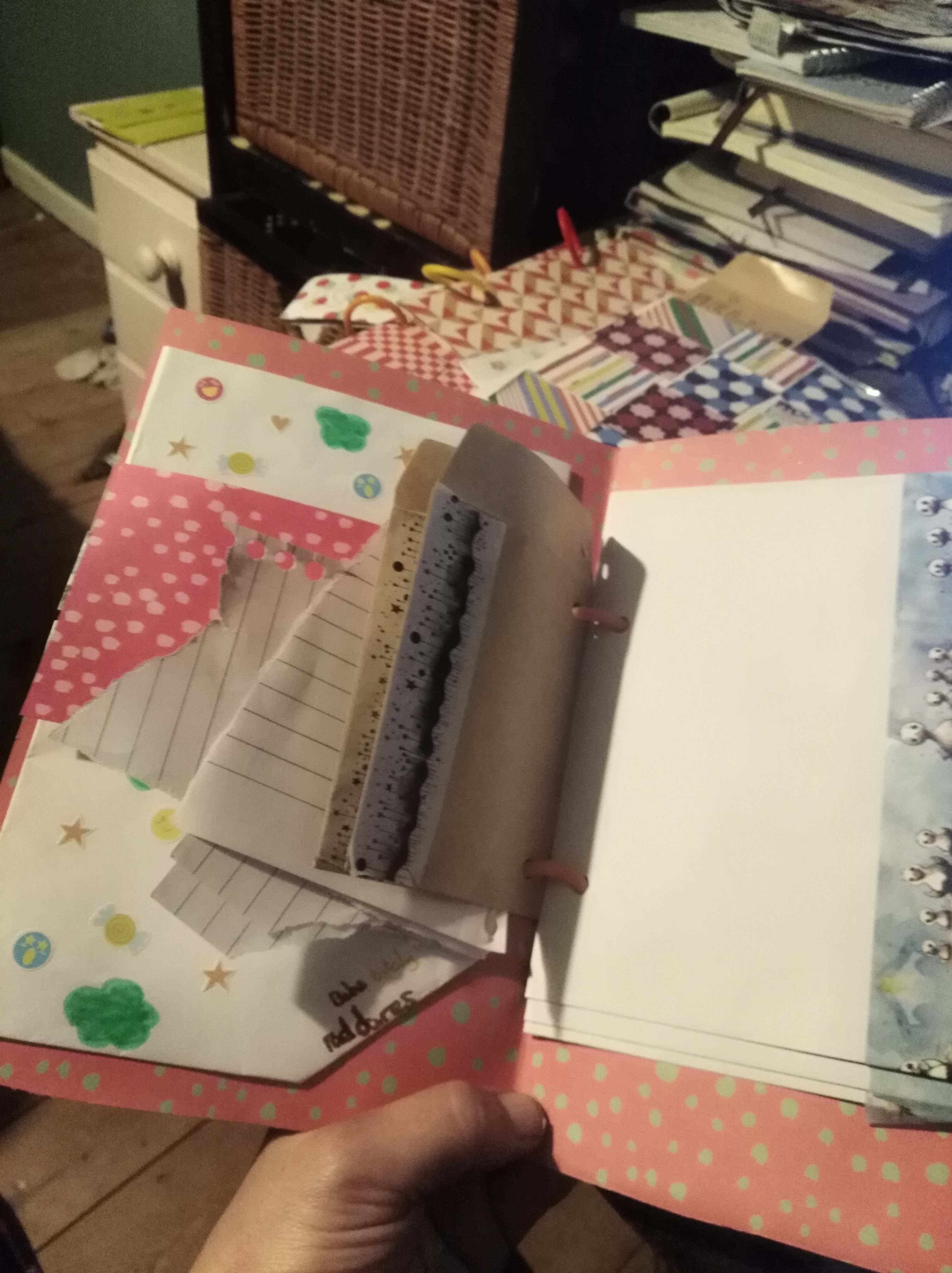
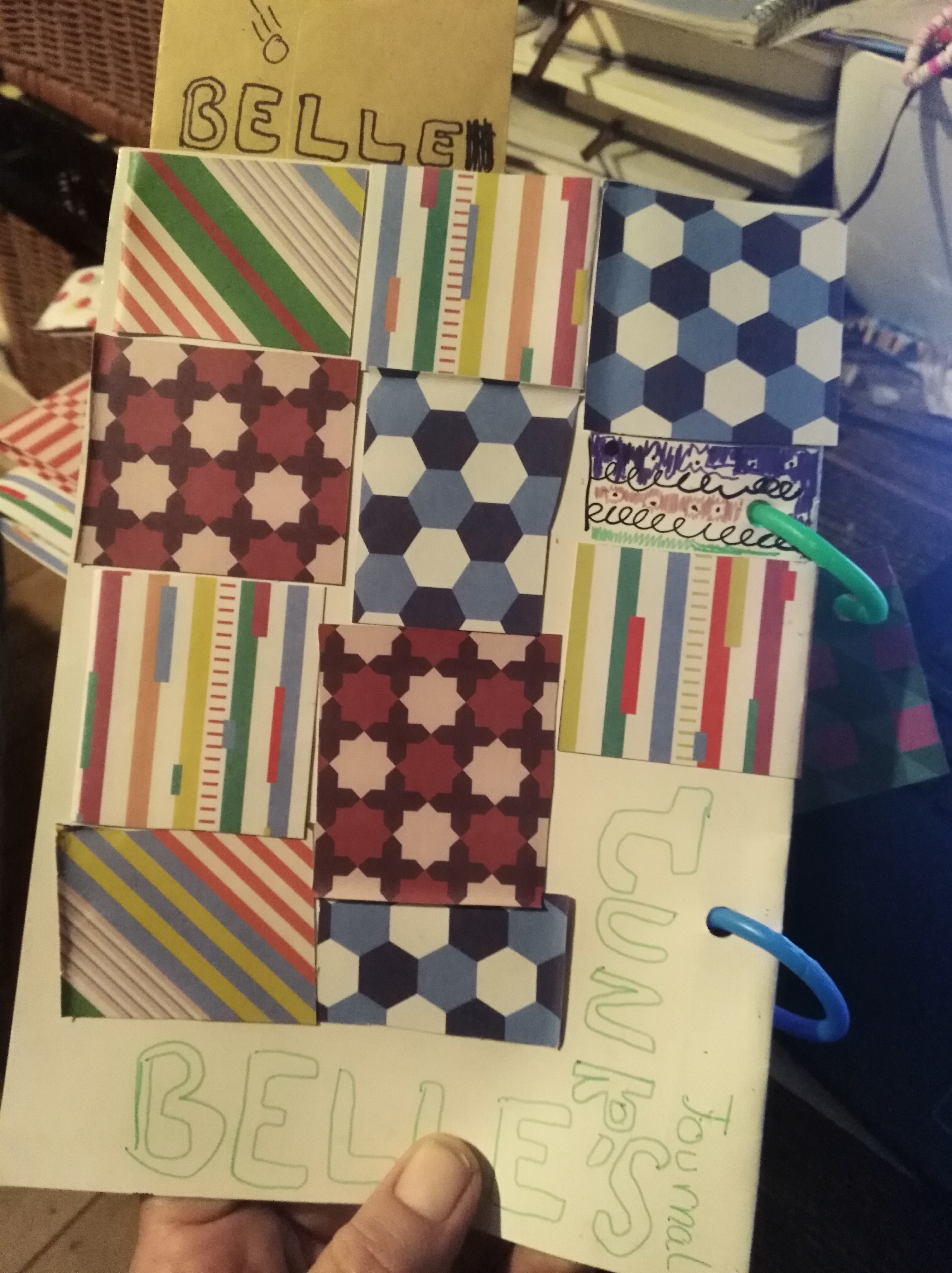
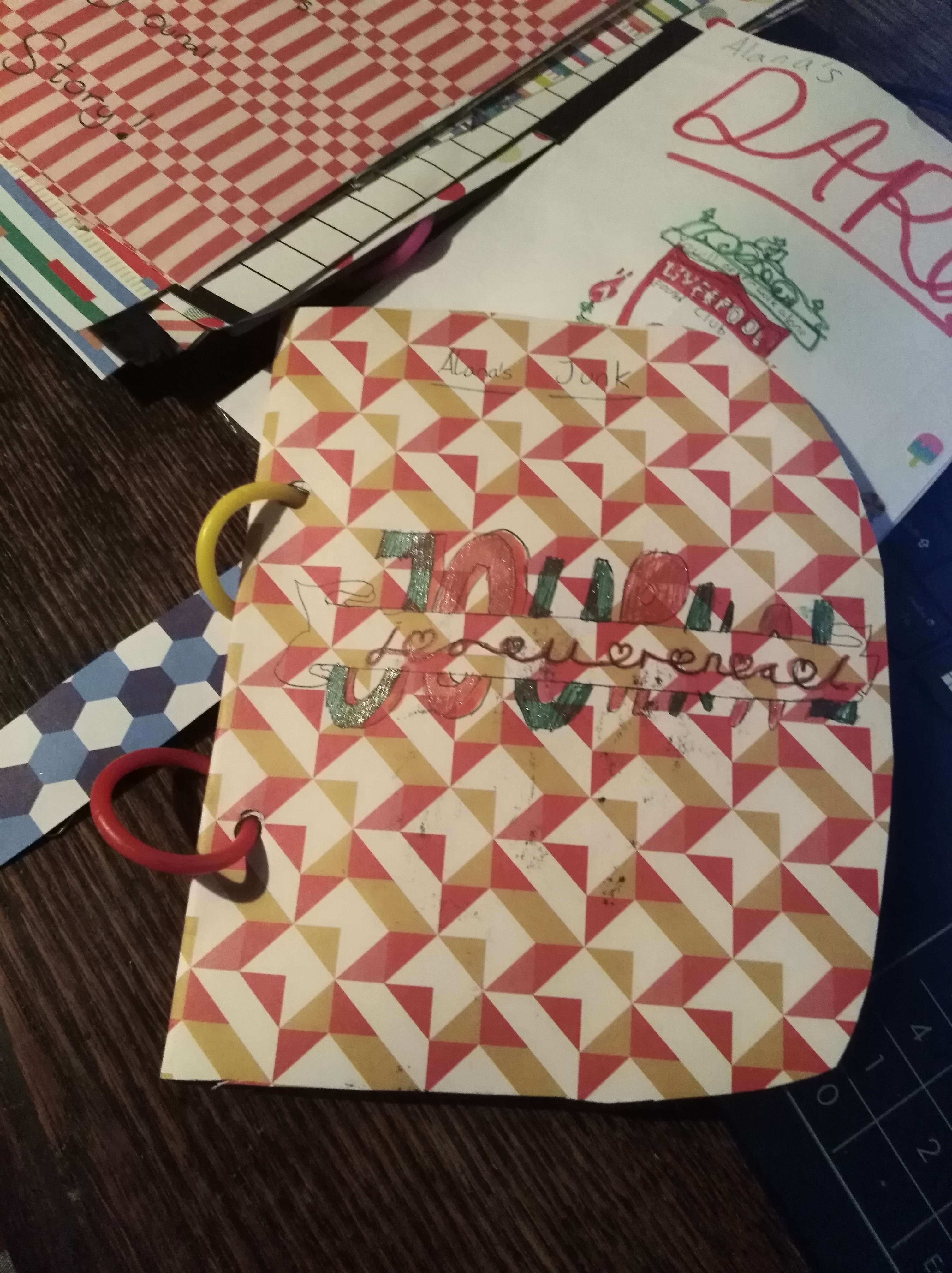
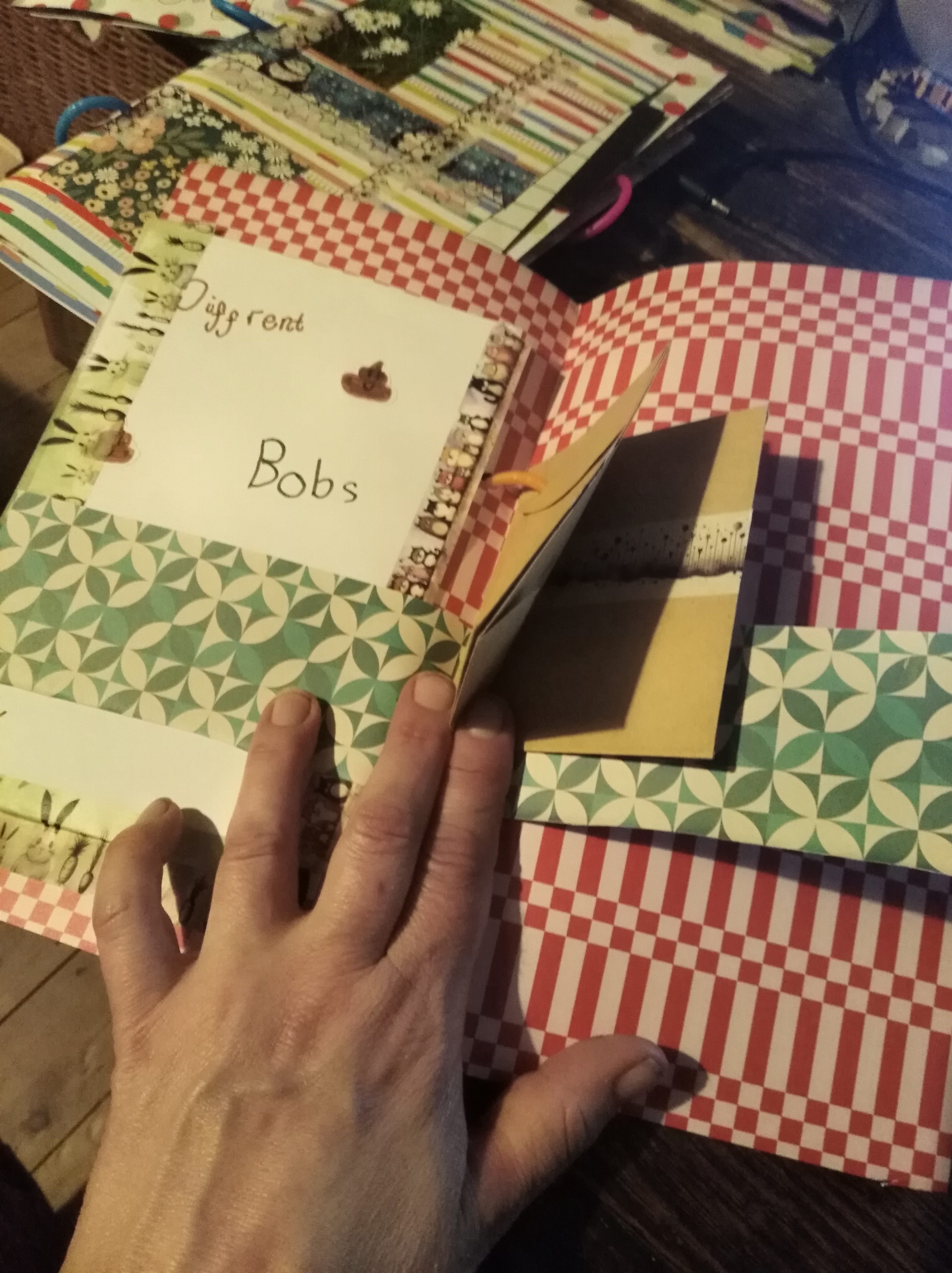
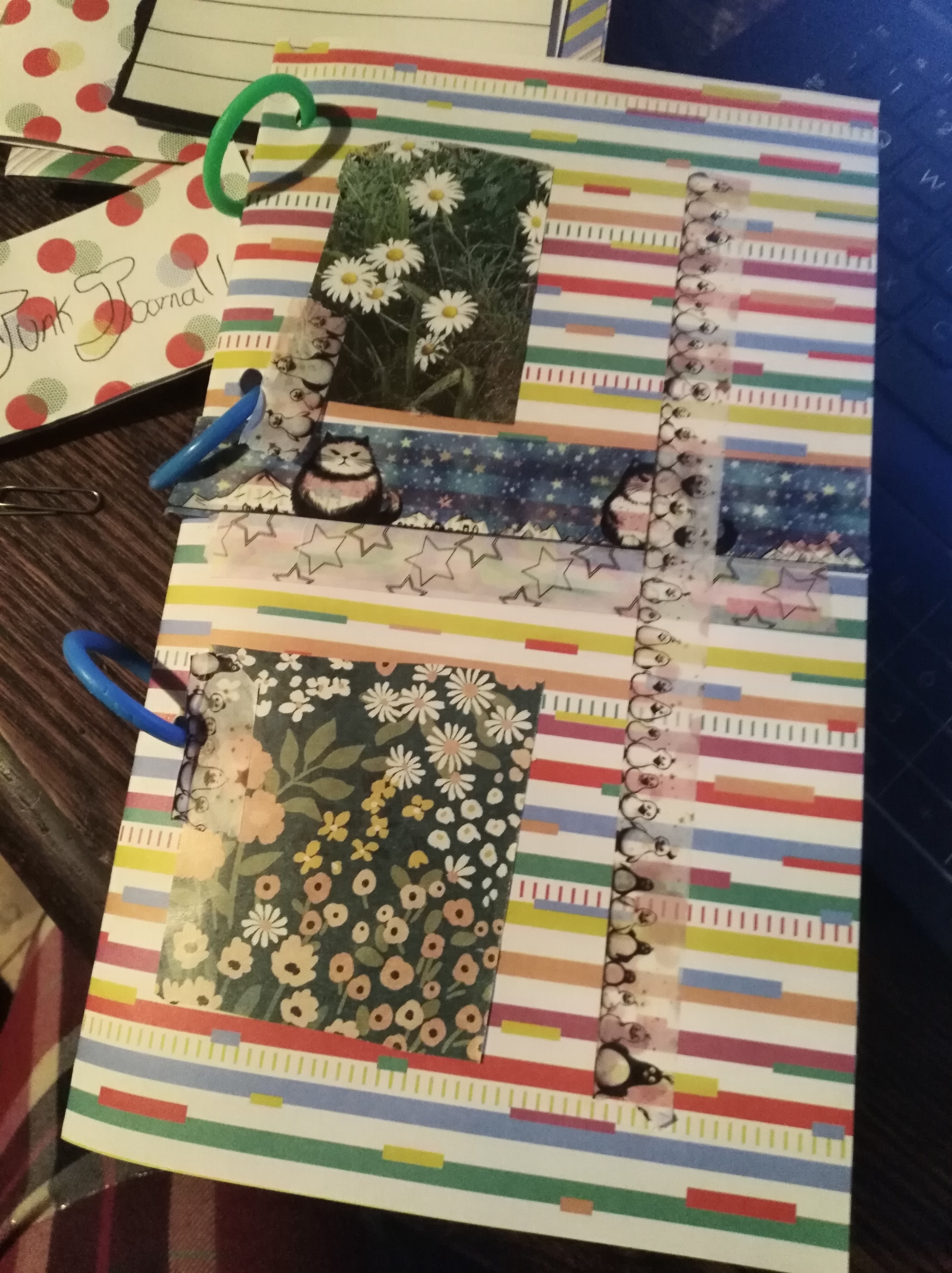
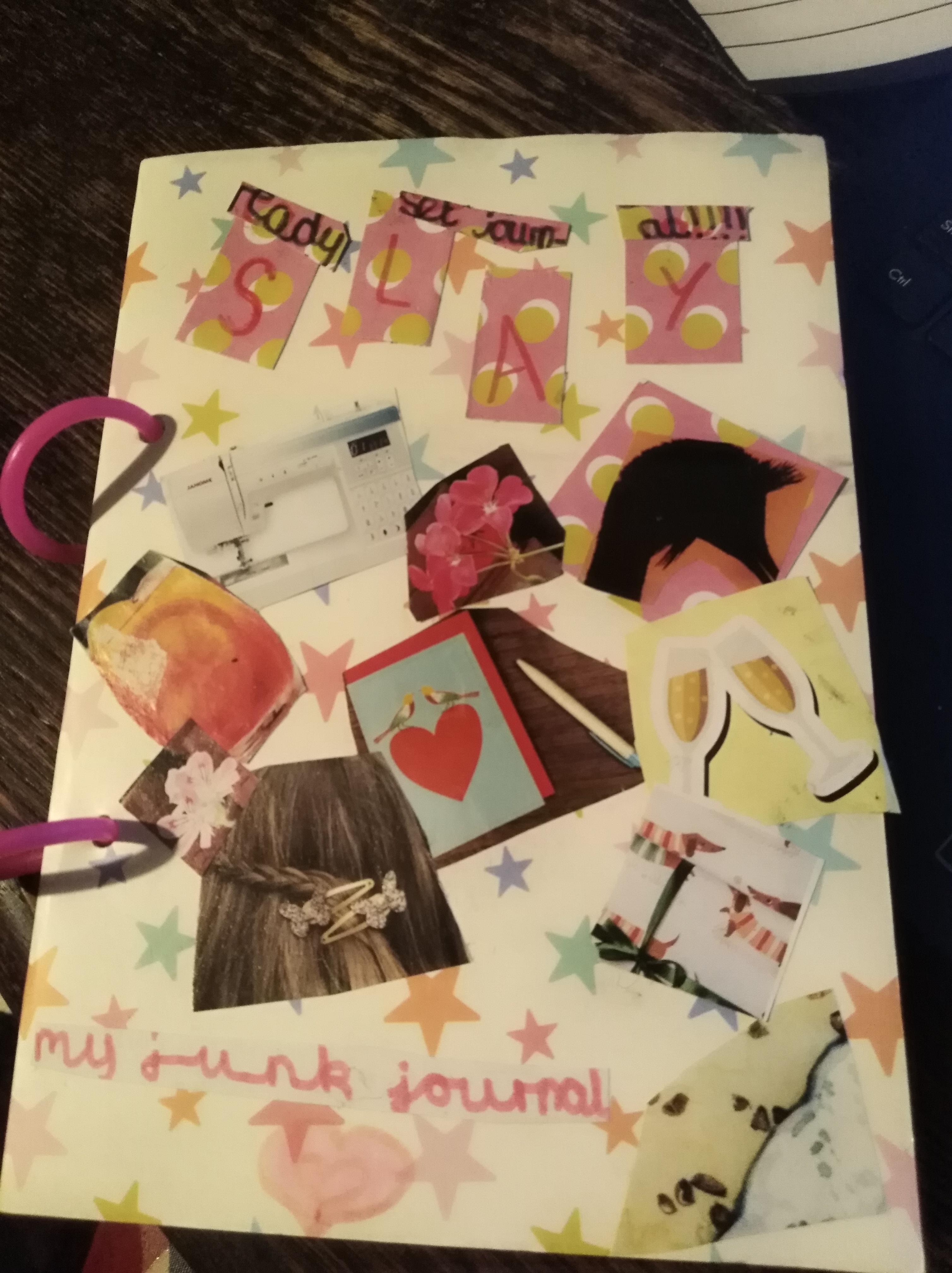
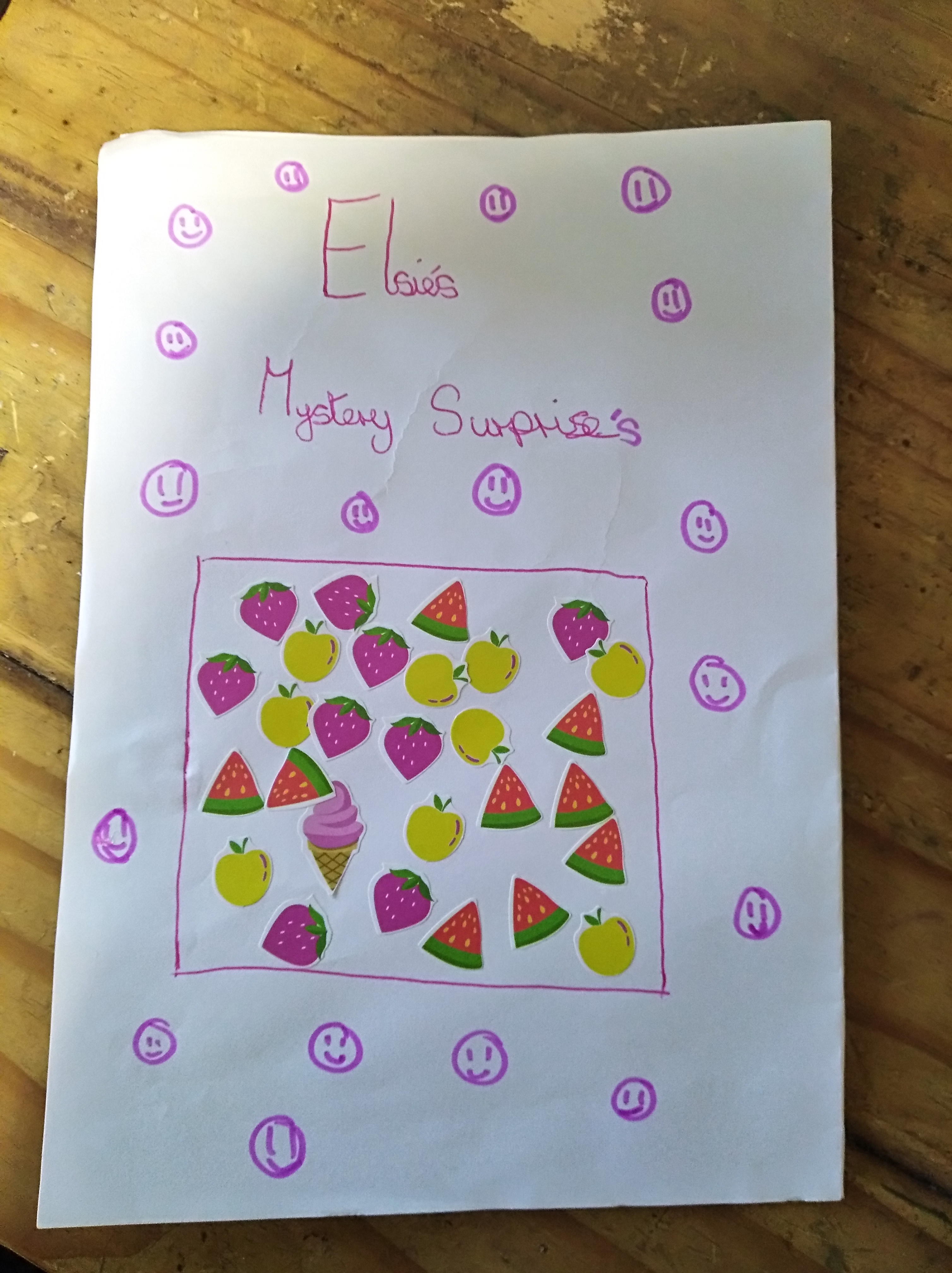
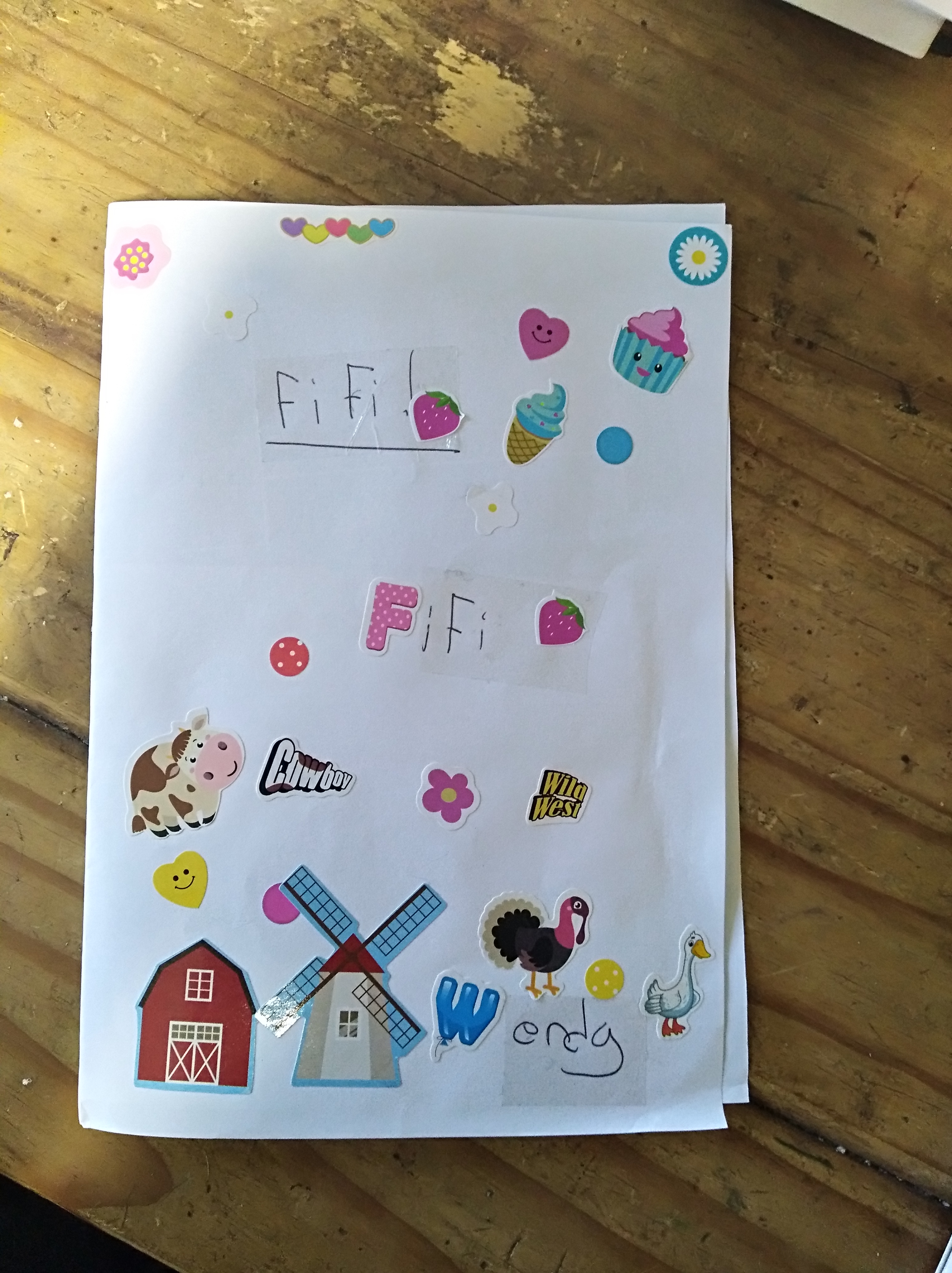
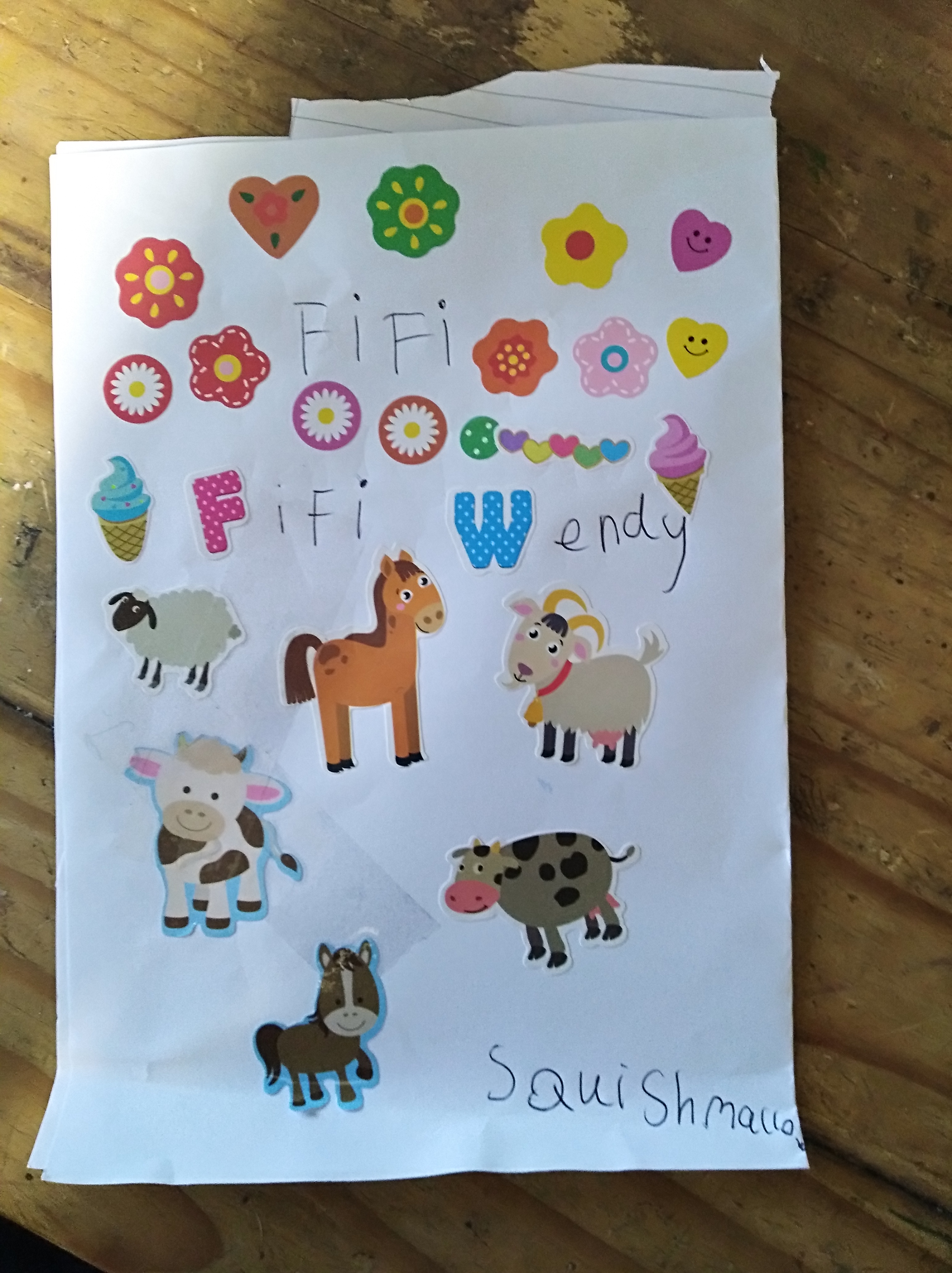
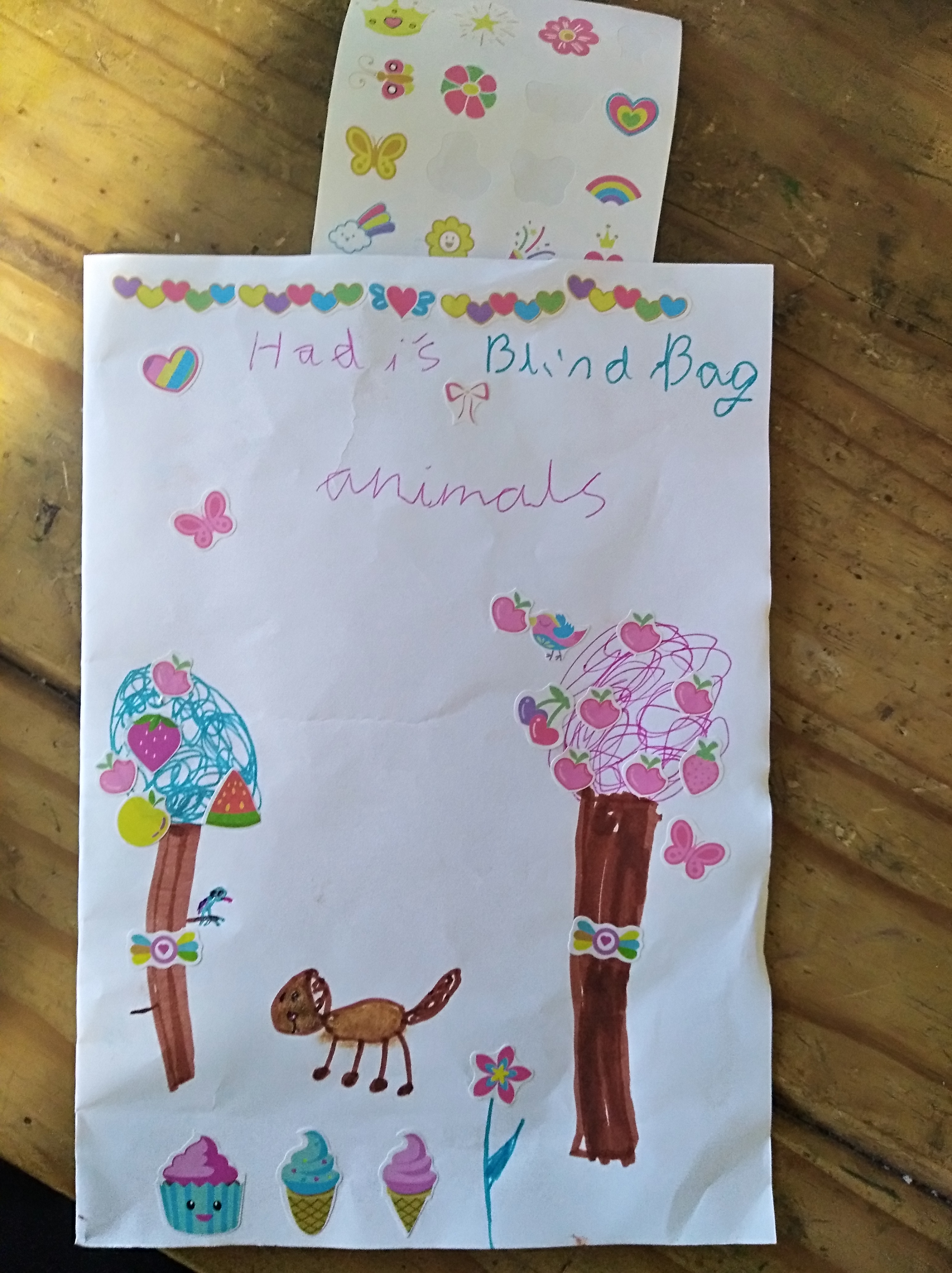
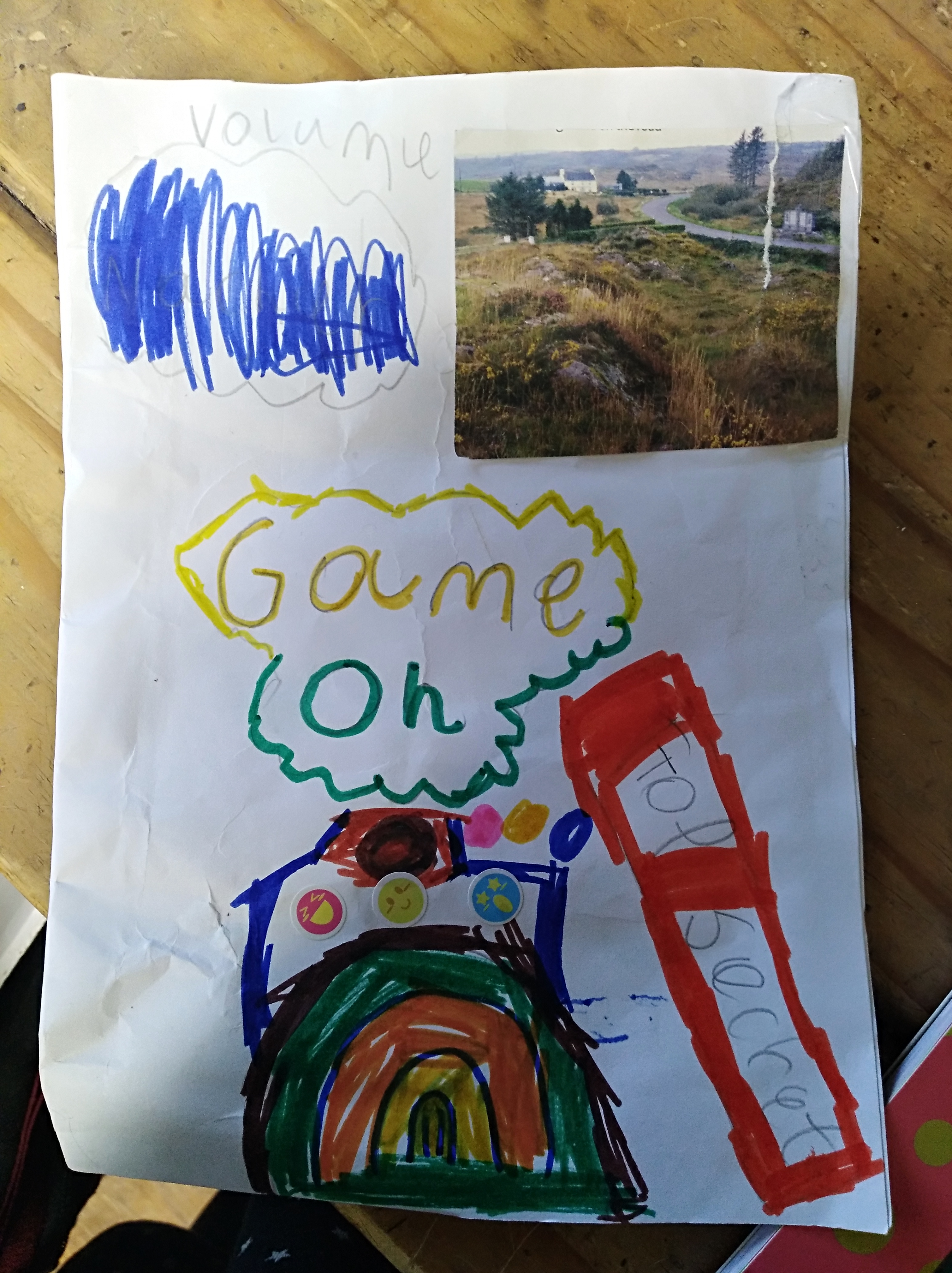
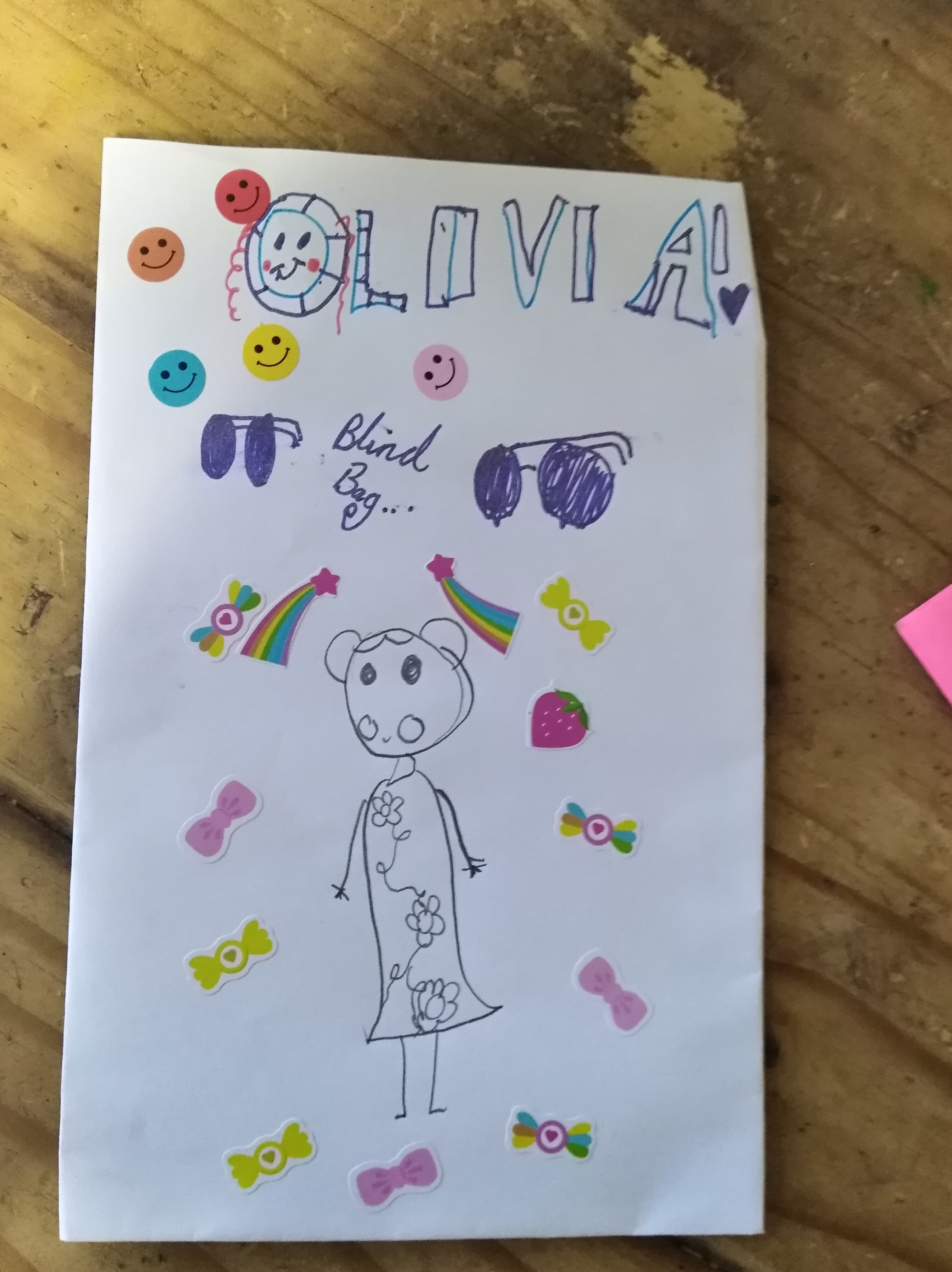
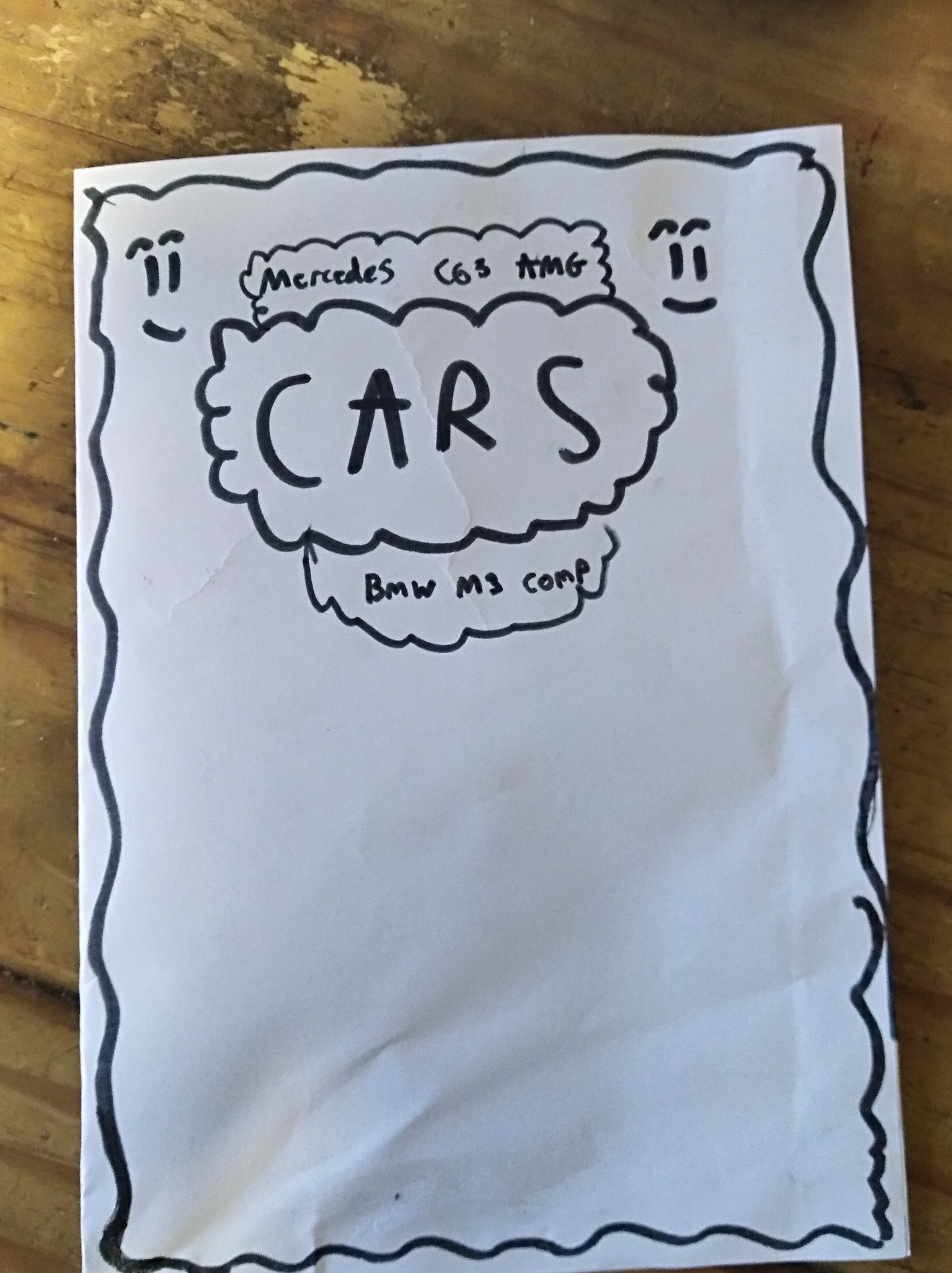
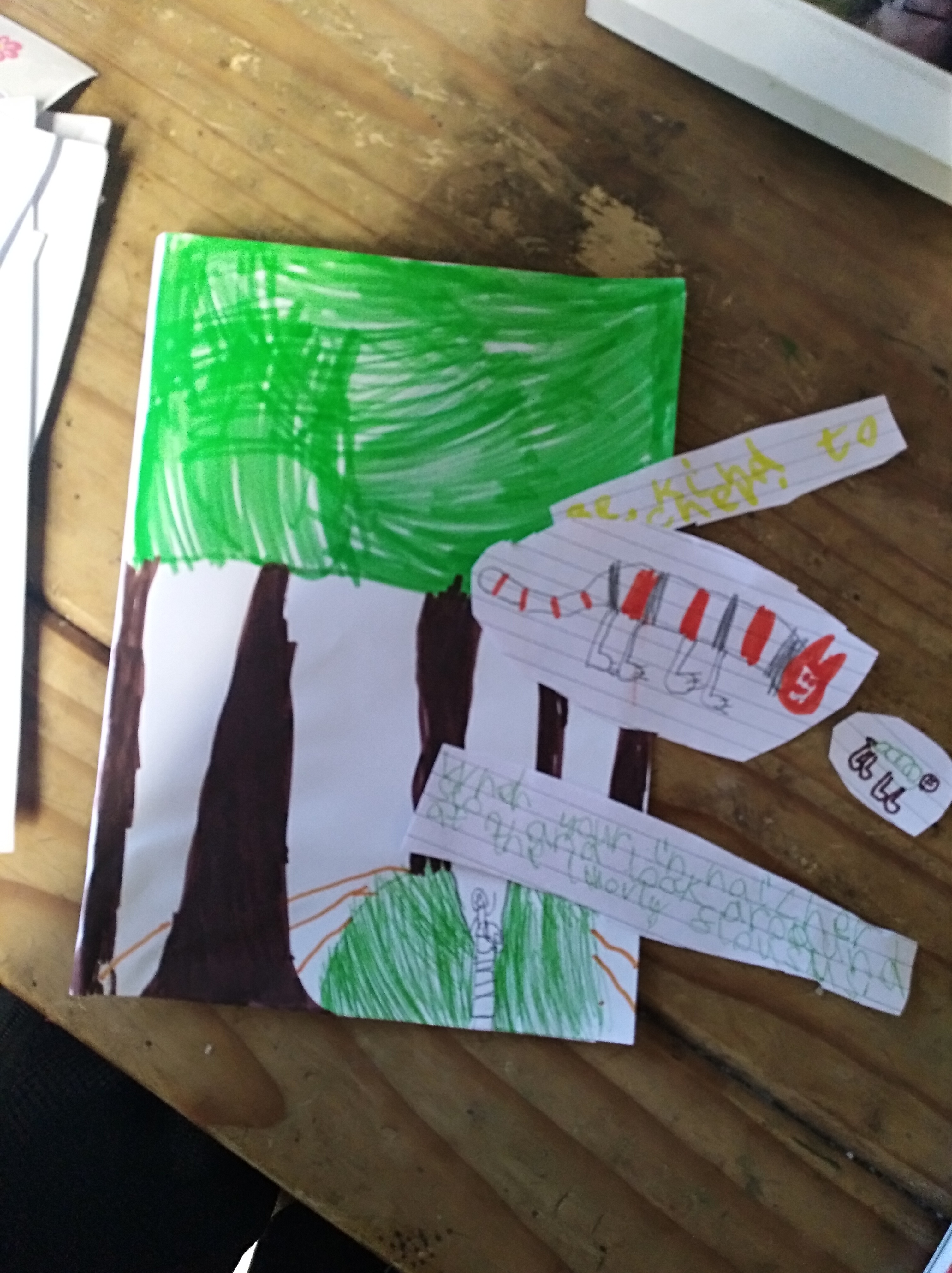
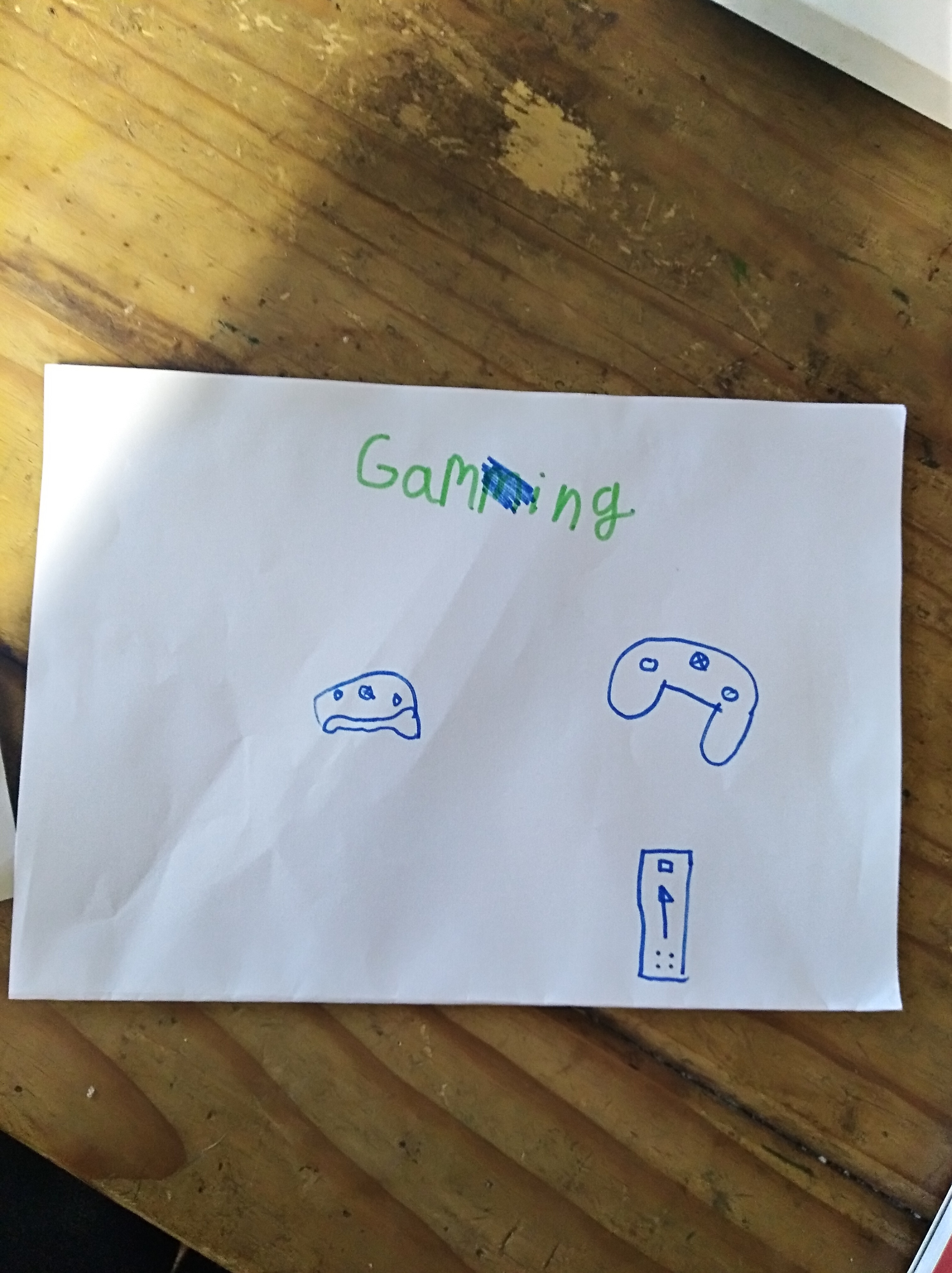
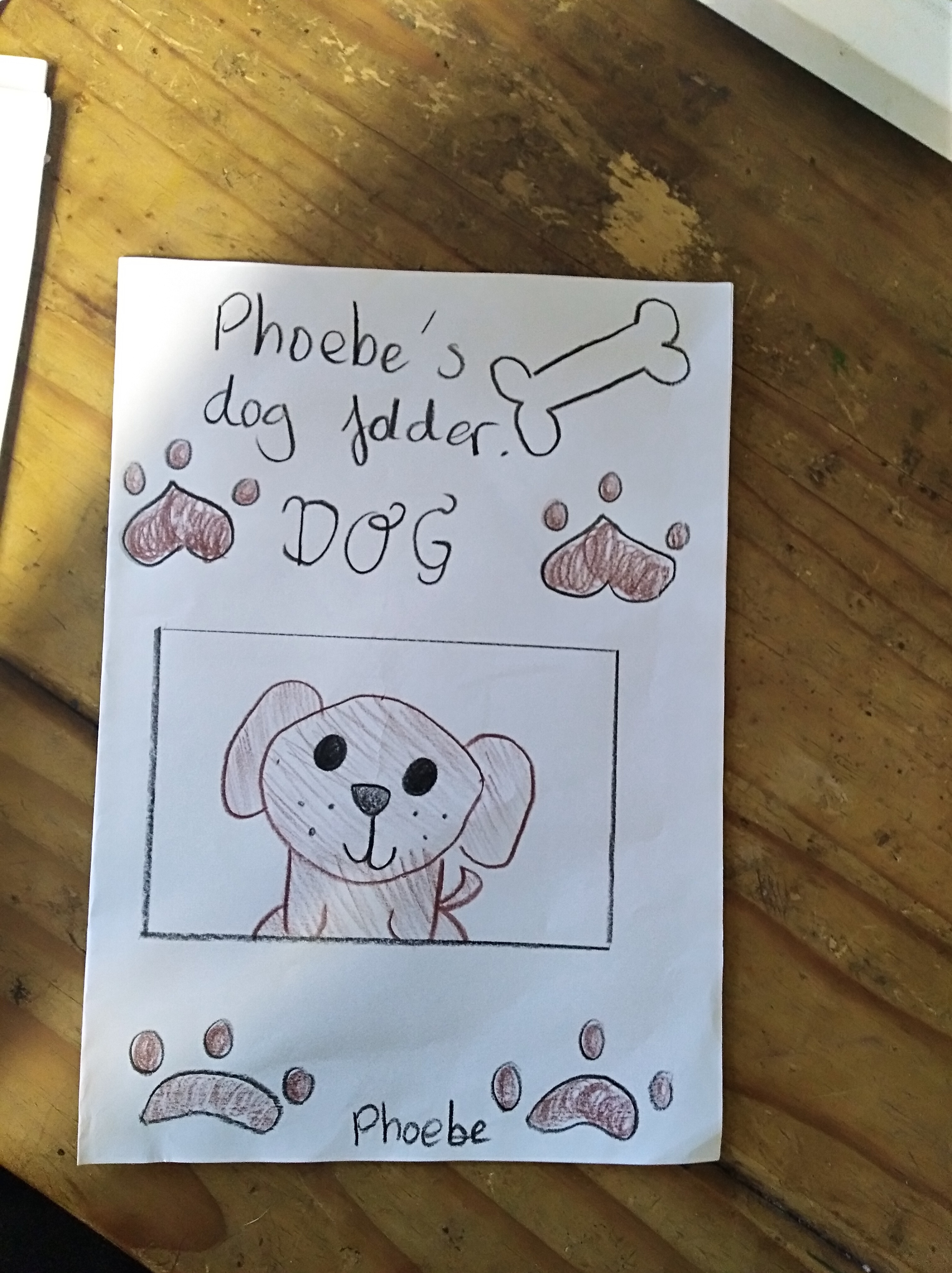
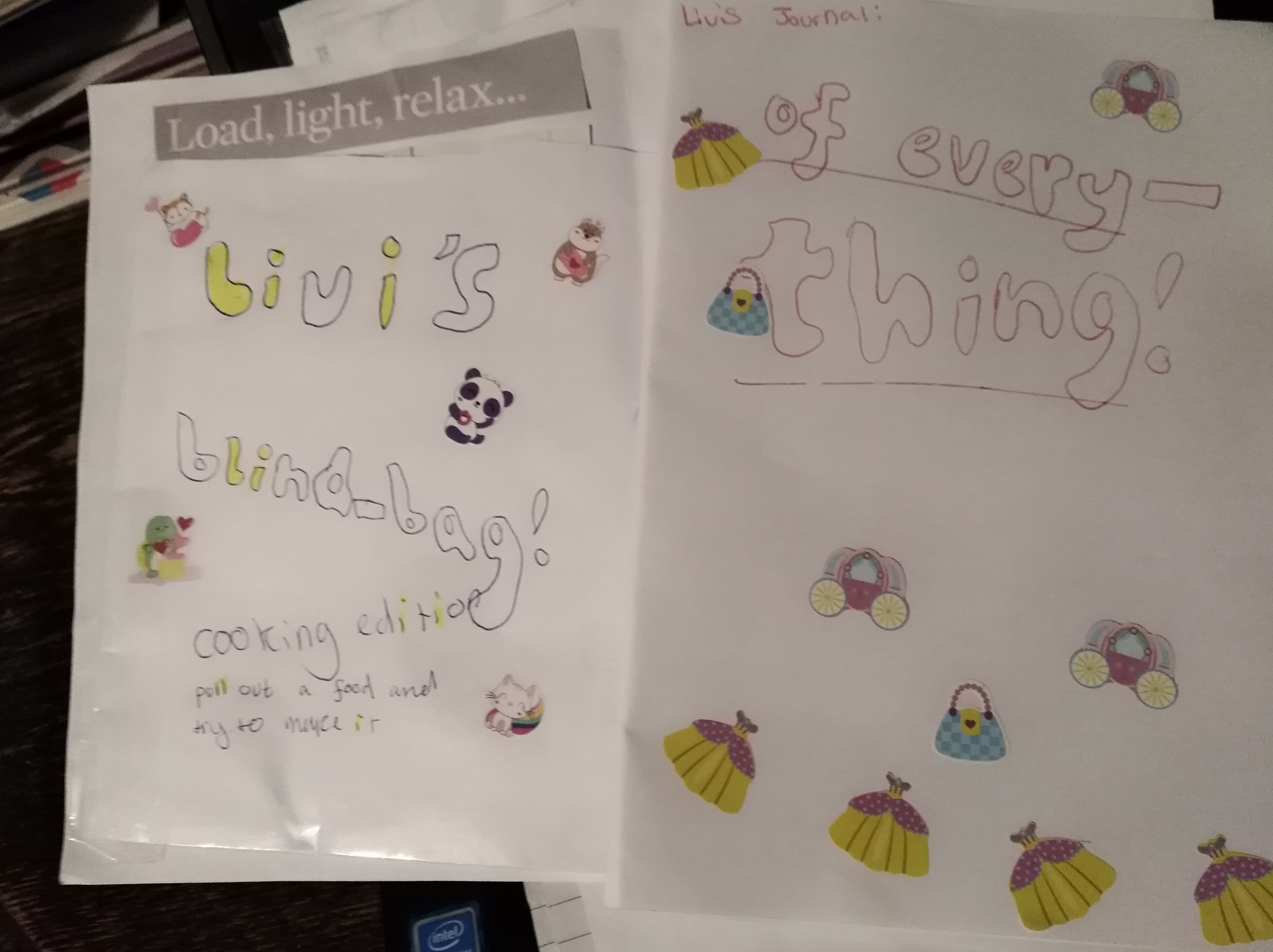
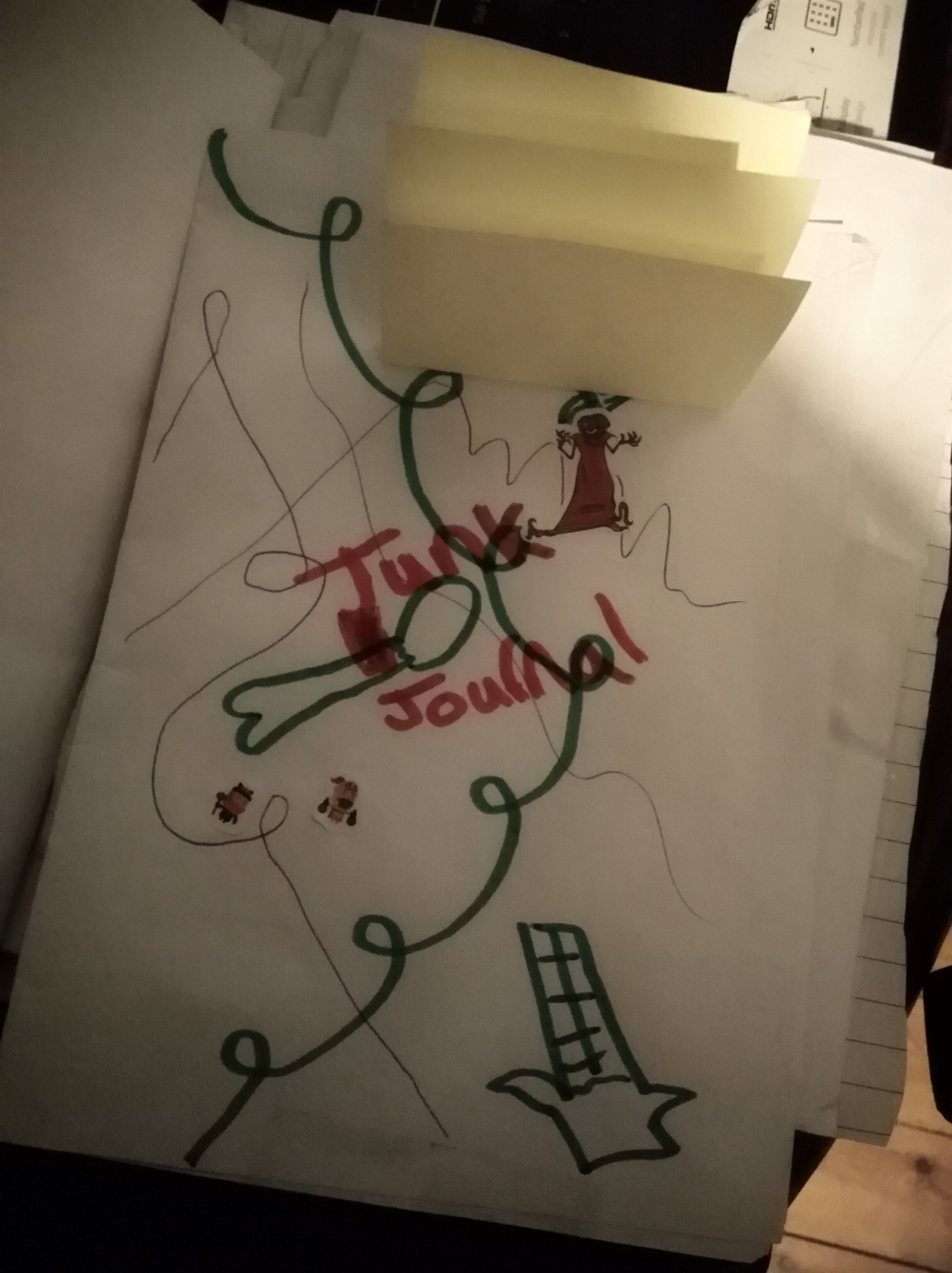
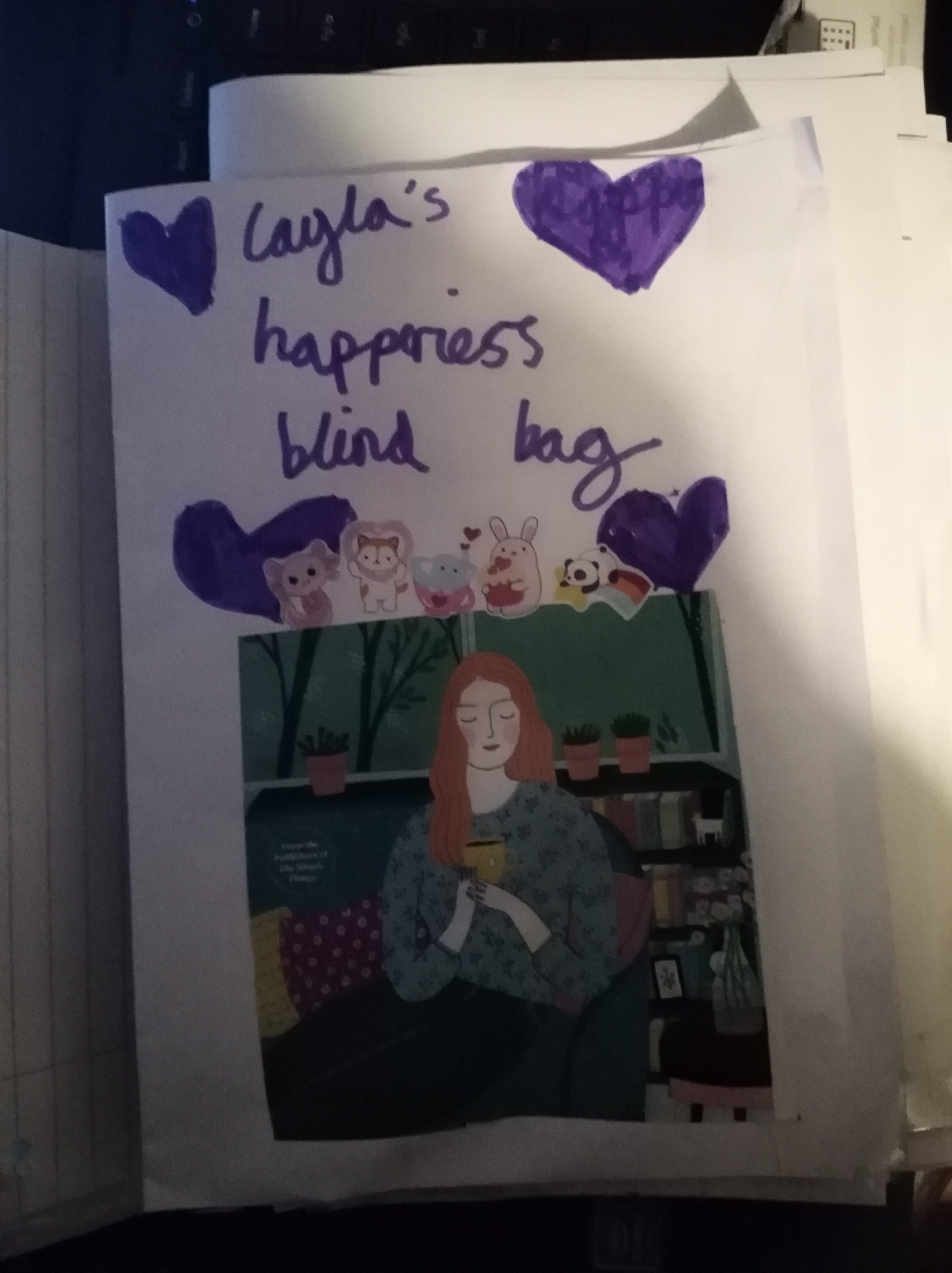
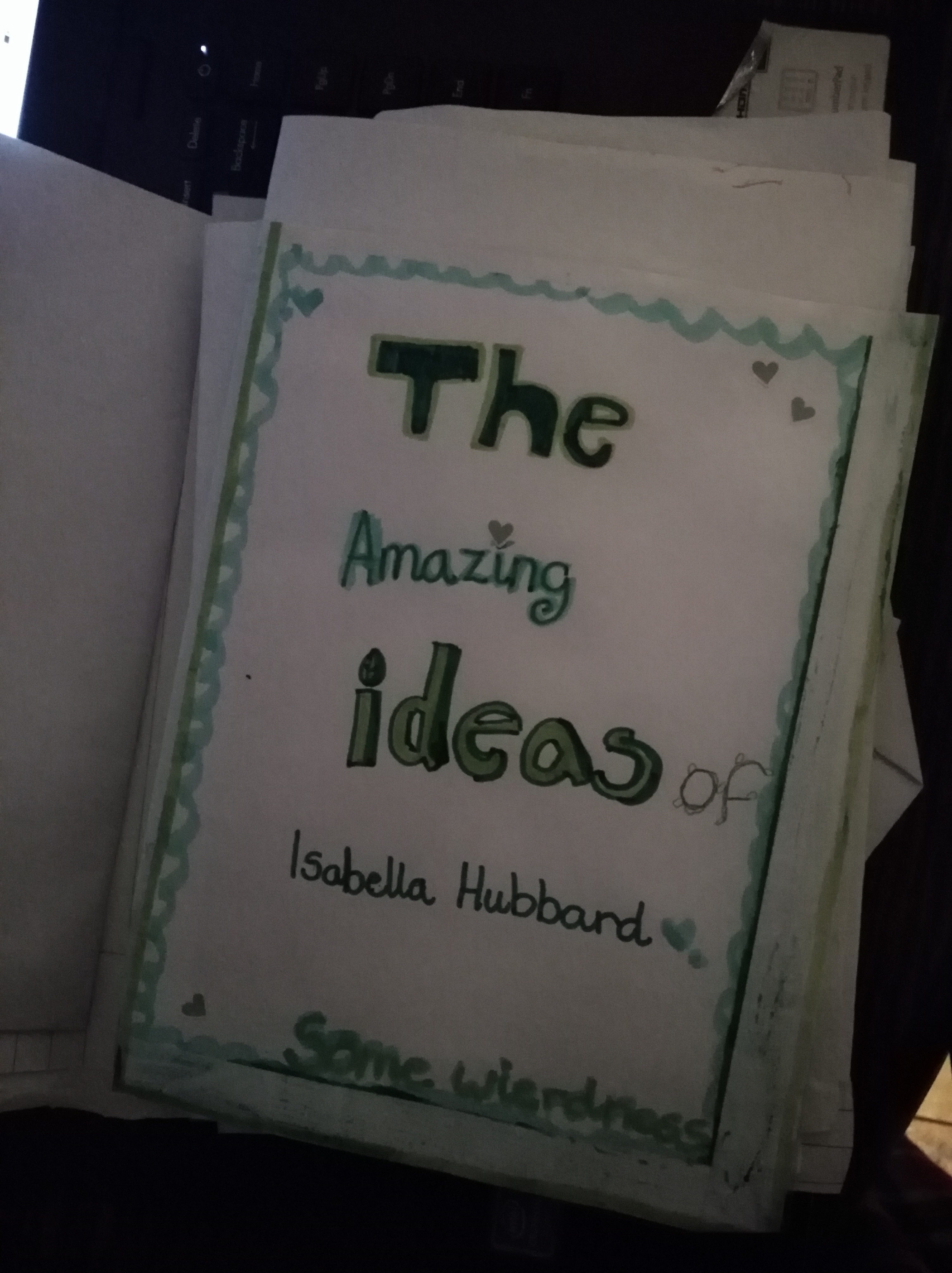
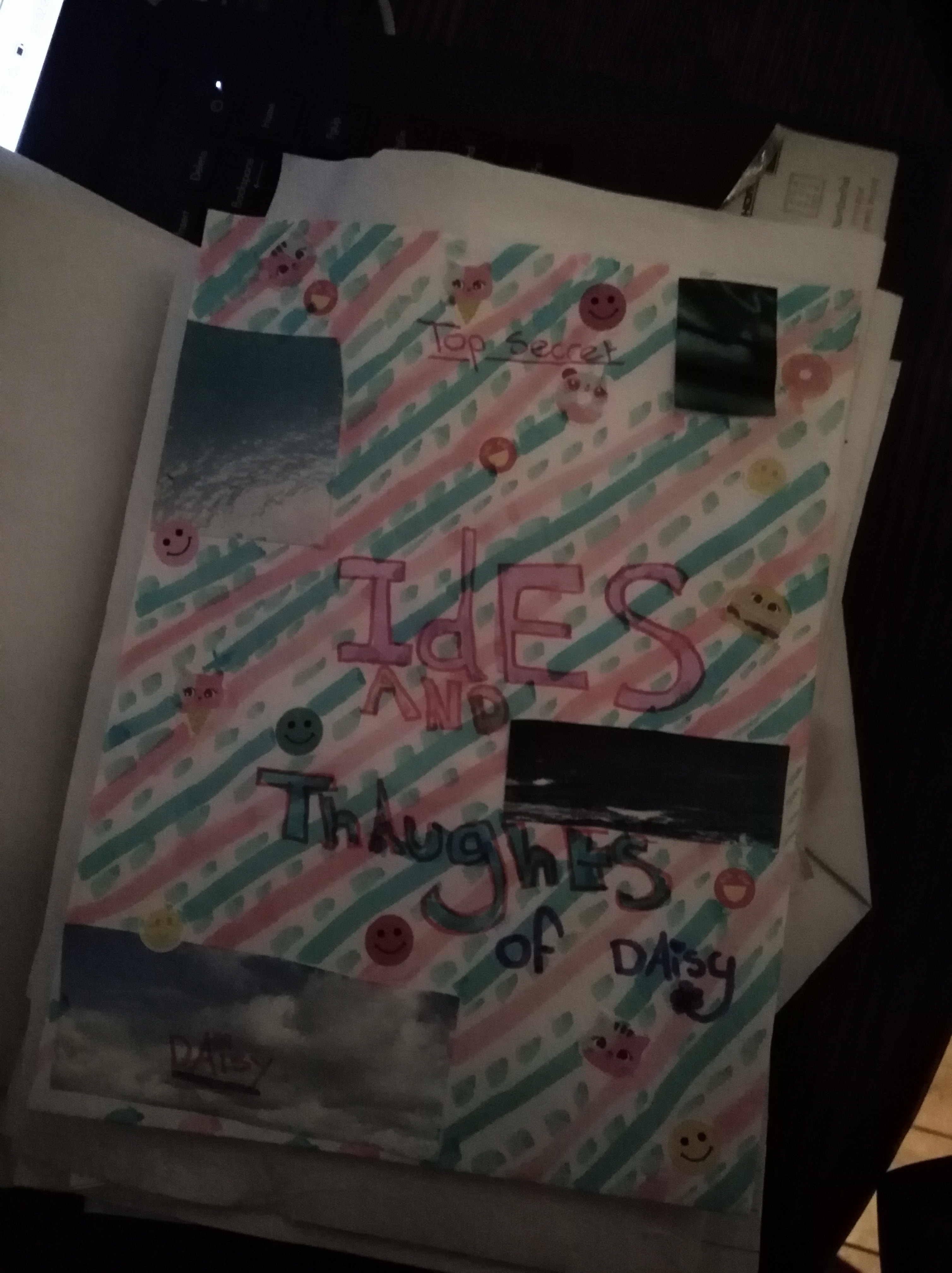
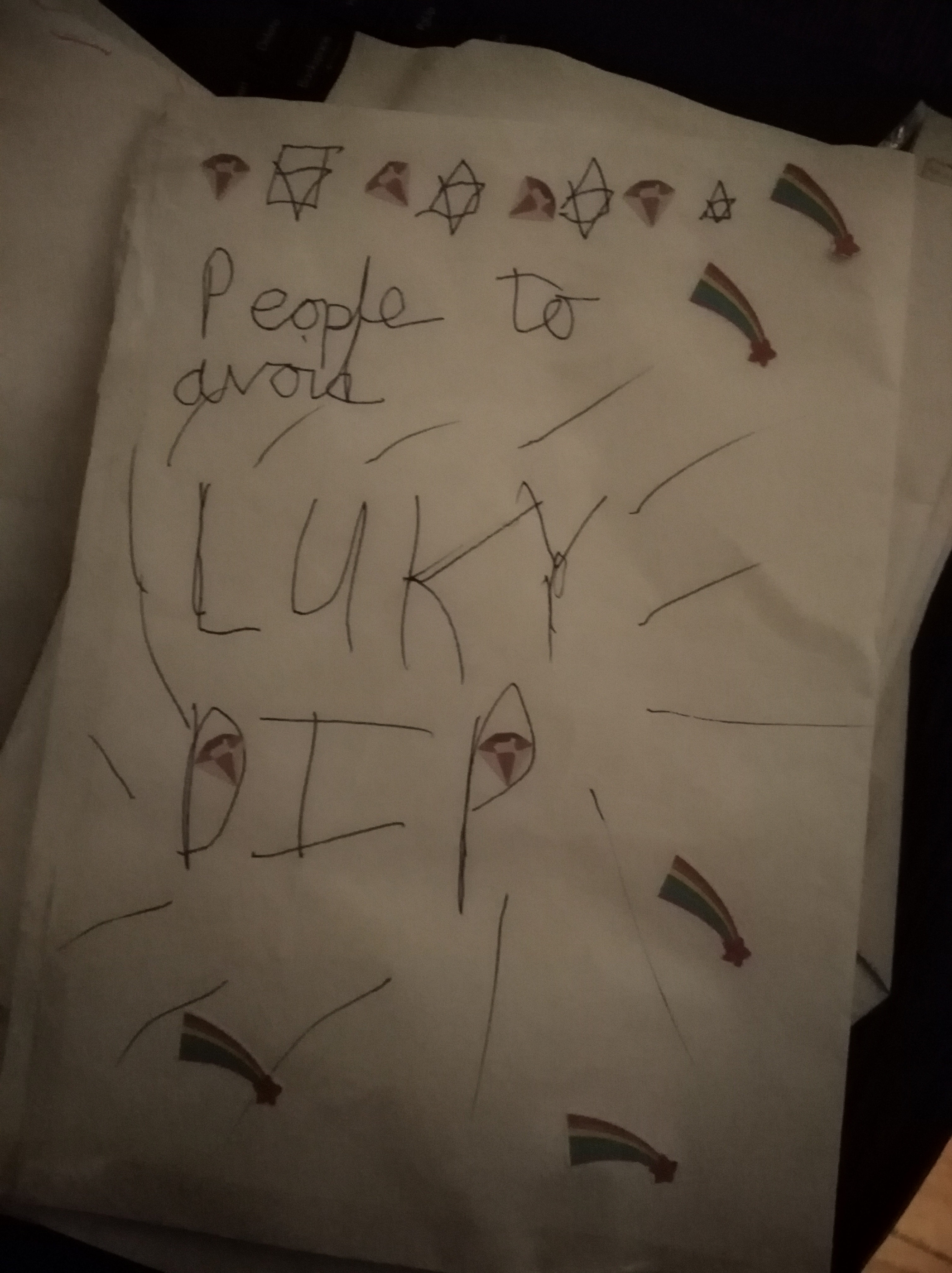
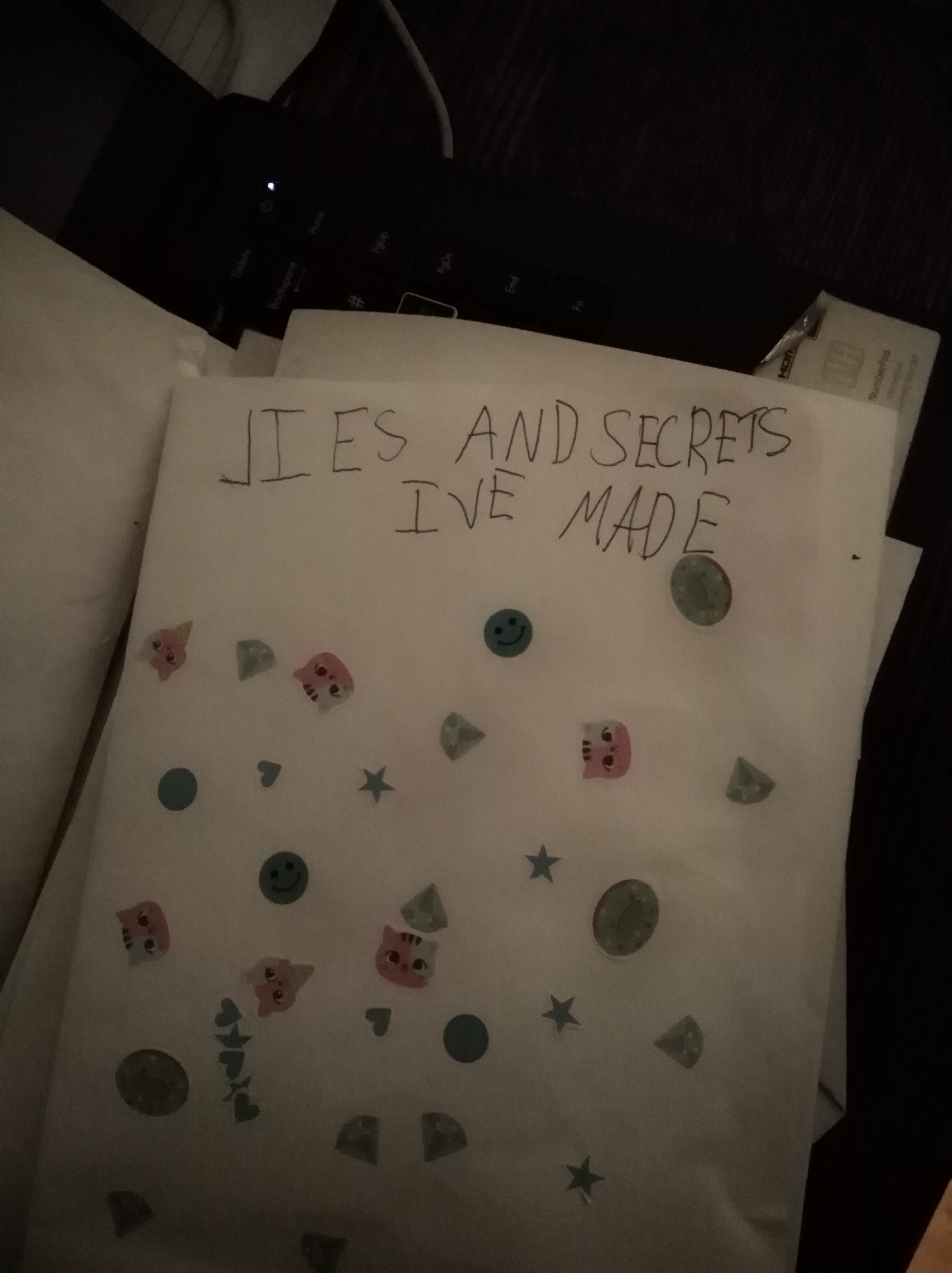
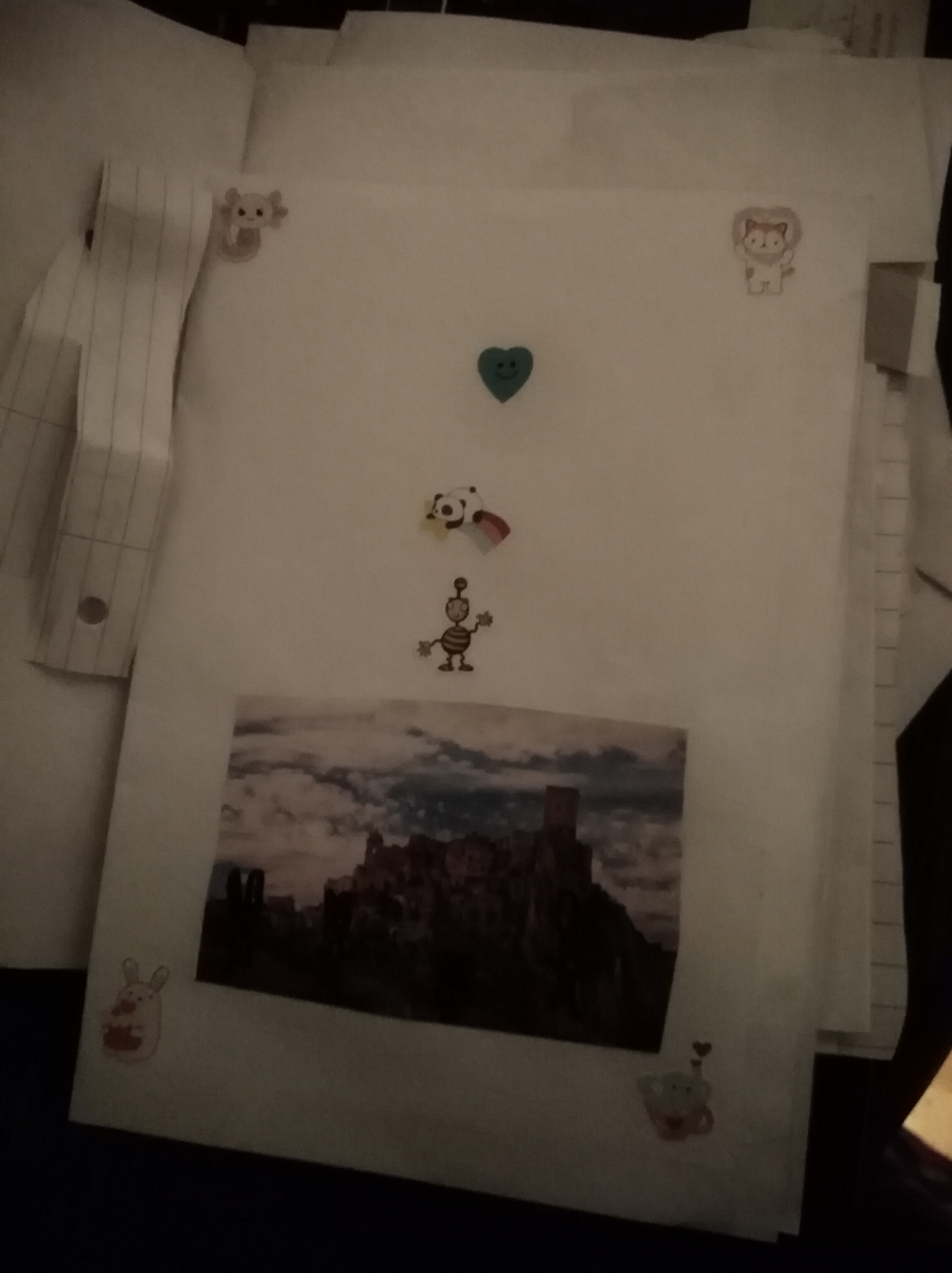
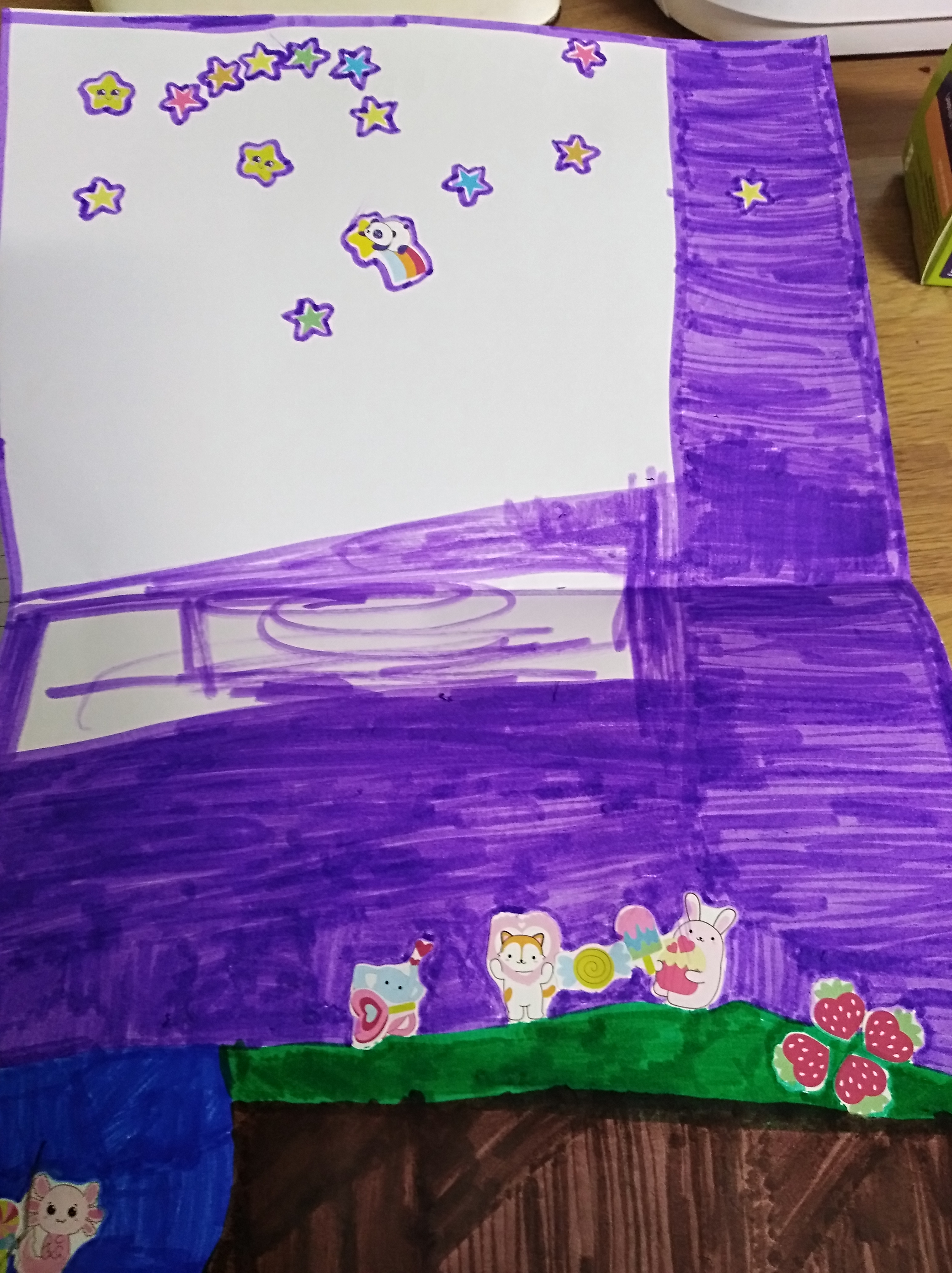
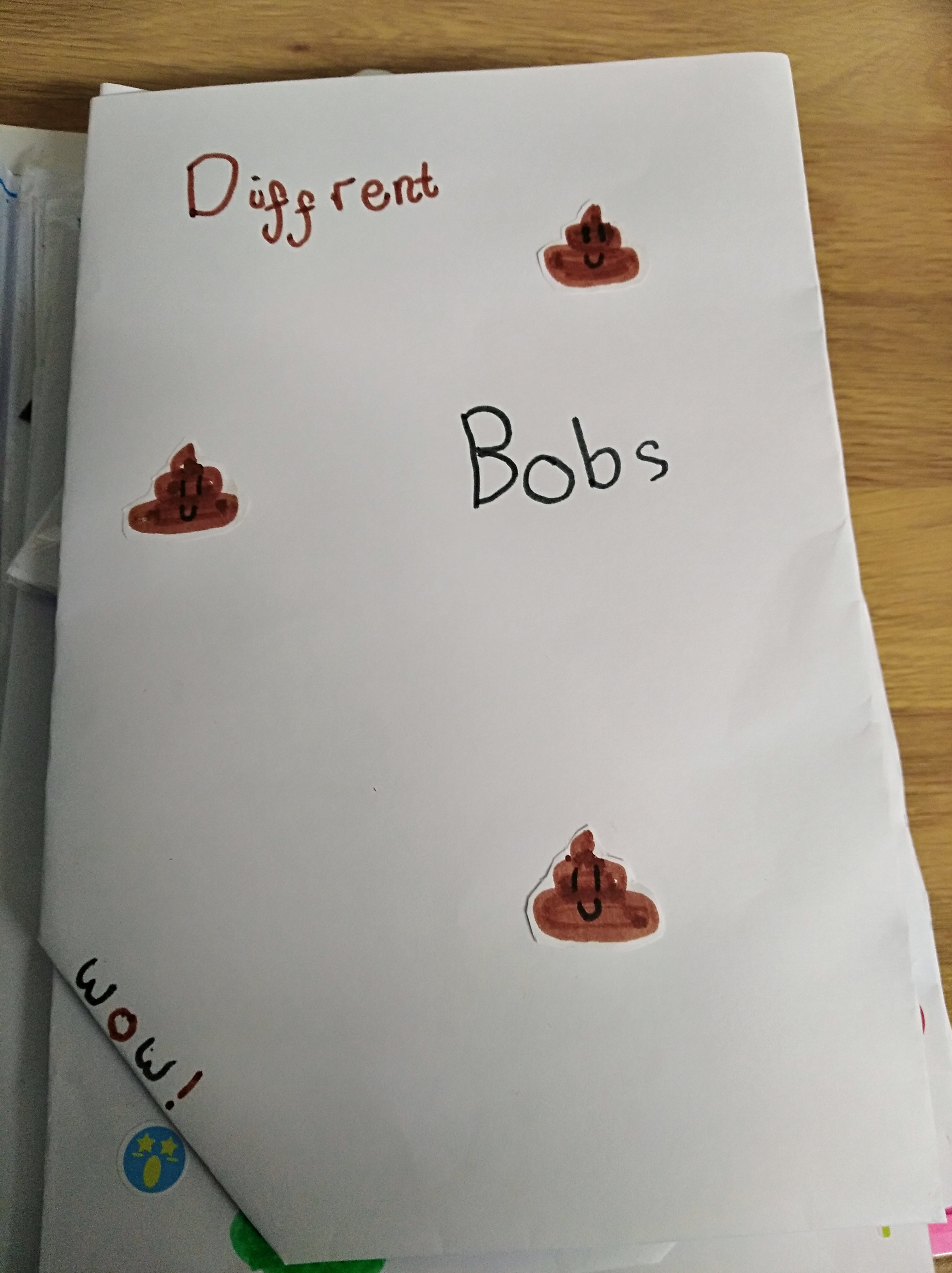
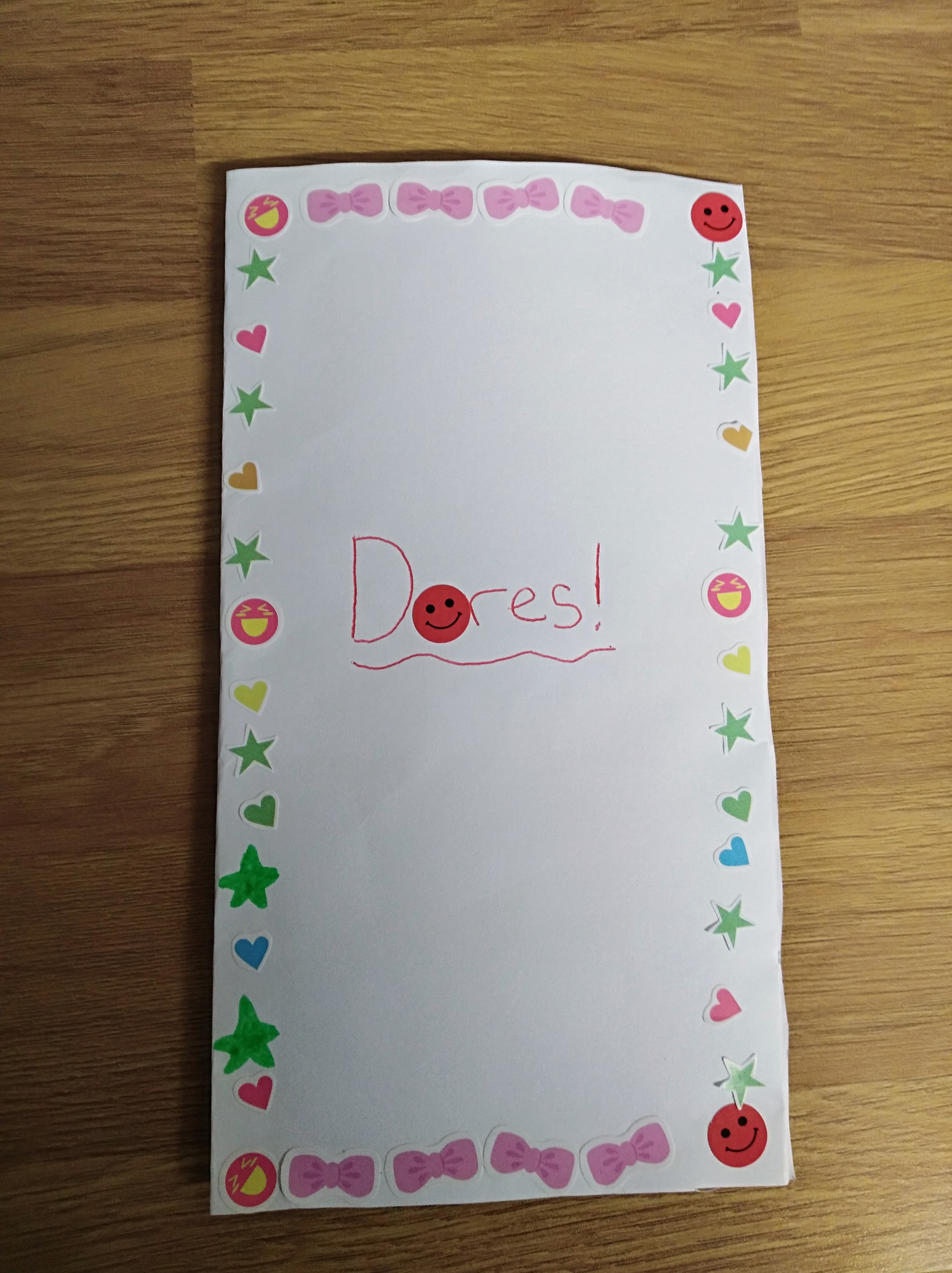
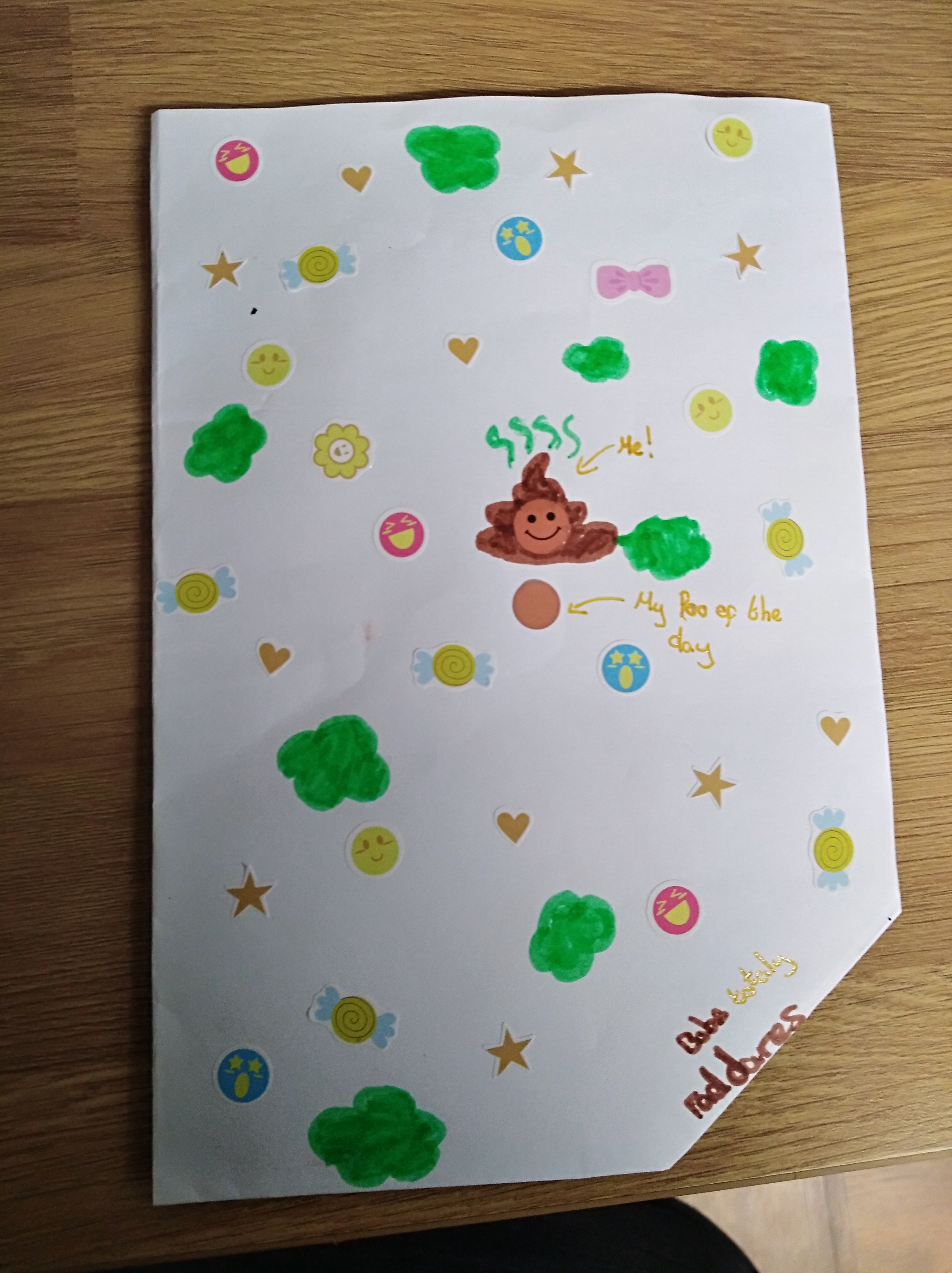
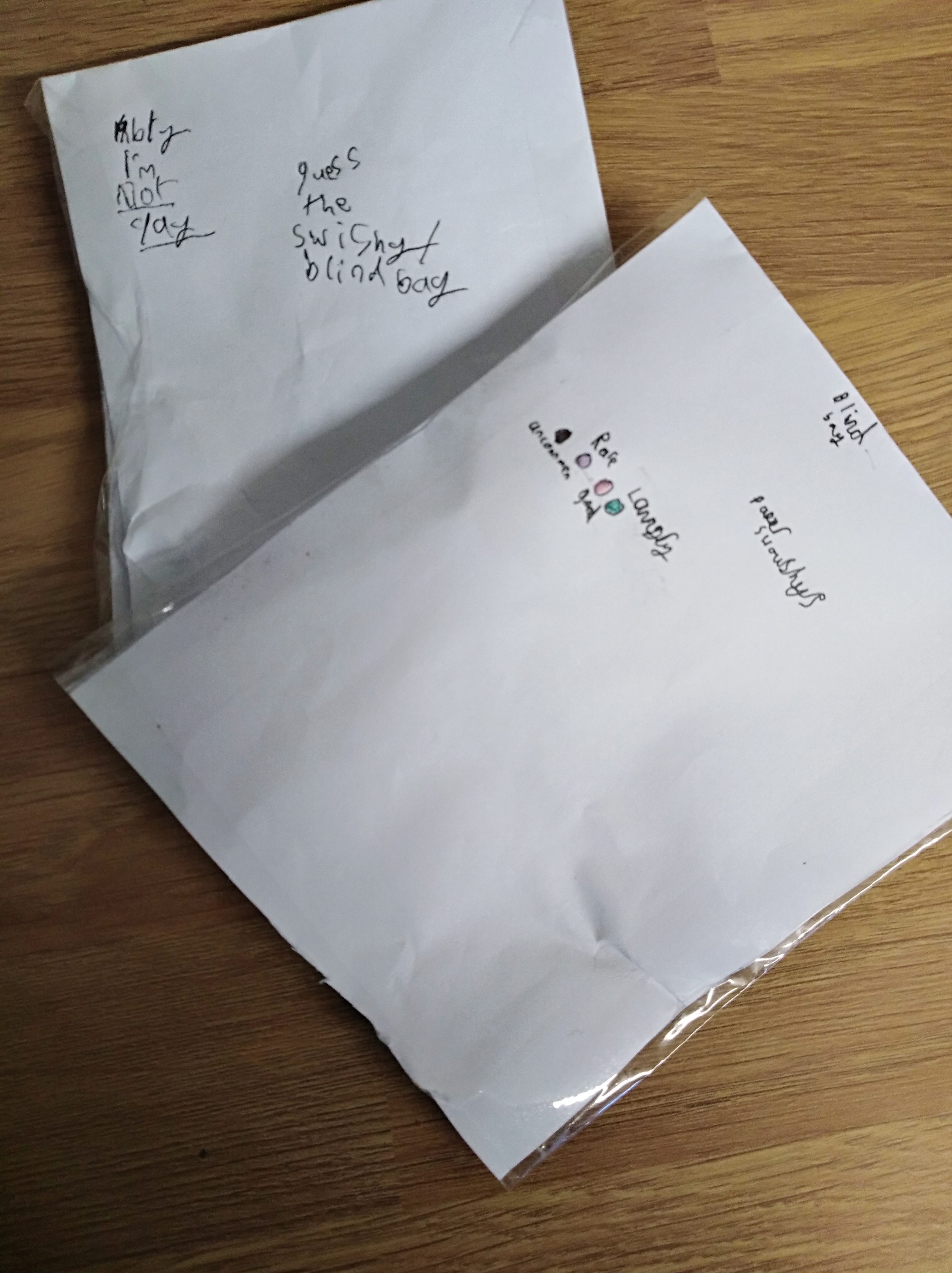
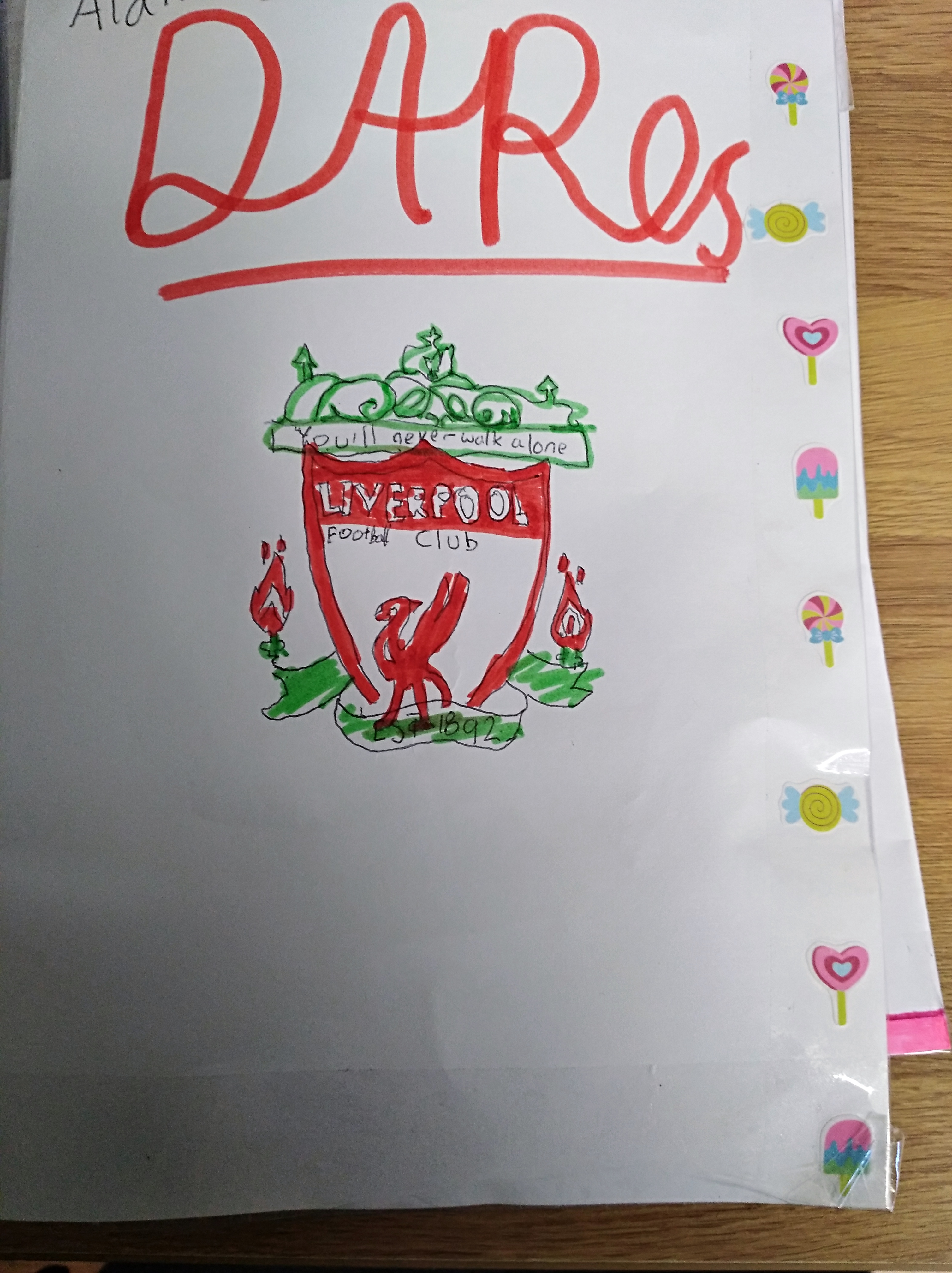
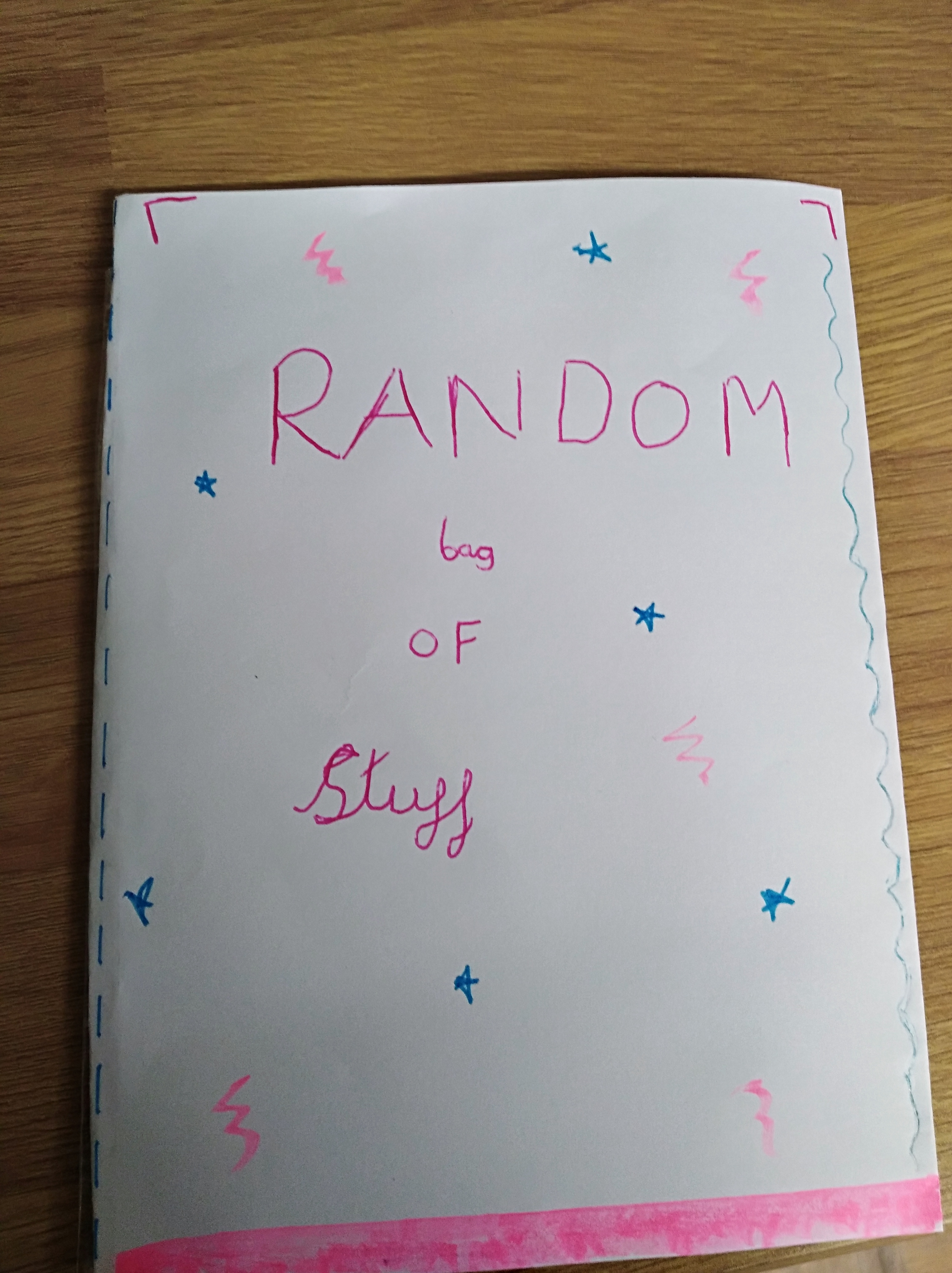
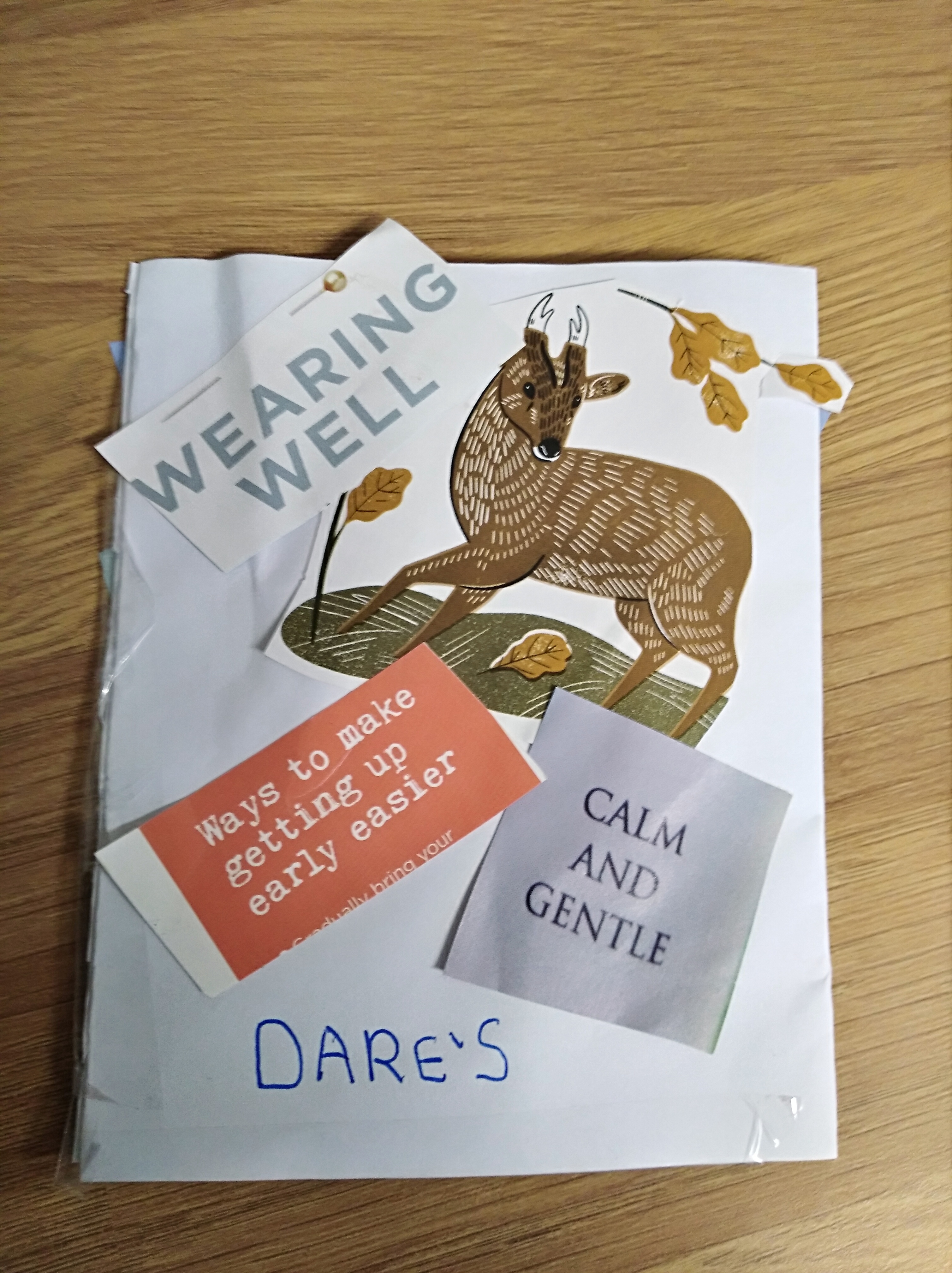
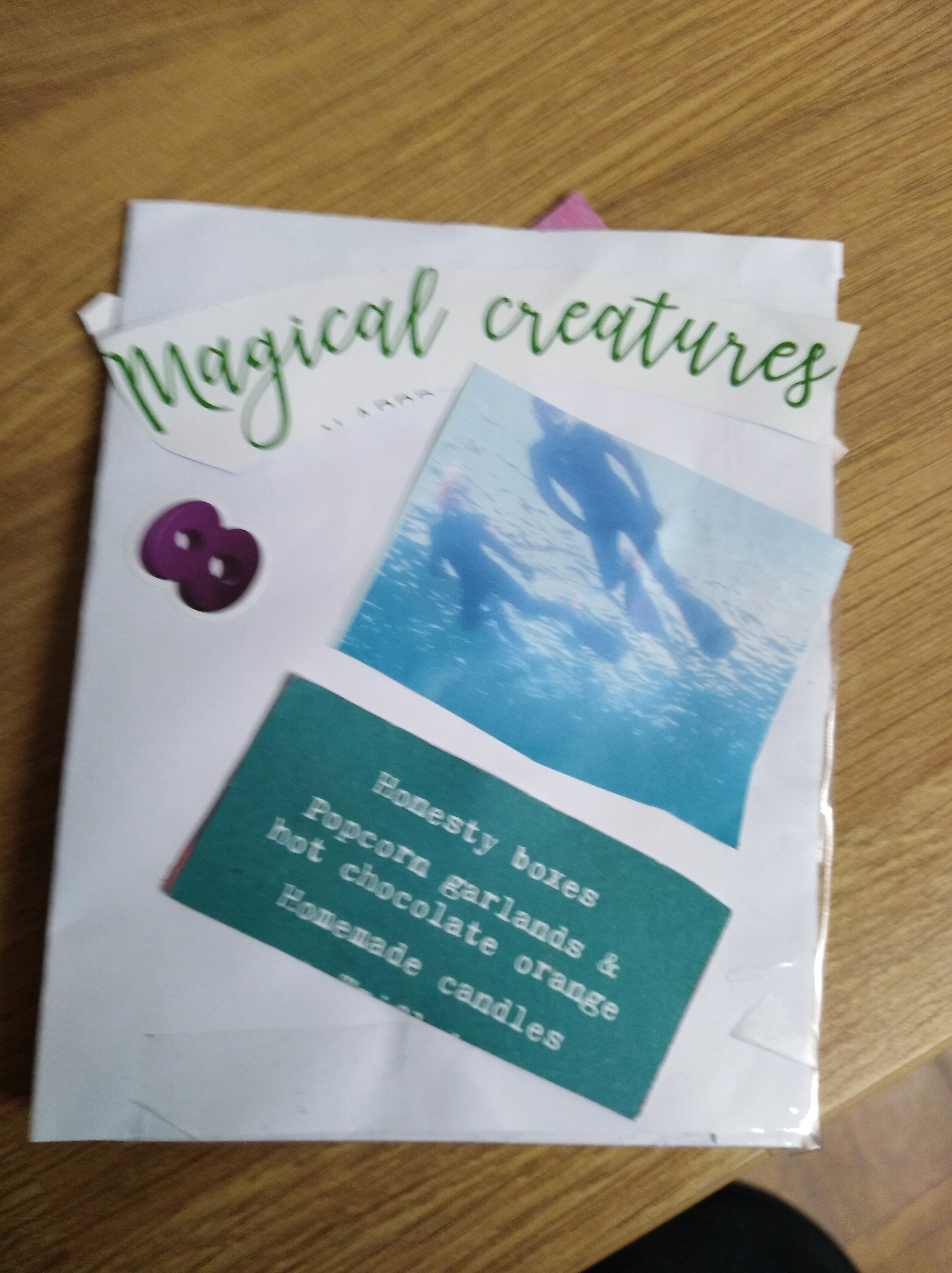
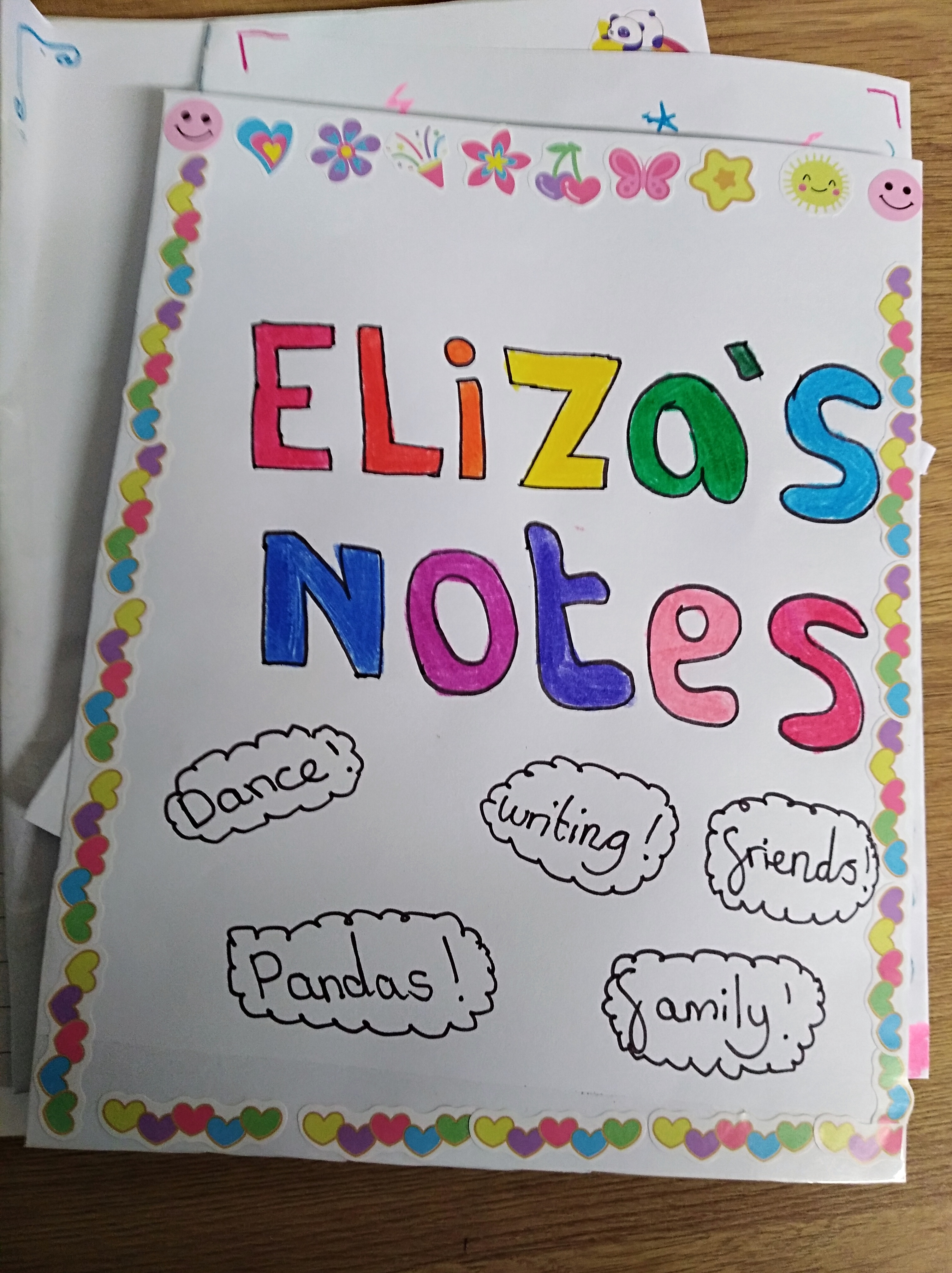
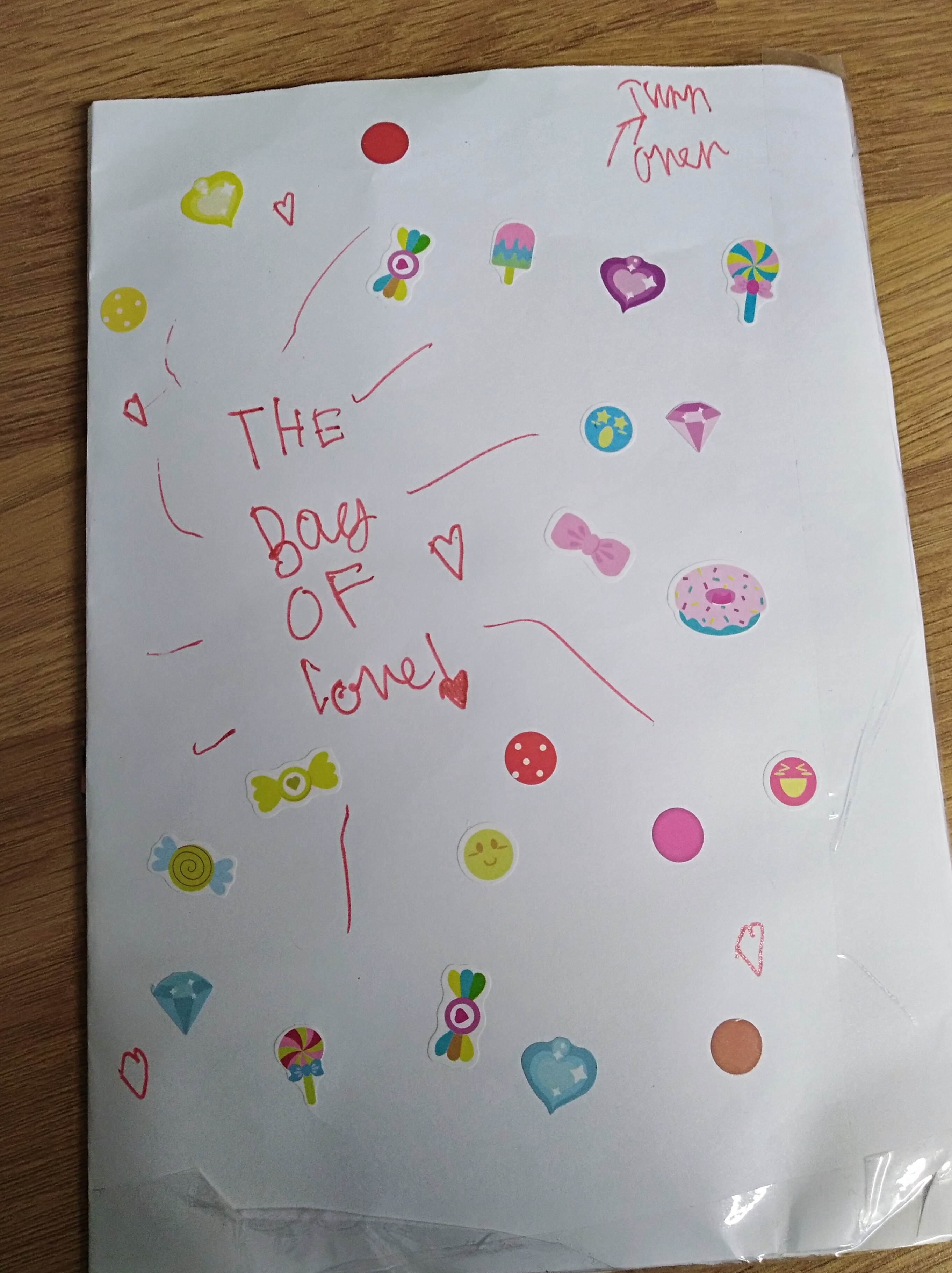
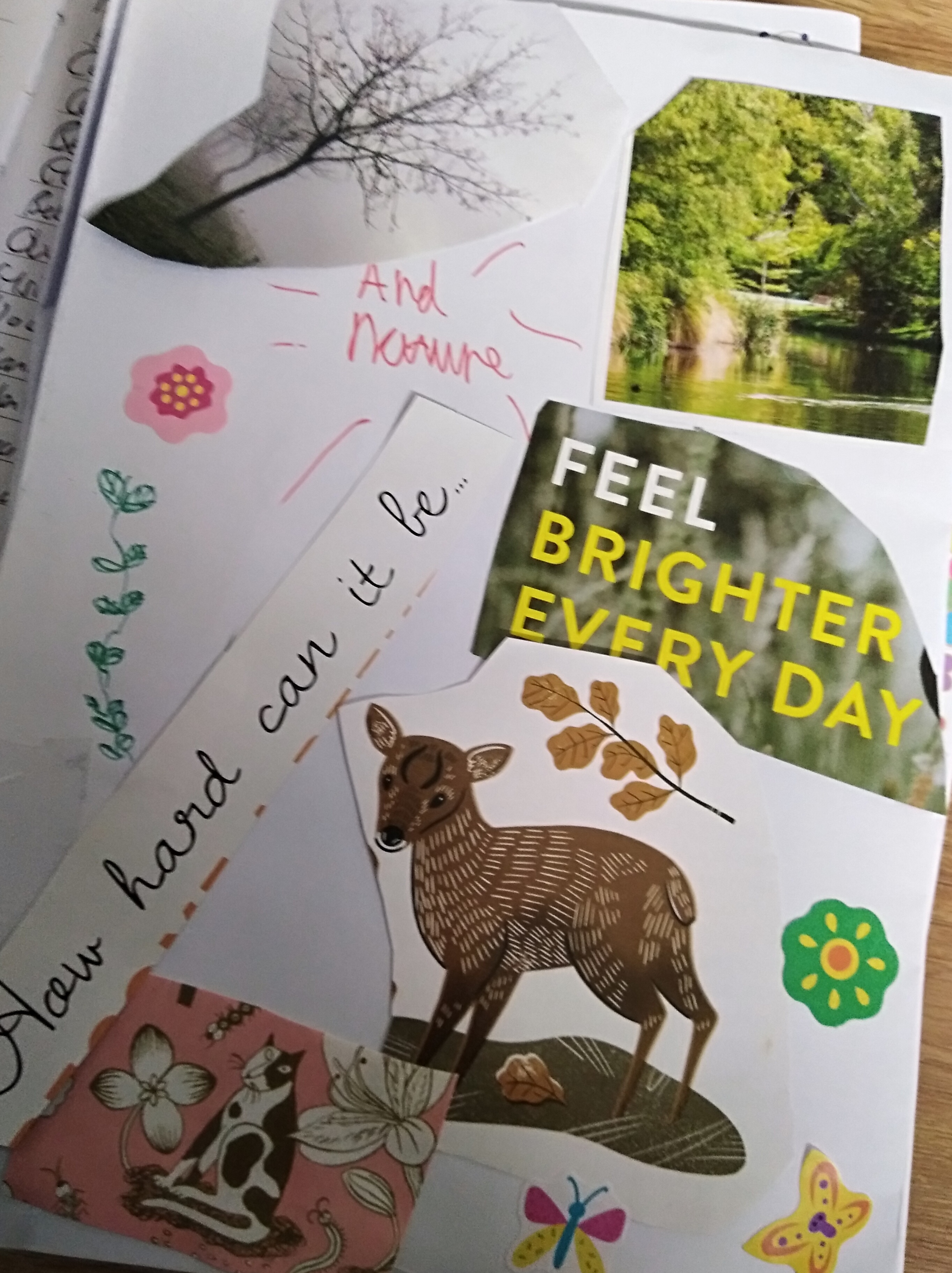
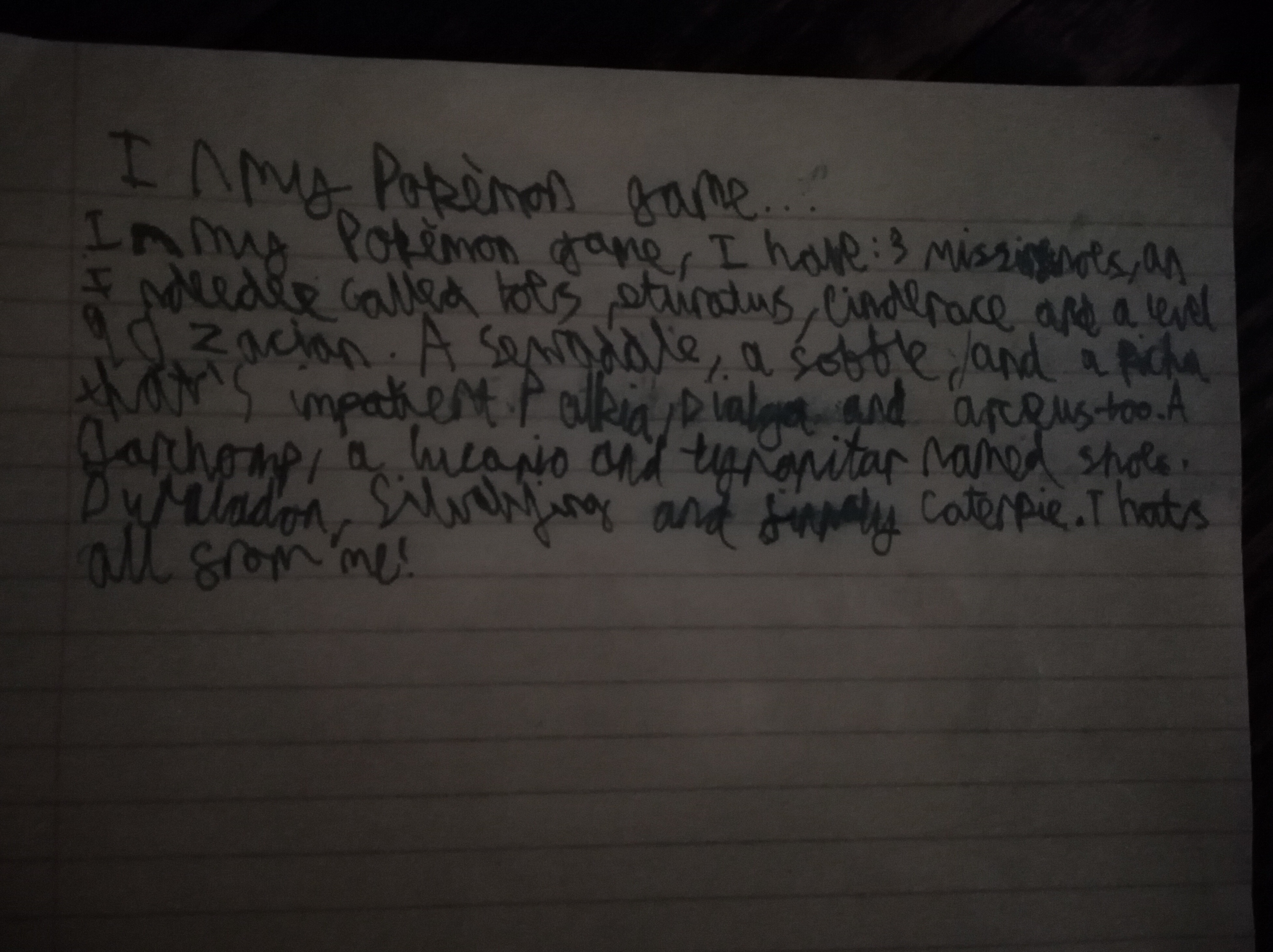
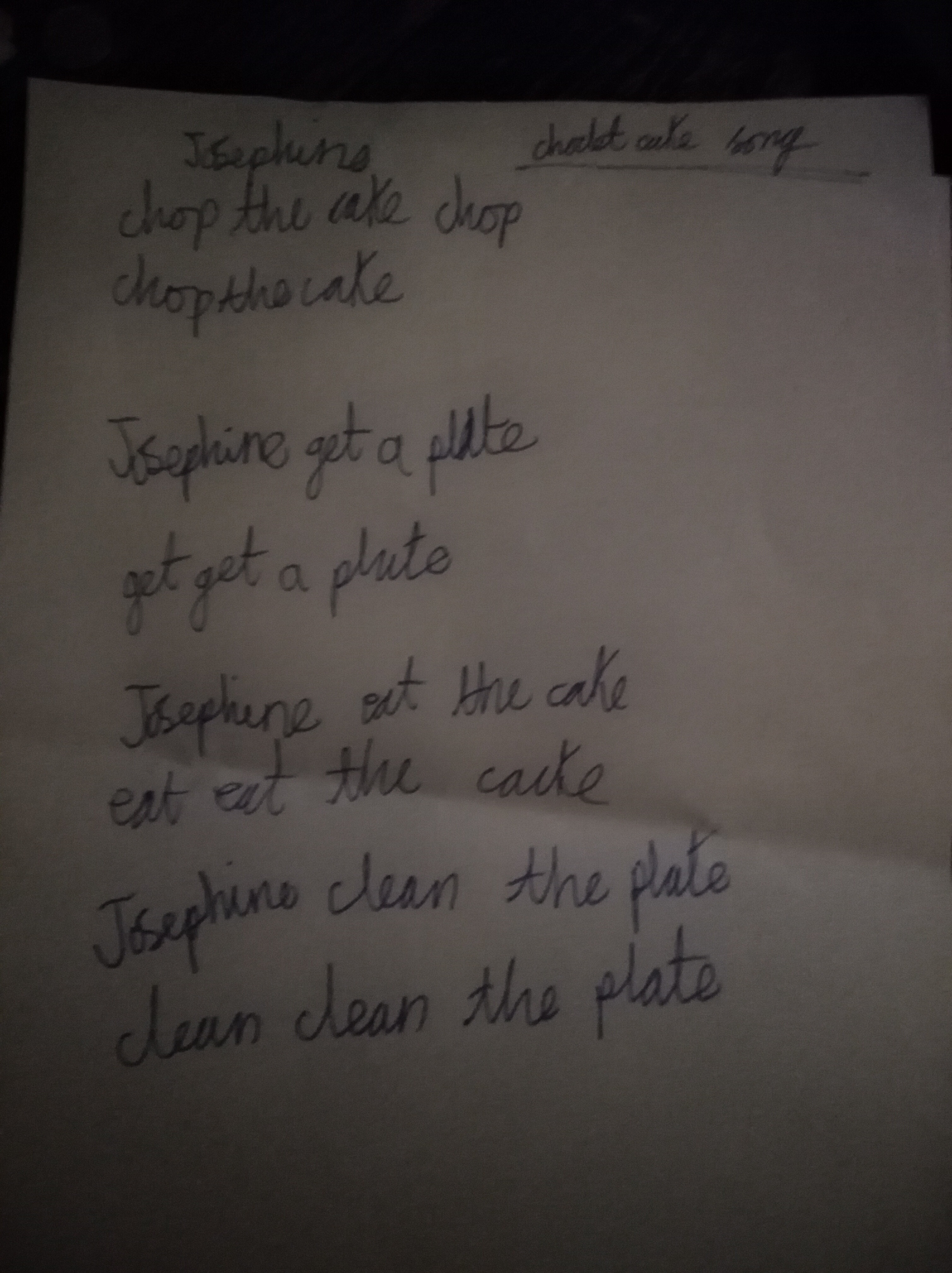
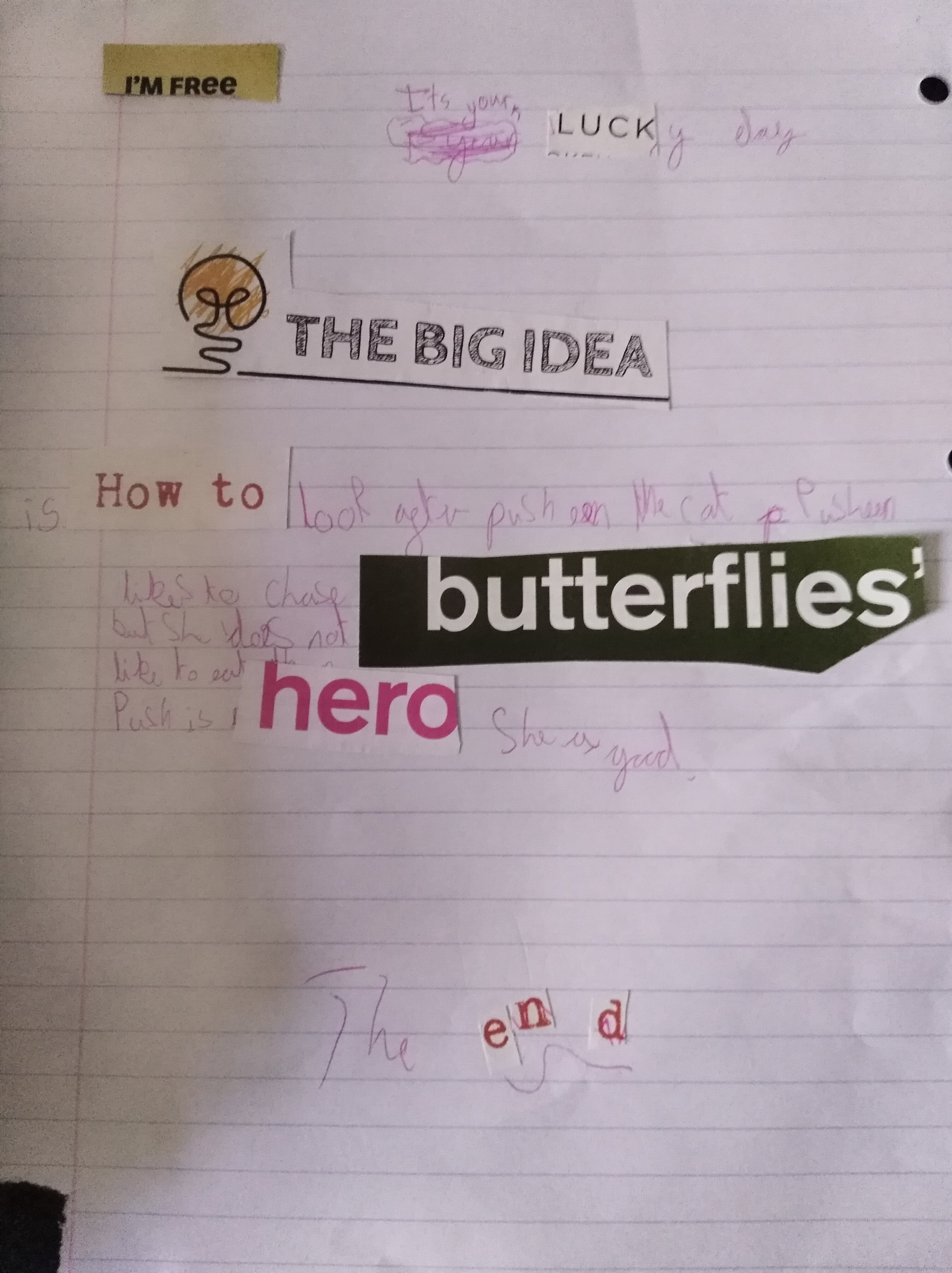
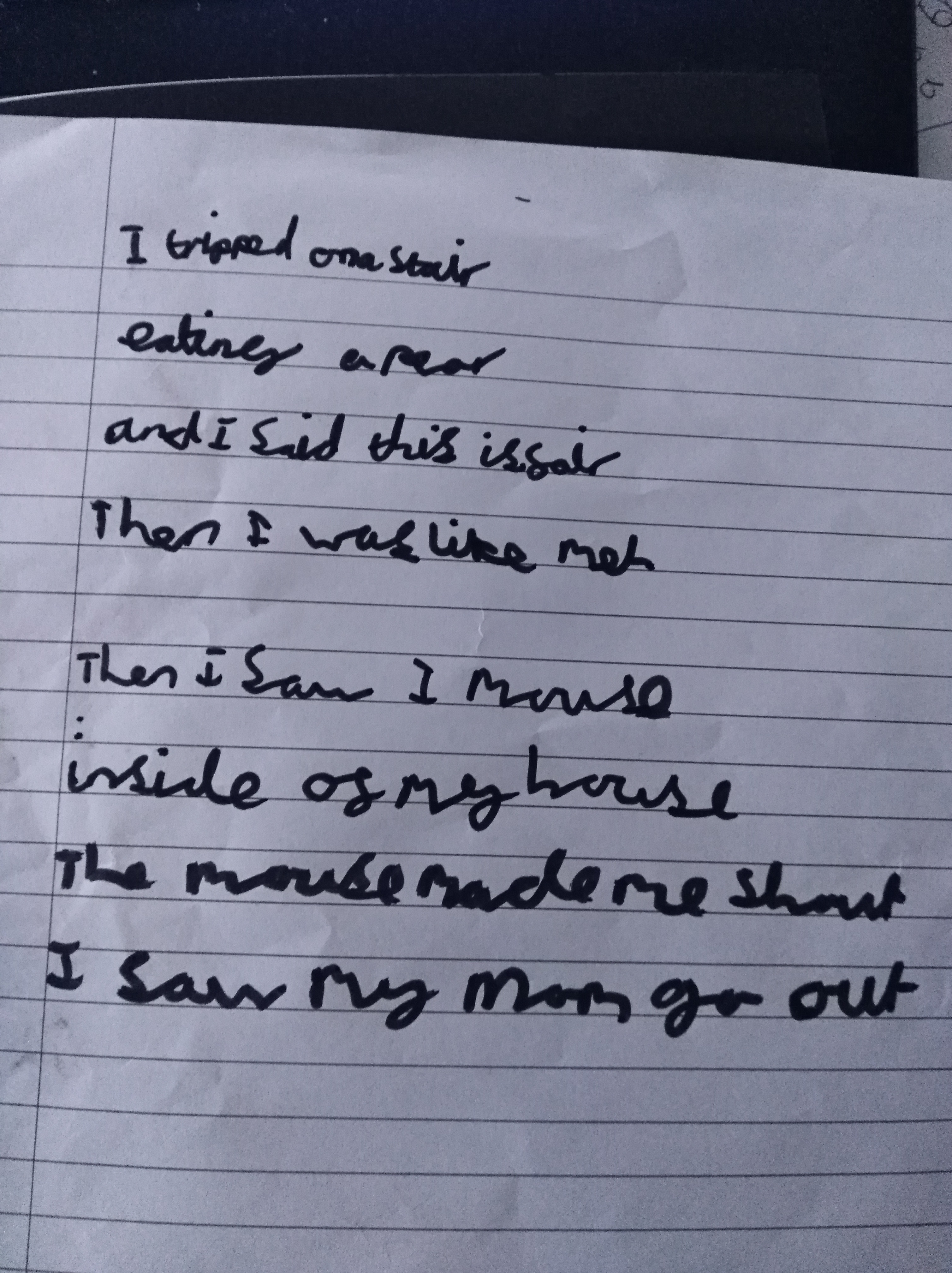
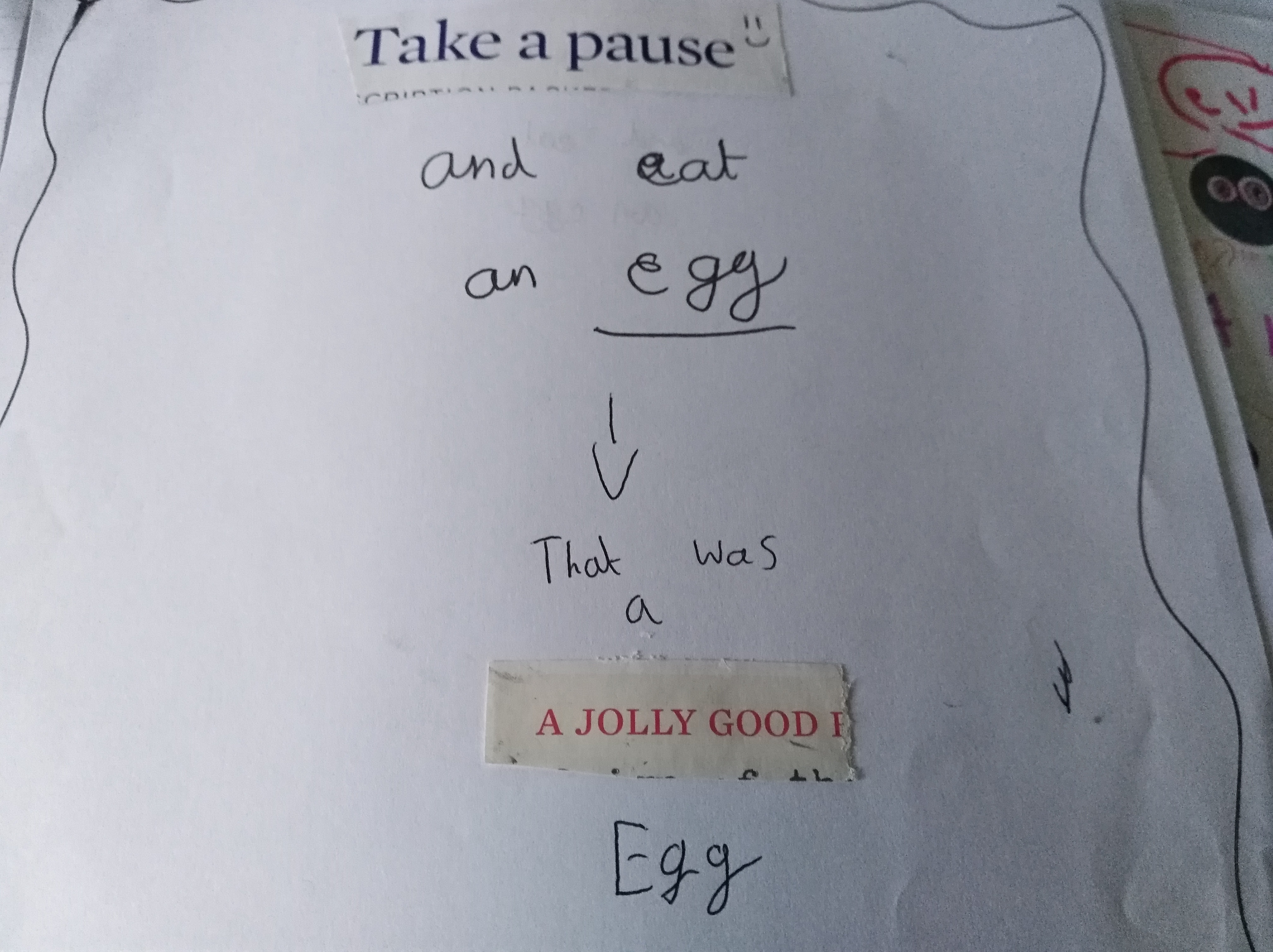
Monday CJS club: This session the children started making their junk journals. I brought in lots of recycled materials to aid their creativity, such as cardboard, coloured paper, old birthday cards, magazines and comics, stickers and more. They loved the washi tape which is basically tape that’s very decorative! The binder rings were a big hit too. Here are the Monday junk journals so far!
Tuesday
Tuesday 11 plus Zoom club: This group had the same epistolary technique prompts as the Monday club, and we had some wonderful responses including a chaotic family group chat and a band reliving some memorable moments during an interview!
Bransgore C of E Primary school club: More junk journal fun today! The journals have been created and decorated with various fun and recycled pages added! Here are some examples of their work.
Wednesday
Wednesday 11 plus Zoom club: This group also tackled the epistolary stories this time using letters, diaries, blog posts, emails and so on. We had some wonderful responses to the offered prompts including a wonderful mixed technique story which involved text communication between a mother and a son that built up a real sense of unease, then moved into a more traditional format to move the story forward! Excellent! We also had a very funny example of how parental group chats can descend into chaos! Well done everyone and thank you!
Wednesday 8-11 yr old Zoom club: The younger group also tackled the same topic and the same prompts and I keep reminding them that very often I am giving them the same work as the older groups and they are smashing it every time! They ought to be very proud of their attitude to learning new things. We had some wonderful pieces from this group too, including an argument via text messages and a news report that also involved some family members missing from a group chat. Brilliant stuff! Well done everyone.
Wednesday CJS Club: These guys were very excited to get started on their junk journals and like the other groups, particularly enjoyed the ring binders and the washi tape! I have been bowled over all week by the immense creativity the children have shown in creating their junk journals. No two are the same and each beautifully expresses the individuality and passions/hobbies etc of each child. We will be carrying on with our junk journals next week! Here are some examples from today.
What did we get up to this week? Different storytelling formats for Zoom clubs and junk journals for the school kids!
Welcome parents, carers and young writers. Every week I will post here what we have been up to in writing clubs. The clubs are categorised by day so if your child attends a Tuesday club, for example, simply scroll down to Tuesday to see what we covered this week!
Monday
Monday Zoom Club: It was lovely to be back together after a week off for half-term and we got stuck straight into a new topic. Different ways to tell stories! We all know about choosing a tense and a point of view, but what about other formats we can use to tell a story? Such as letters, diaries, blog posts, emails or news reports? We started with a chat about books we’ve read that fall under this category (epistolary stories…) and several members of the group enthusiastically talked about books they loved. I mentioned House of Leaves by Mark Z. Danielewski and a few people suggested Holly Jackson’s Good Girl’s Guide To Murder series. Both great examples! We started today with two options. One: pick a photo prompt and write the news story to go with it Two: write a news story to narrate a part of your own on-going story
We had some fantastic responses to this and everyone was happy to share, which was lovely. Well done everyone!
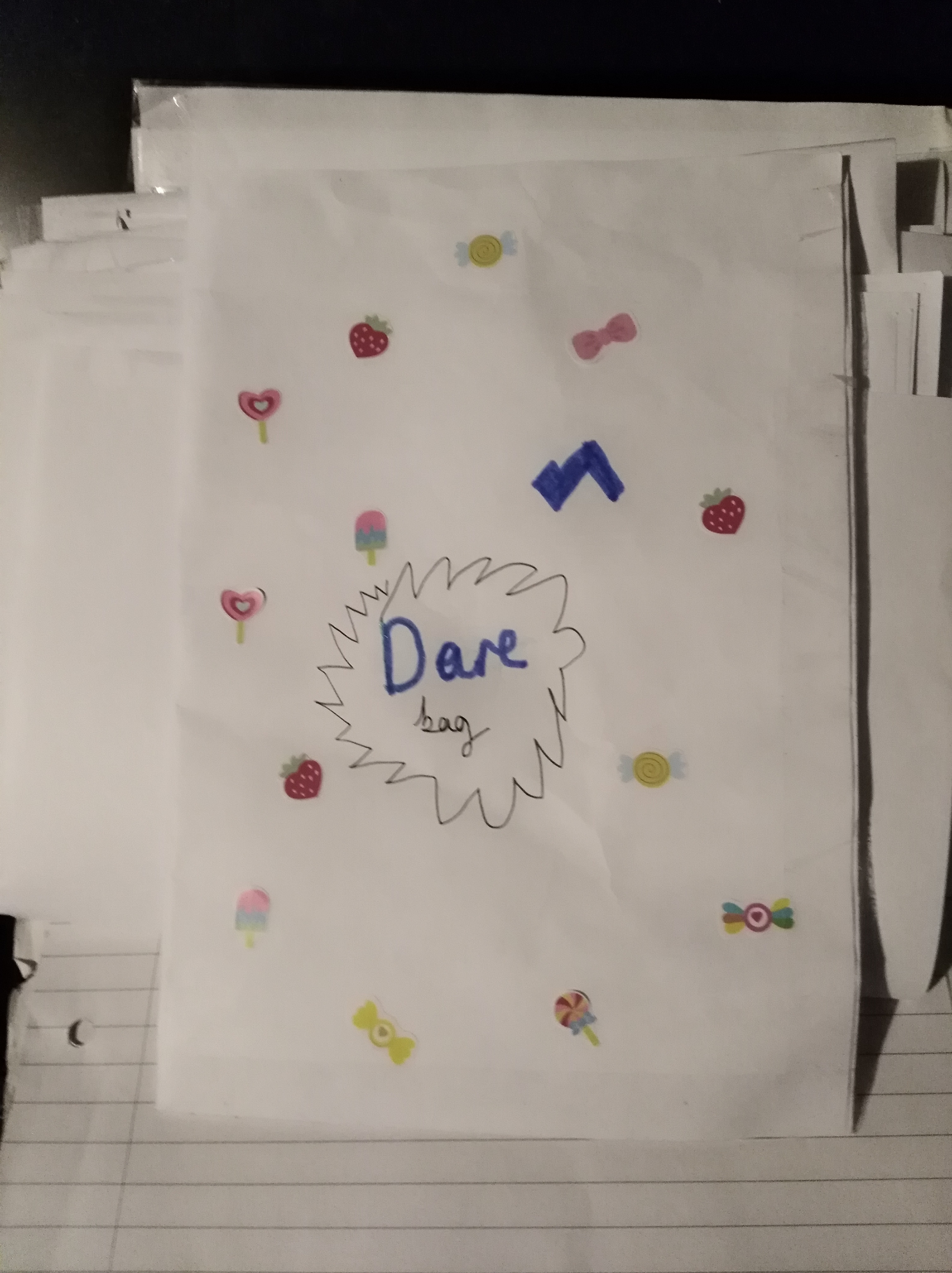
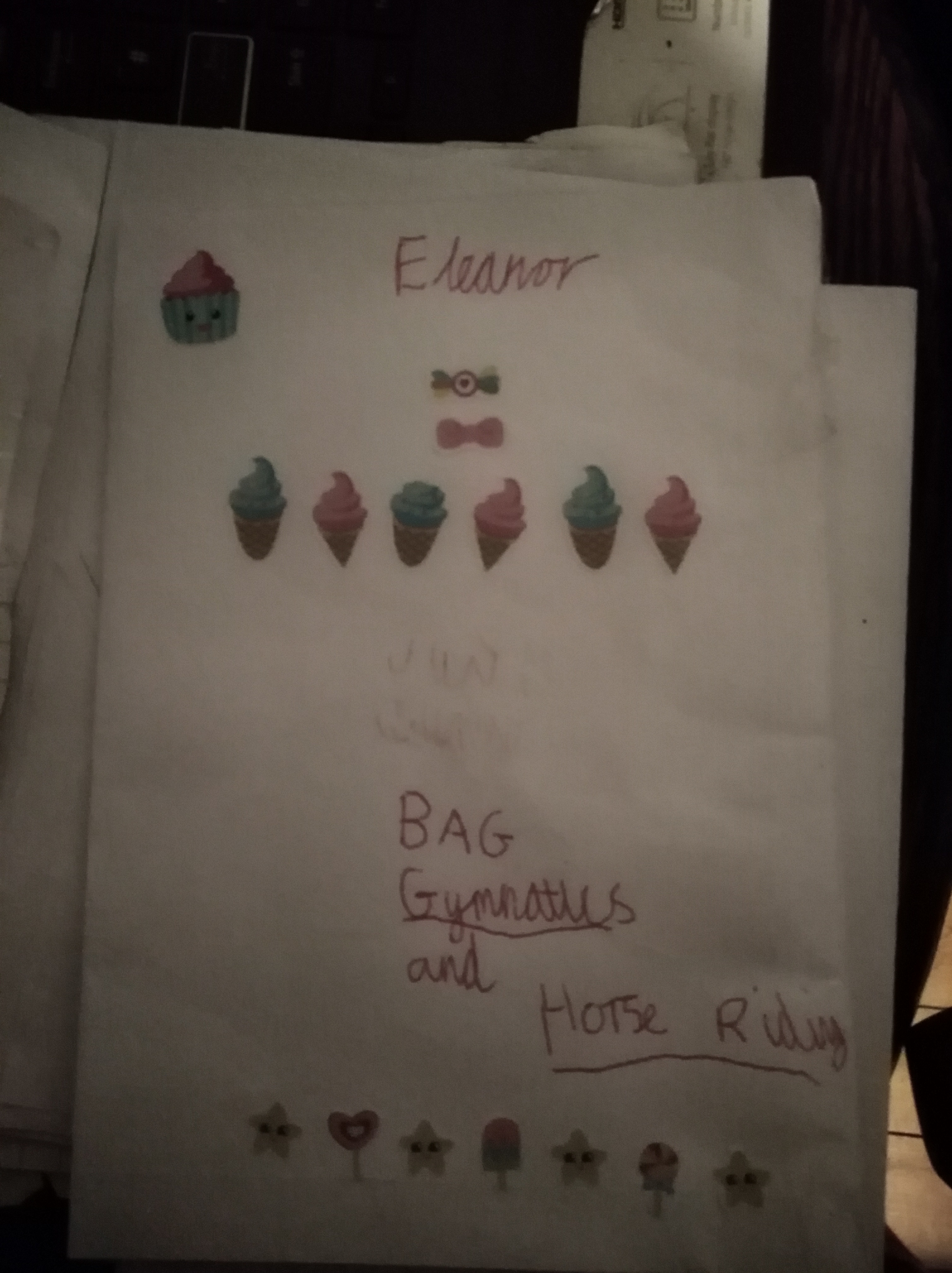
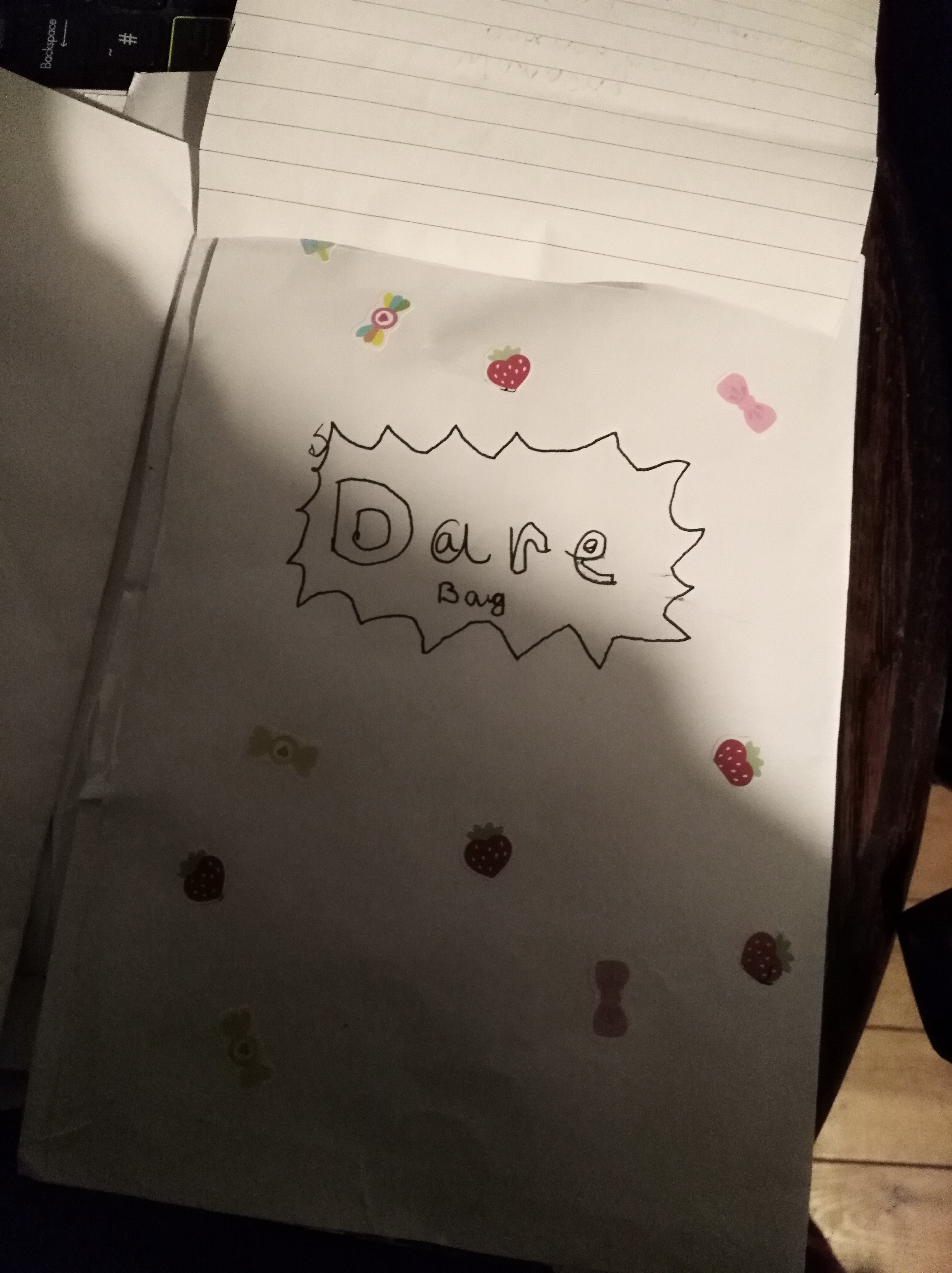
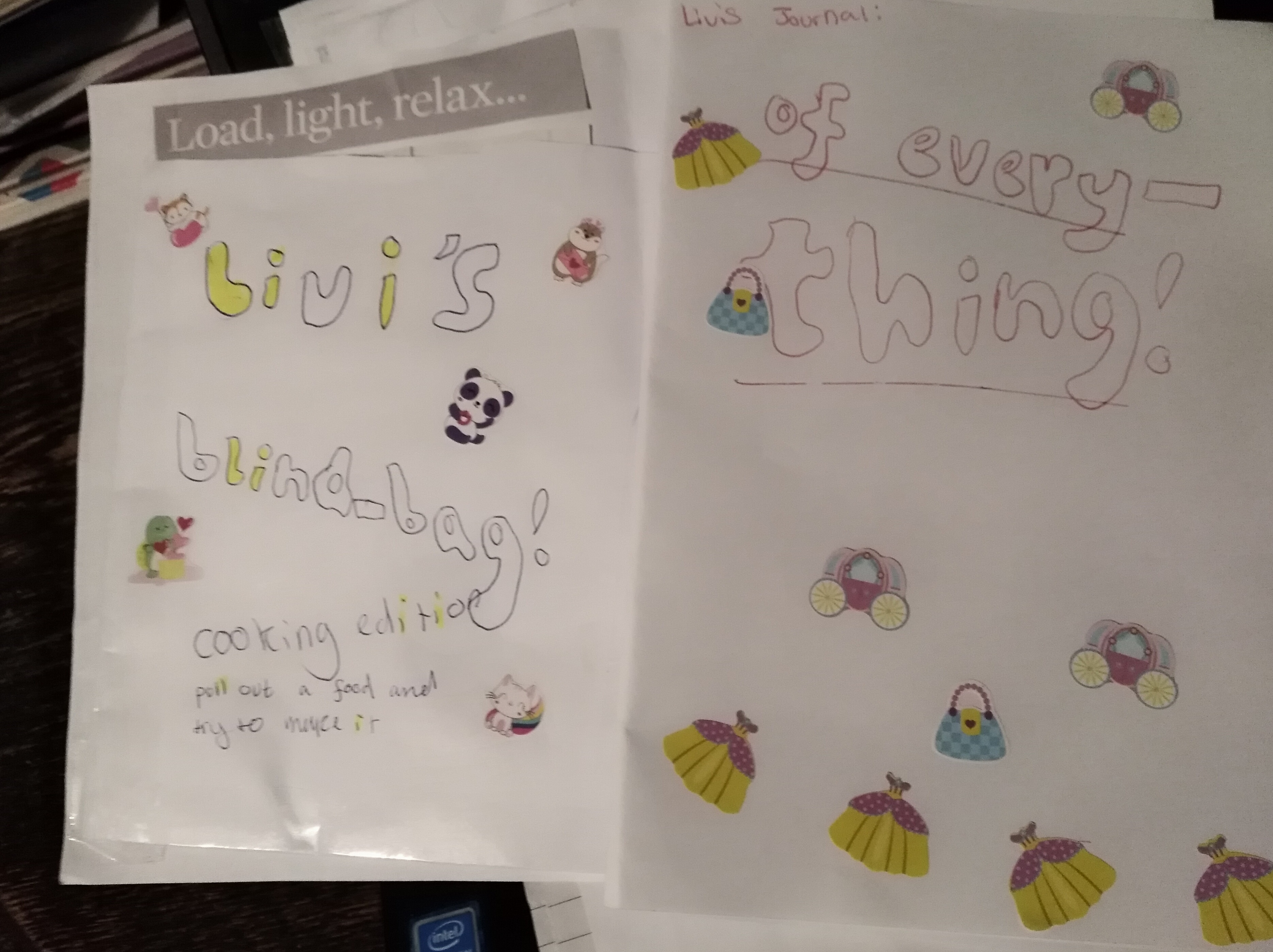
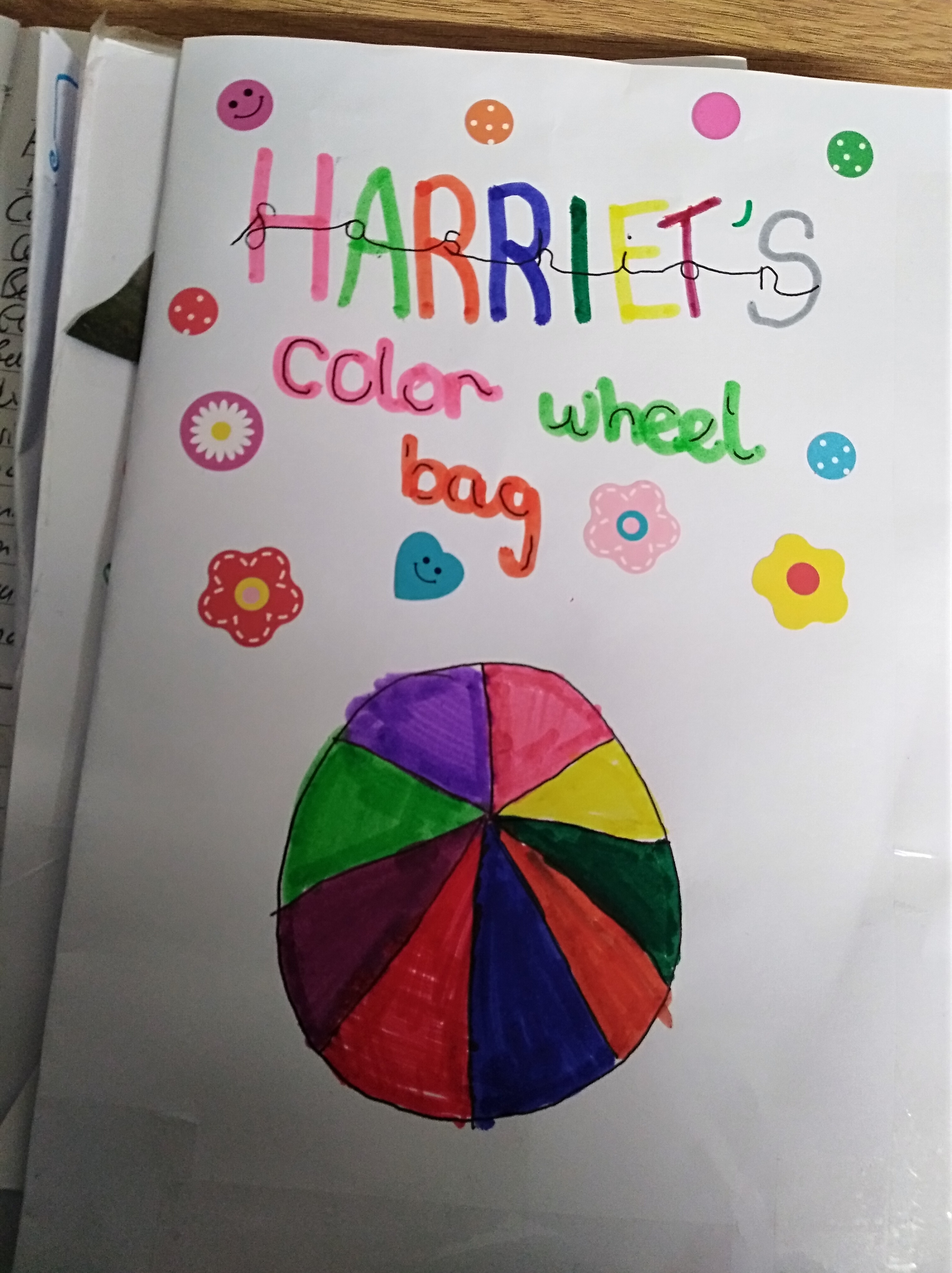
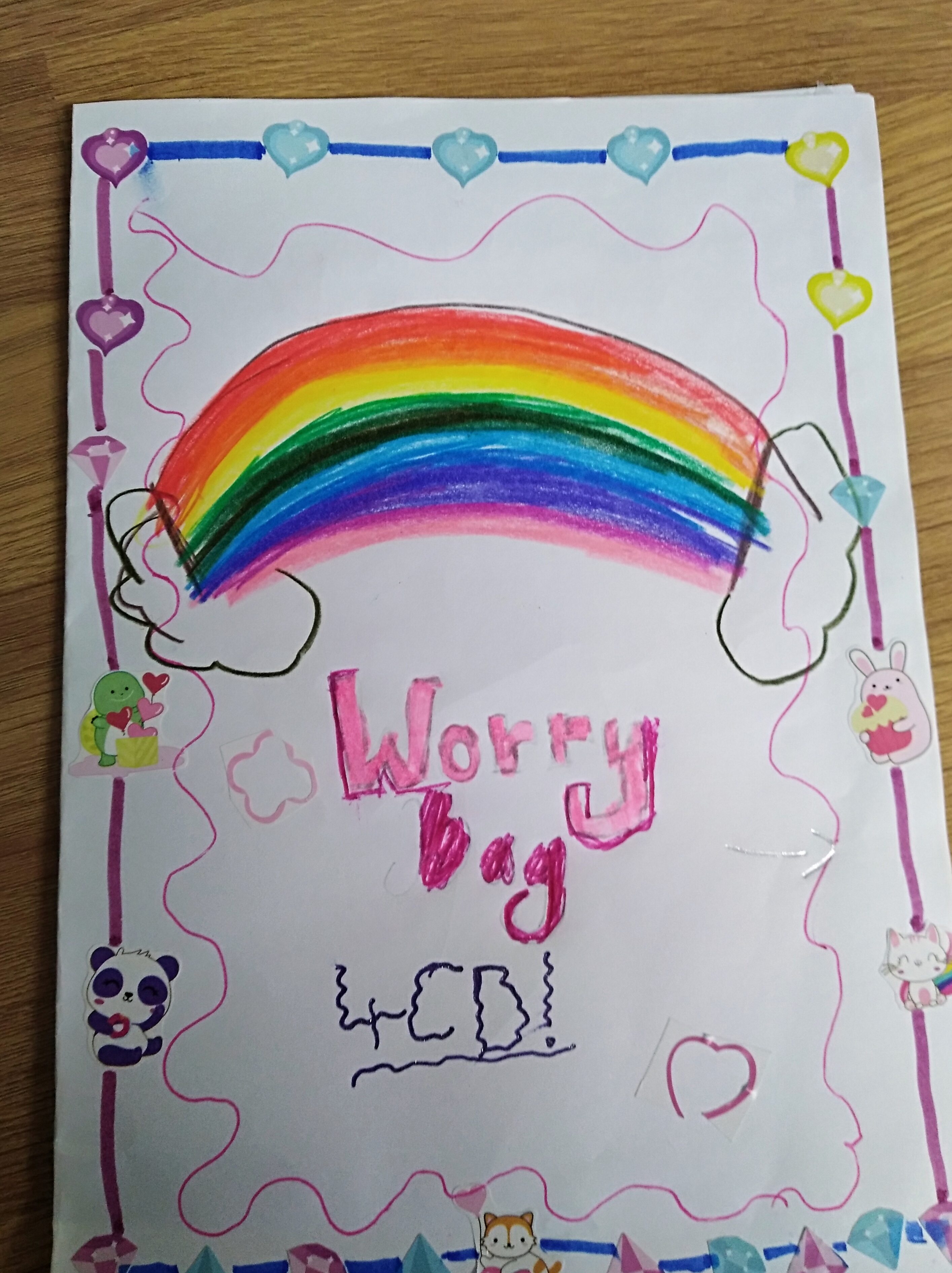
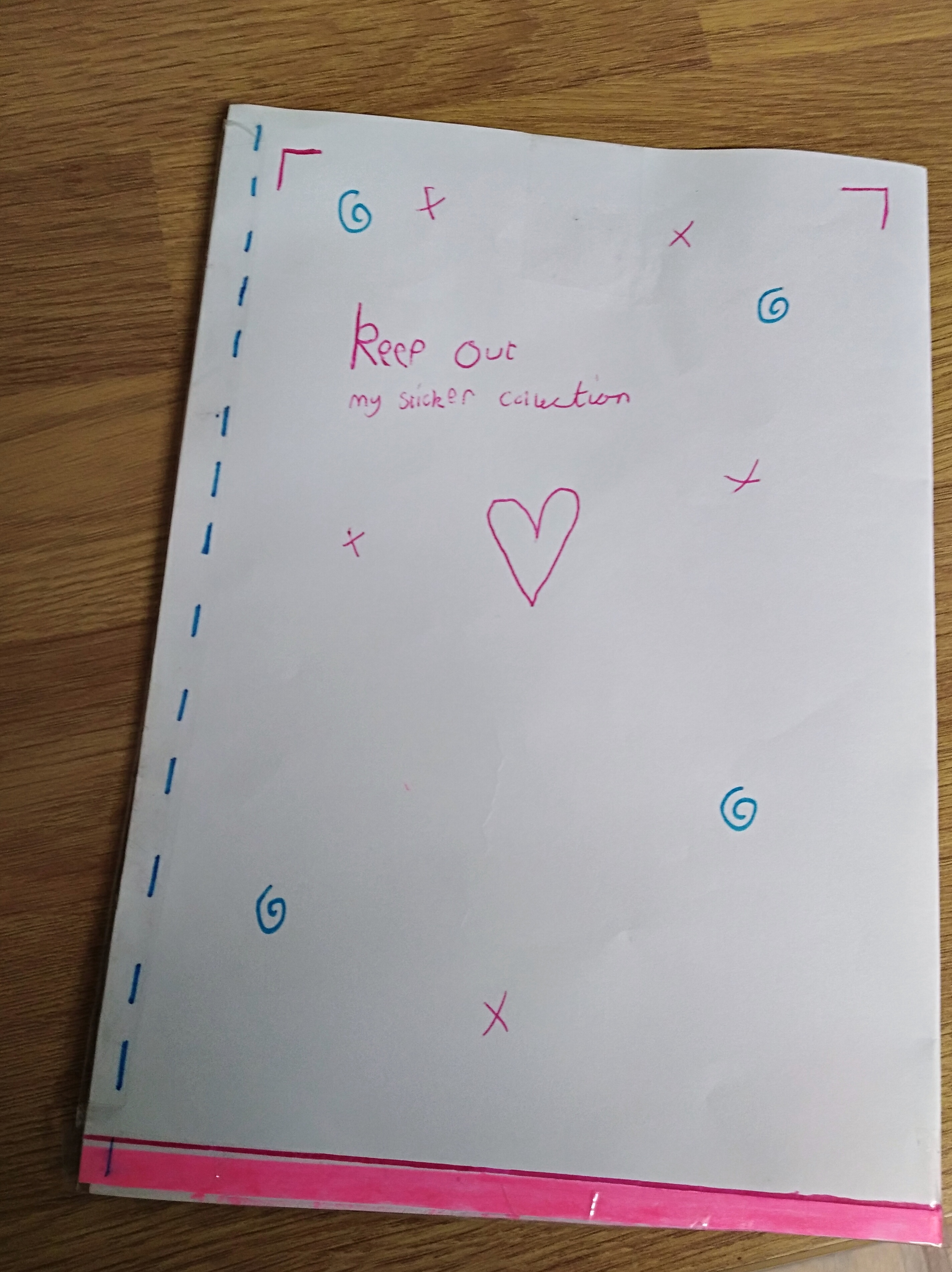
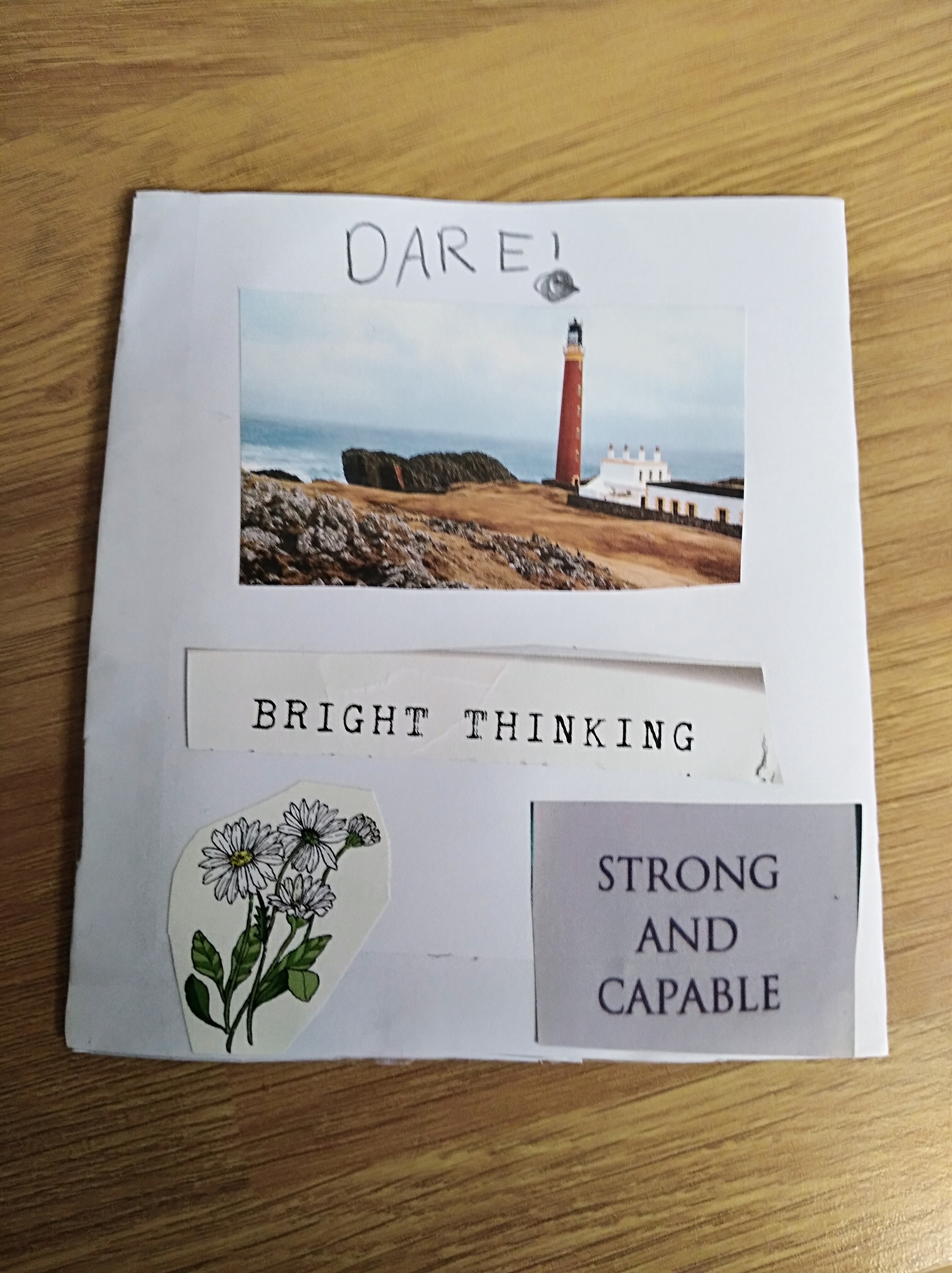
Monday CJS Club: For the next couple of weeks we are going to be making junk journals in school! We started by discussing the difference between a diary and a journal and talked about some journaling examples such as a nature journal, memory journal or travel journey. I explained that a junk journal is made from junk and recycled bits and bobs and can be anything they want it to be. We started today by first creating a ‘blind bag’ or ‘surprise bag’. This was partly to get them into a creative mood and get them thinking about possible themes for their journals. The surprise bags were a big hit and it was brilliant to see how differently they tackled them! You create a little envelope style ‘bag’ with a piece of paper and then decorate it however you like. As you can see from the examples below, they were very varied in design and purpose! Some children, for example, wanted to focus on nature, so as well as decorating the bag they also wrote tiny little poems and drew pictures to put inside. One child created a bag of games to play when bored! Another was designed as a ‘top secret’ bag full of secrets! Next week they will design their journal’s front and back cover and then can start adding fun pages over the next few weeks!
Tuesday
Tuesday 11 Plus Zoom club: A great session today with this group. A few of them chose to write a news report based on the picture prompts offered while another member of the group wanted to start a new story and decided to start the story with a newspaper report about a missing person. We have tackled article writing in the past and it was lovely to see them all remember things like an attention grabbing headline followed by a sub-title or lead, followed by the story itself. Fantastic!
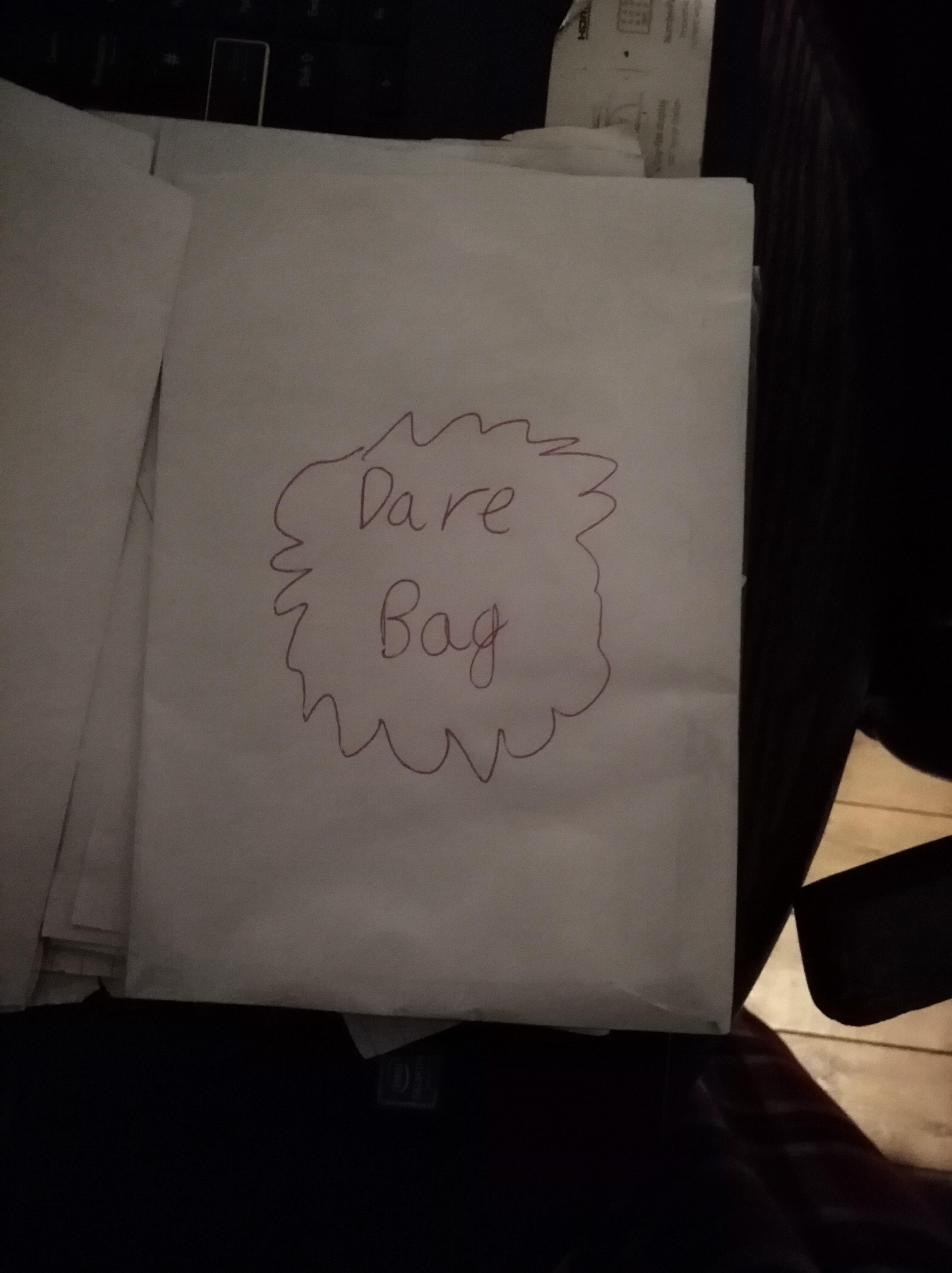
Bransgore C of E School club: These guys were thrilled by the idea of making junk journals and jumped straight into making surprise bags first. We had a really varied selection of bags, including jokes, ideas, writing prompts and even dares! They also helped me put some finishing touches to my own junk journal which I plan to put writing prompts and ideas in, plus the little notes and drawings I often get given! Here are some examples of their surprise bags today.
Wednesday
Wednesday 11 Plus Zoom Club: The older Wednesday group got stuck into news report style stories today, using a selection of picture prompts to inspire ideas. We also discussed epistolary stories and what they involve, giving examples such as Holly Jackson’s Good Girl’s Guide To Murder series, House of Leaves by Mark Z Danielewski and more. We had some wonderful examples from everyone with some very enticing news stories relayed!
Wednesday 8-11 Zoom Club: For some of this group it was their first time discussing epistolary stories and learning how to craft a news report. We shared some top tips, such as creating an eye-catching headline and using clear and concise language. They all did so well! Most chose to use the picture prompts to help them craft a story and one child decided to use her own toys to create exciting news stories from! Well done everyone!
Wednesday CJS Club: These guys were excited to create and decorate their surprise or ‘blind’ bags in preparation for creating junk journals over the next few weeks. Lots of them already knew what a junk journal was and they all fantastic ideas for their bags today, such as dare bags, worry bags, bag to keep stickers in and kindness bags! Here are some examples.
What did we get up to this week? Pacing and imagery for Zoom, poetry for schools!
Welcome parents, carers and young writers. Every week I will post here what we have been up to in writing clubs. The clubs are categorised by day so if your child attends a Tuesday club, for example, simply scroll down to Tuesday to see what we covered this week!
Monday
Monday Zoom Club: Today they had a choice of discussing pacing or imagery. They could choose between the topics or work on both if they had time. We discussed what pacing is and had examples of how to increase pacing to fast or slow within a story or within a scene. We then had four activities to choose from to practice writing fast or slow paced scenes. Or if they chose imagery, we also briefly reminded ourselves what imagery is and gave some examples and they had four options to choose from for responding. Well done to everyone – we had some wonderful sharing of fast and slow paced writing, which was lovely to analyse and also helpful to anyone unsure. We also had some great responses to the imagery topic, with more writing being shared from that!
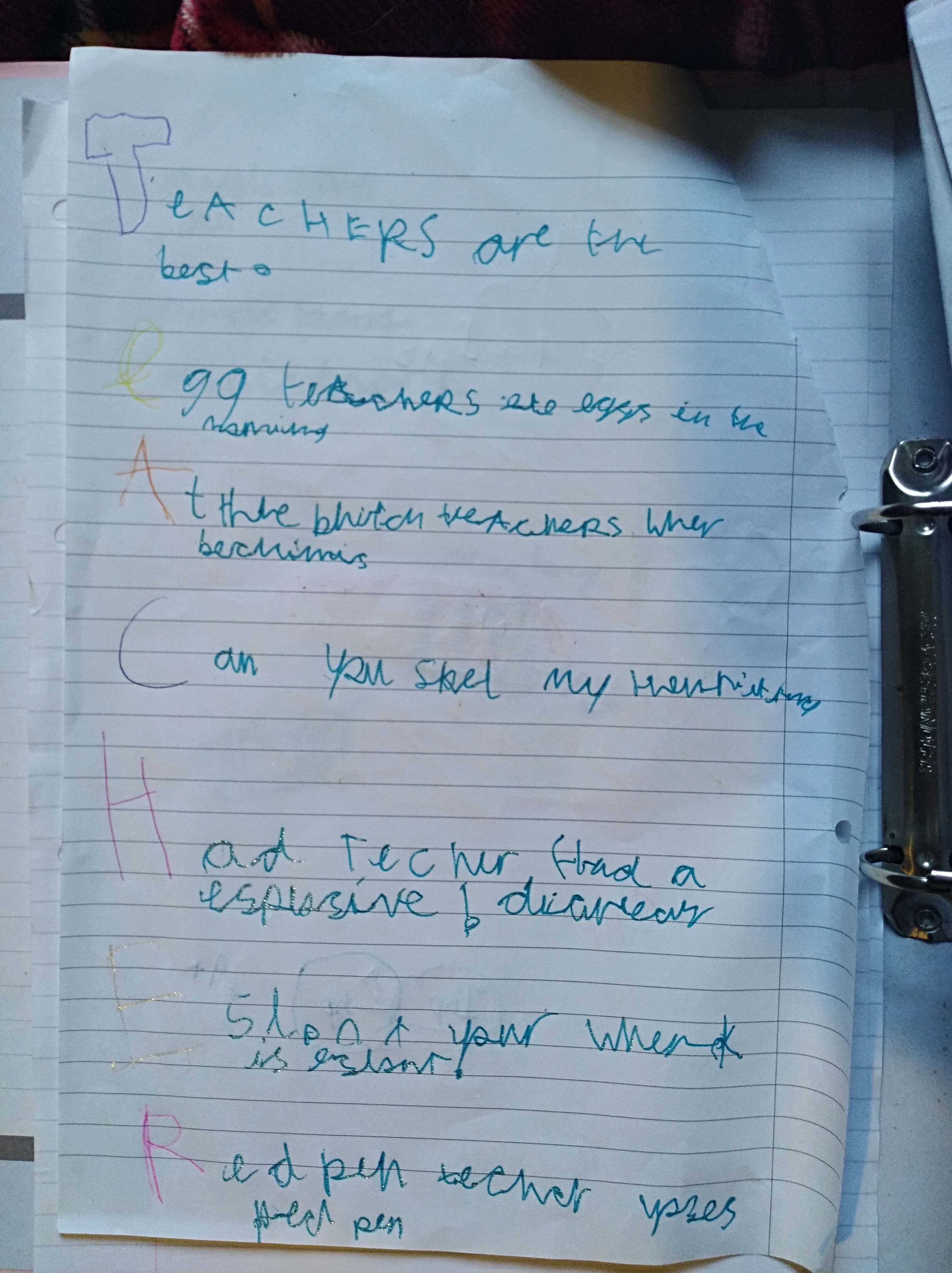
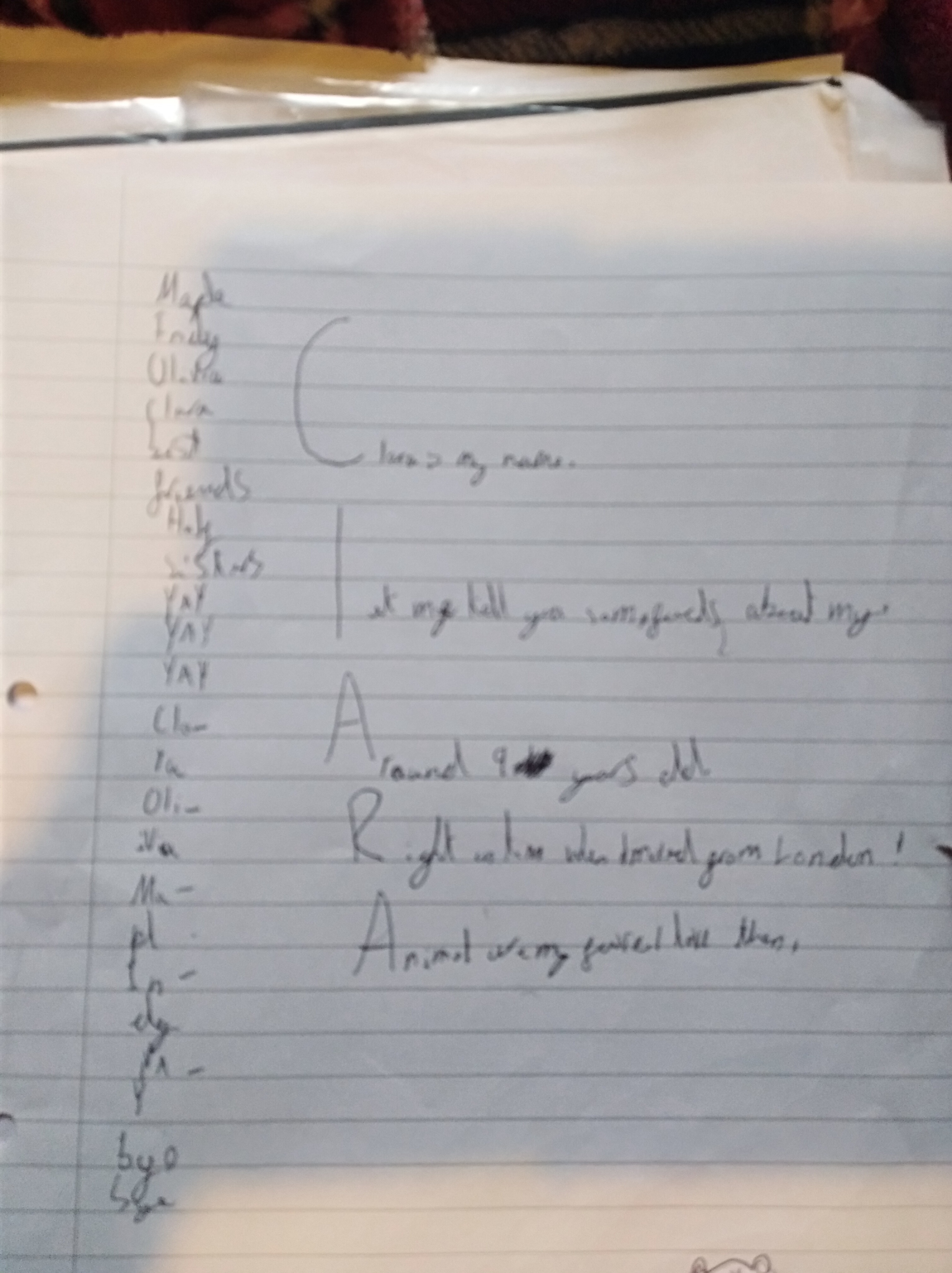
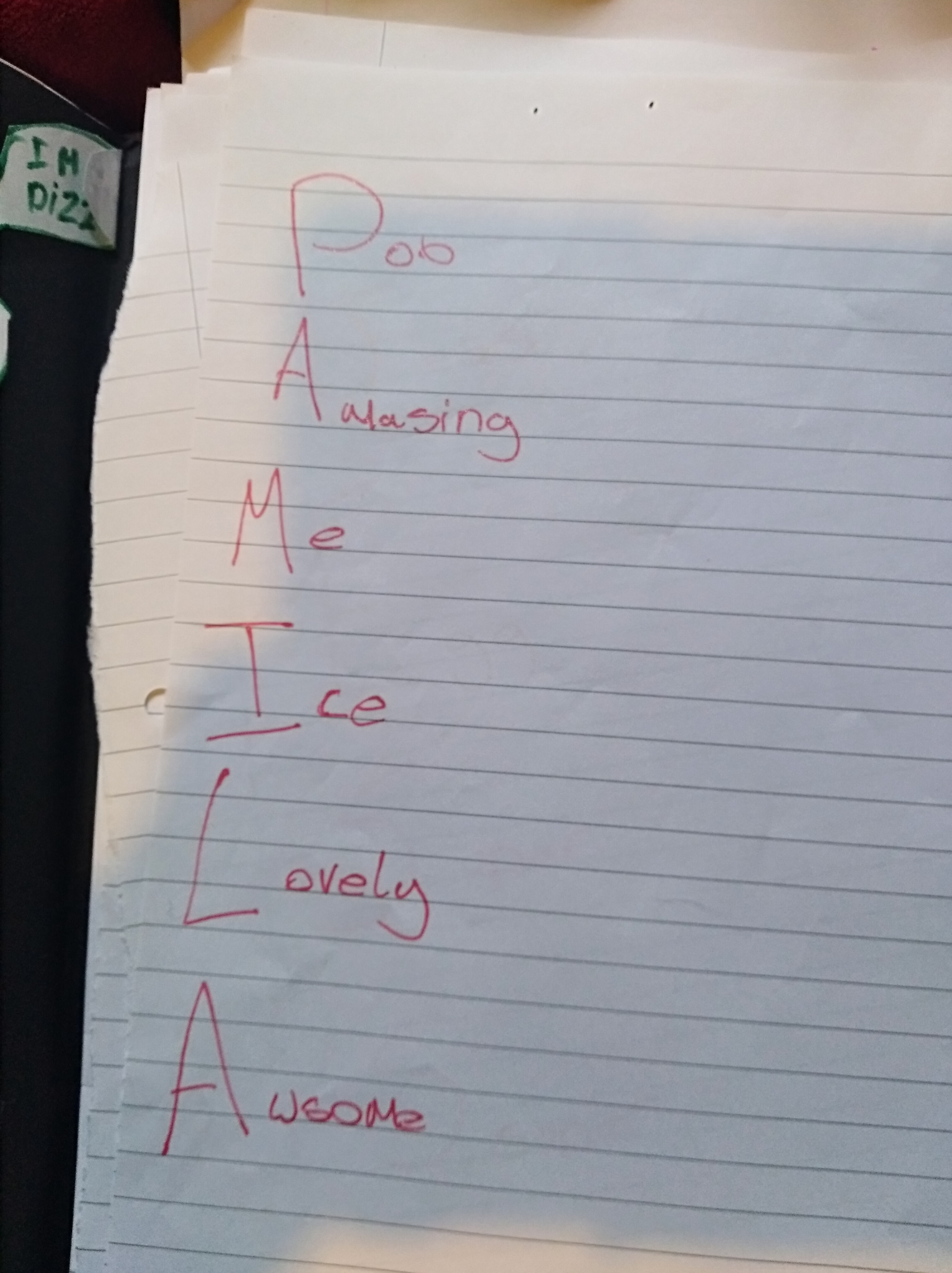
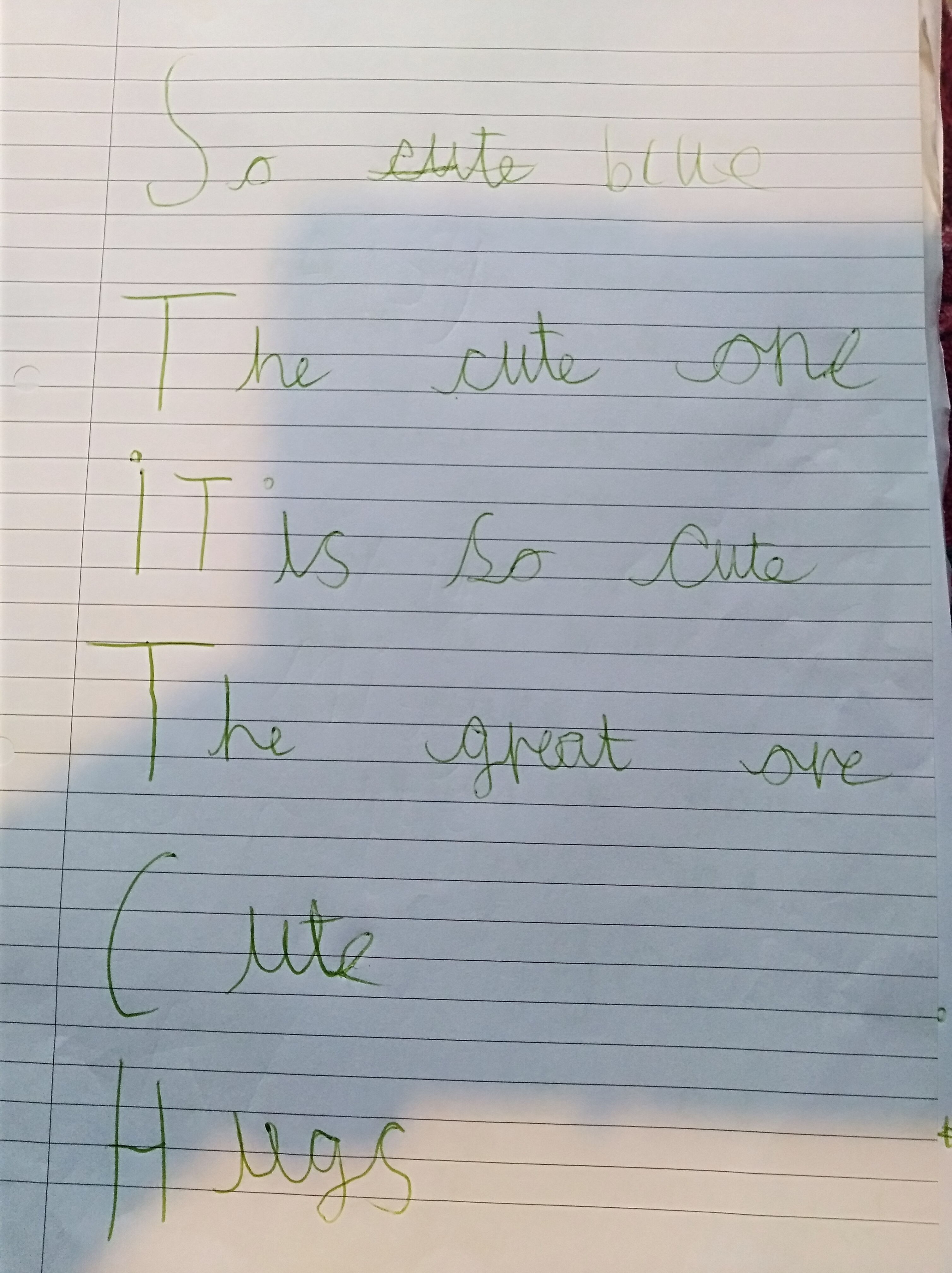
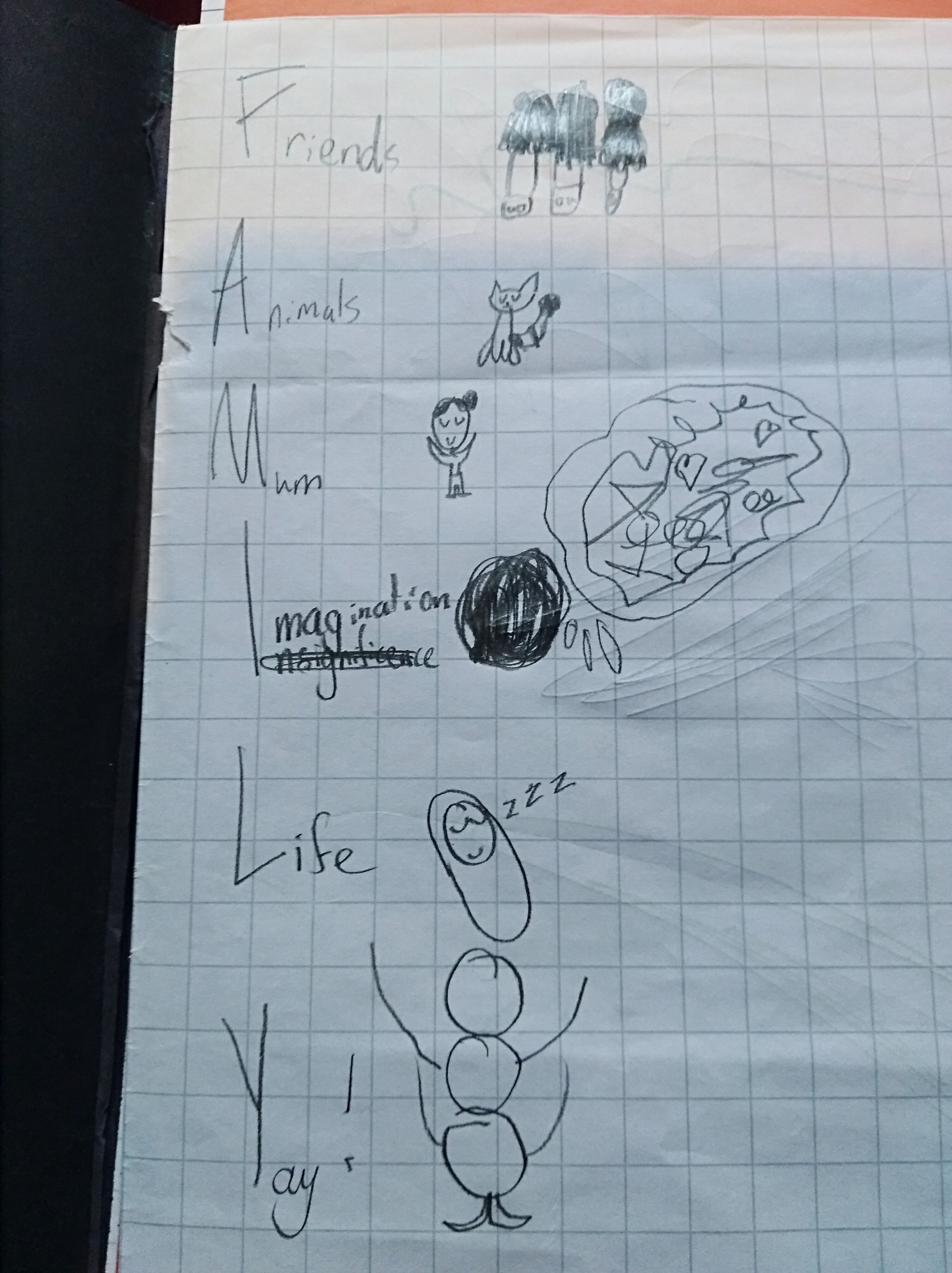
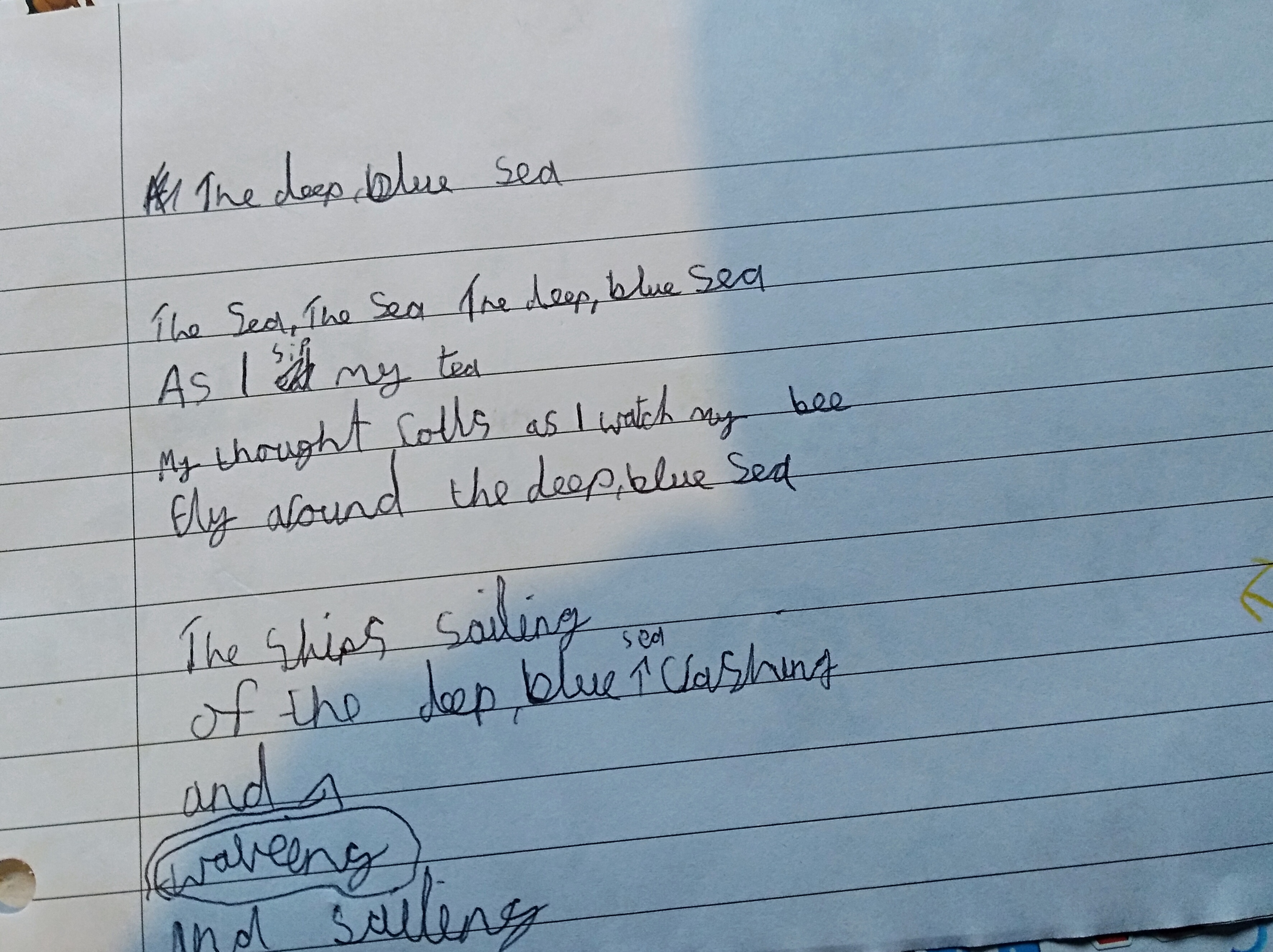
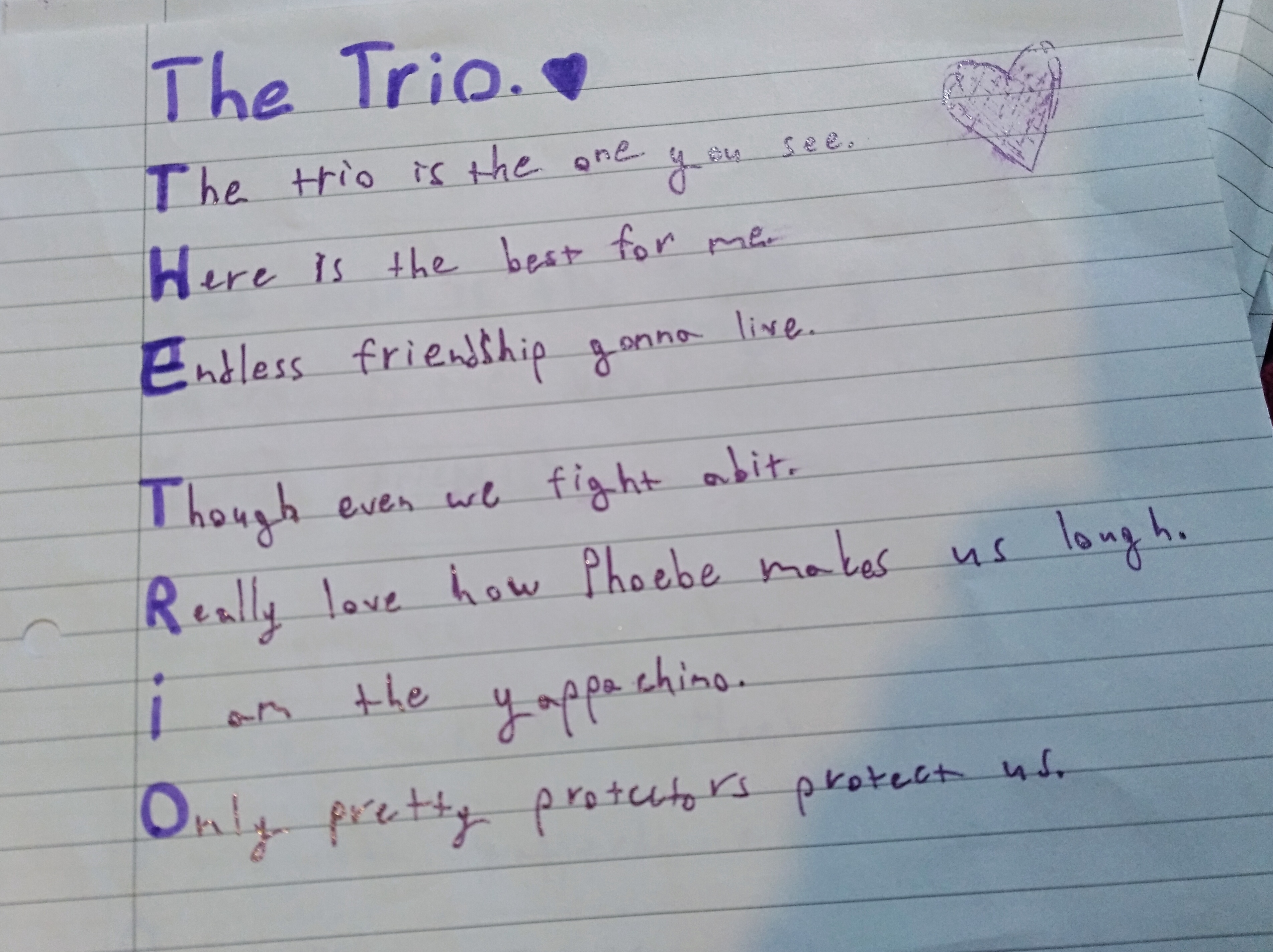
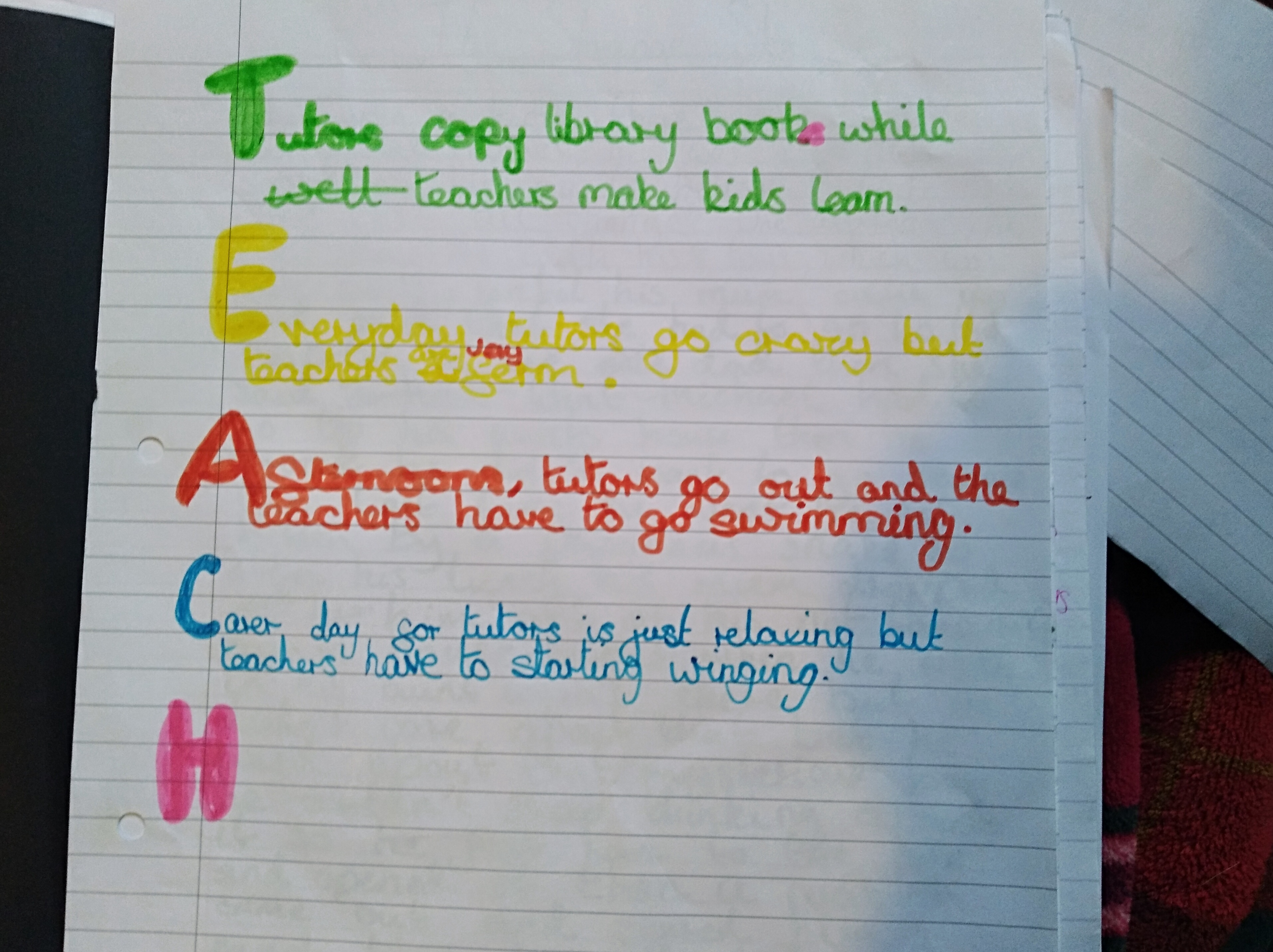
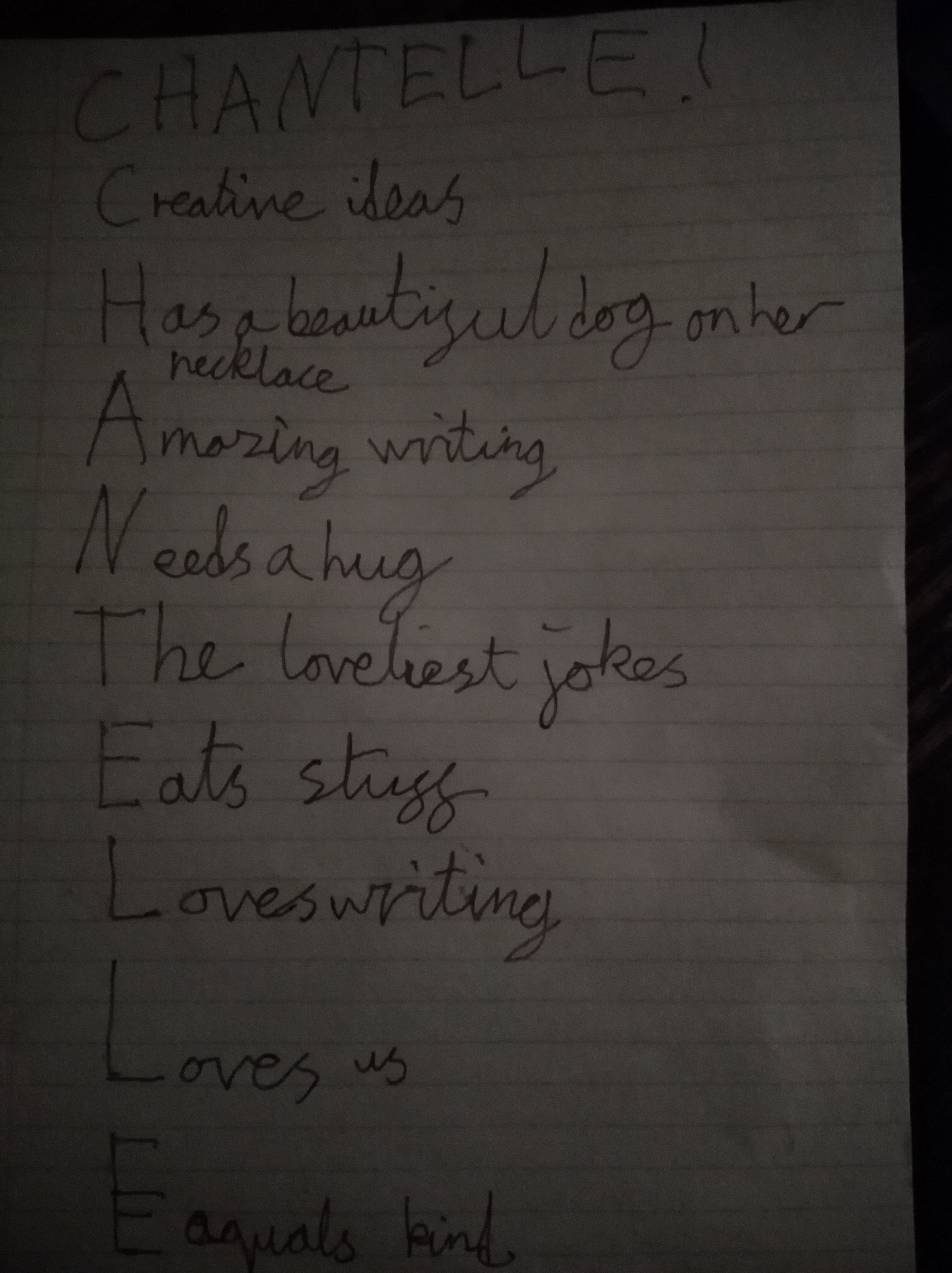
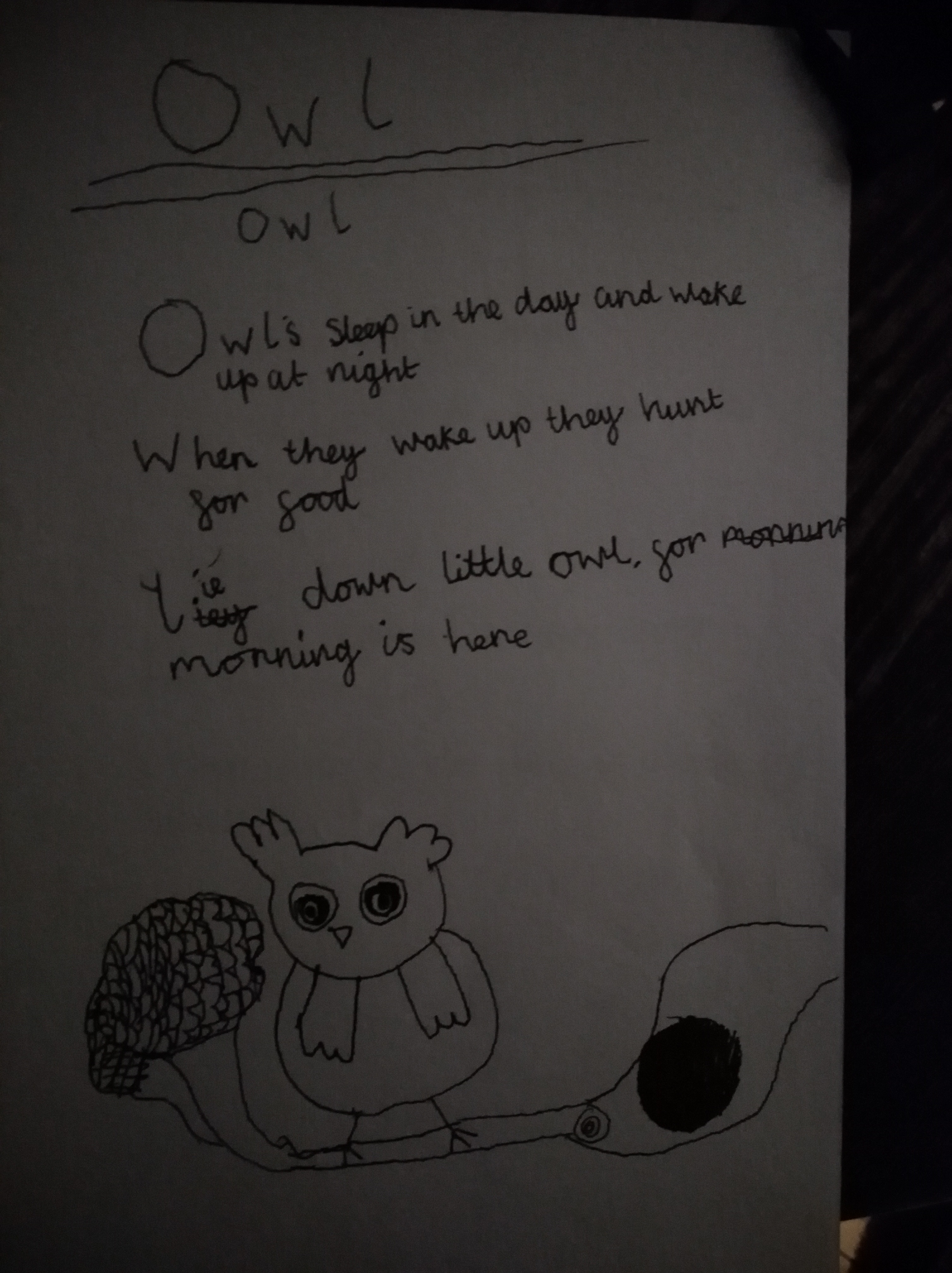
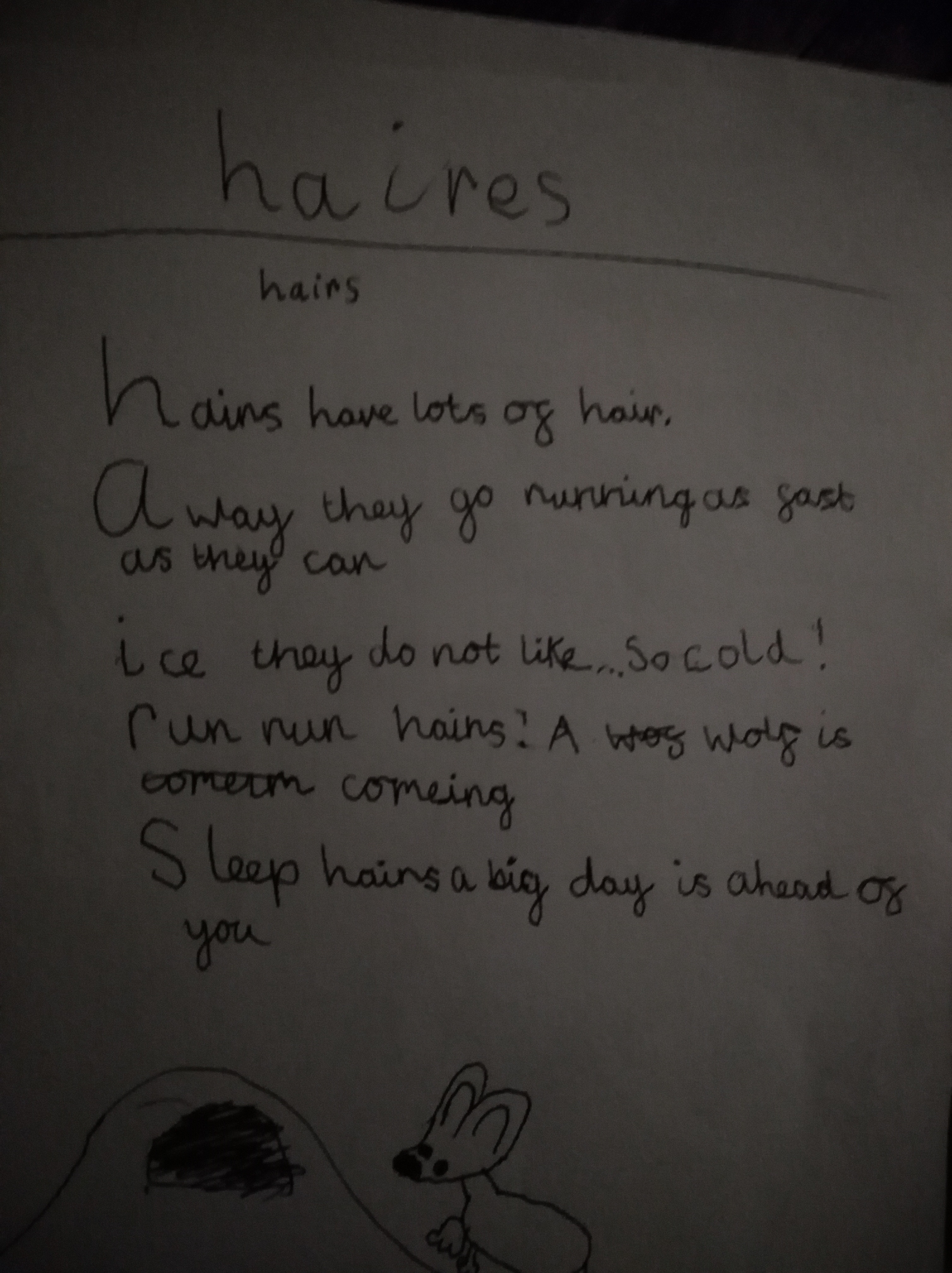
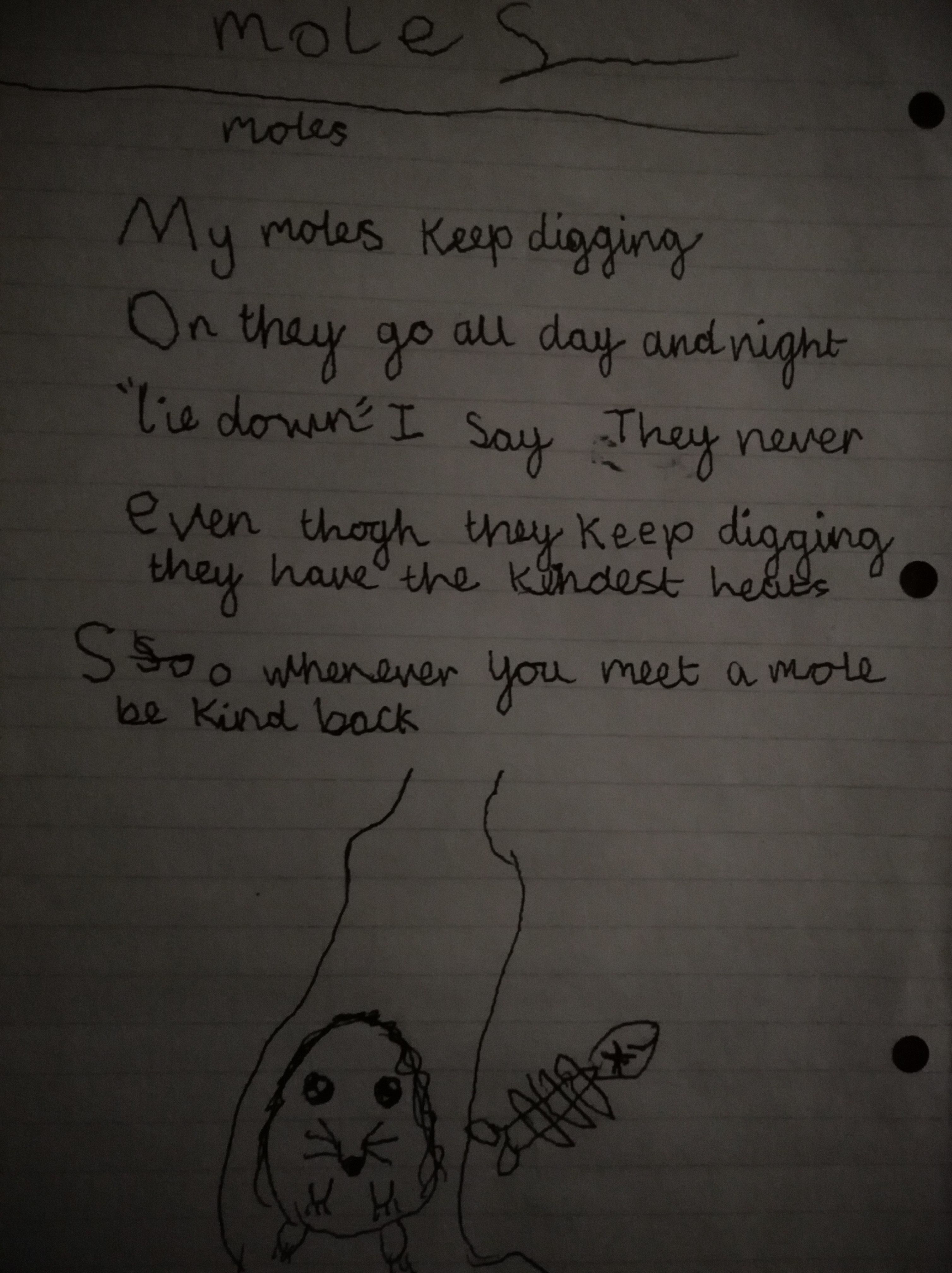
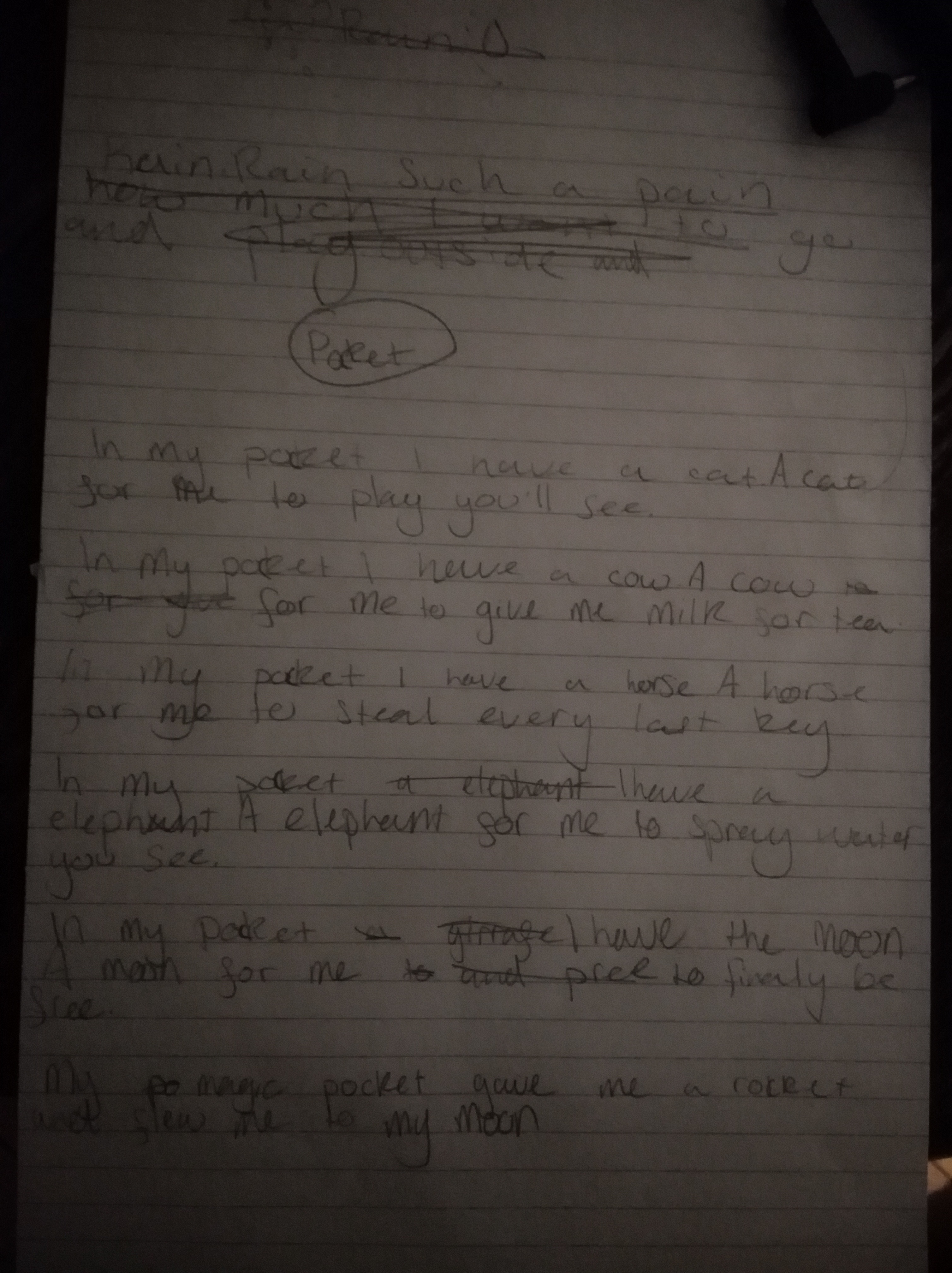
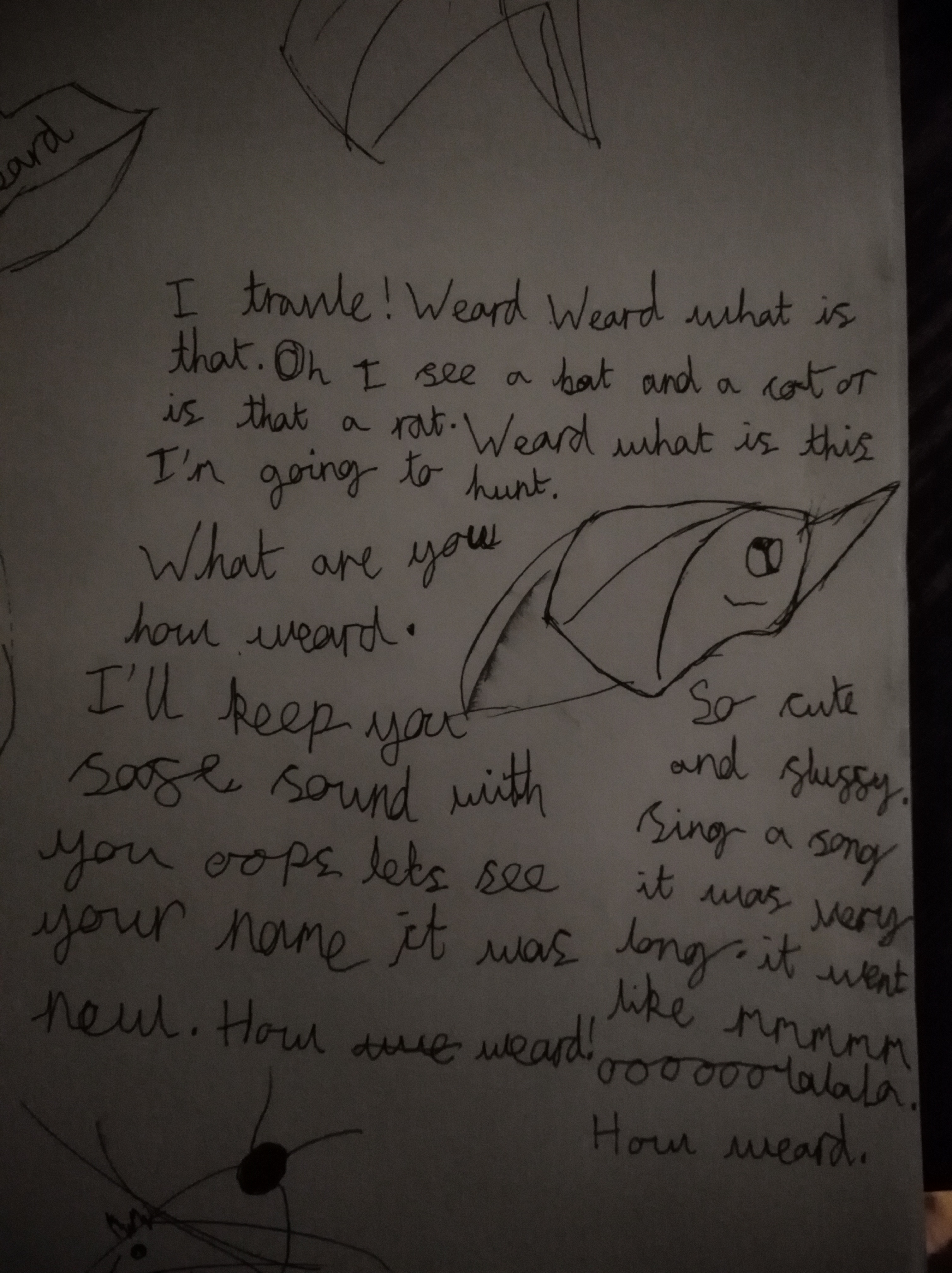
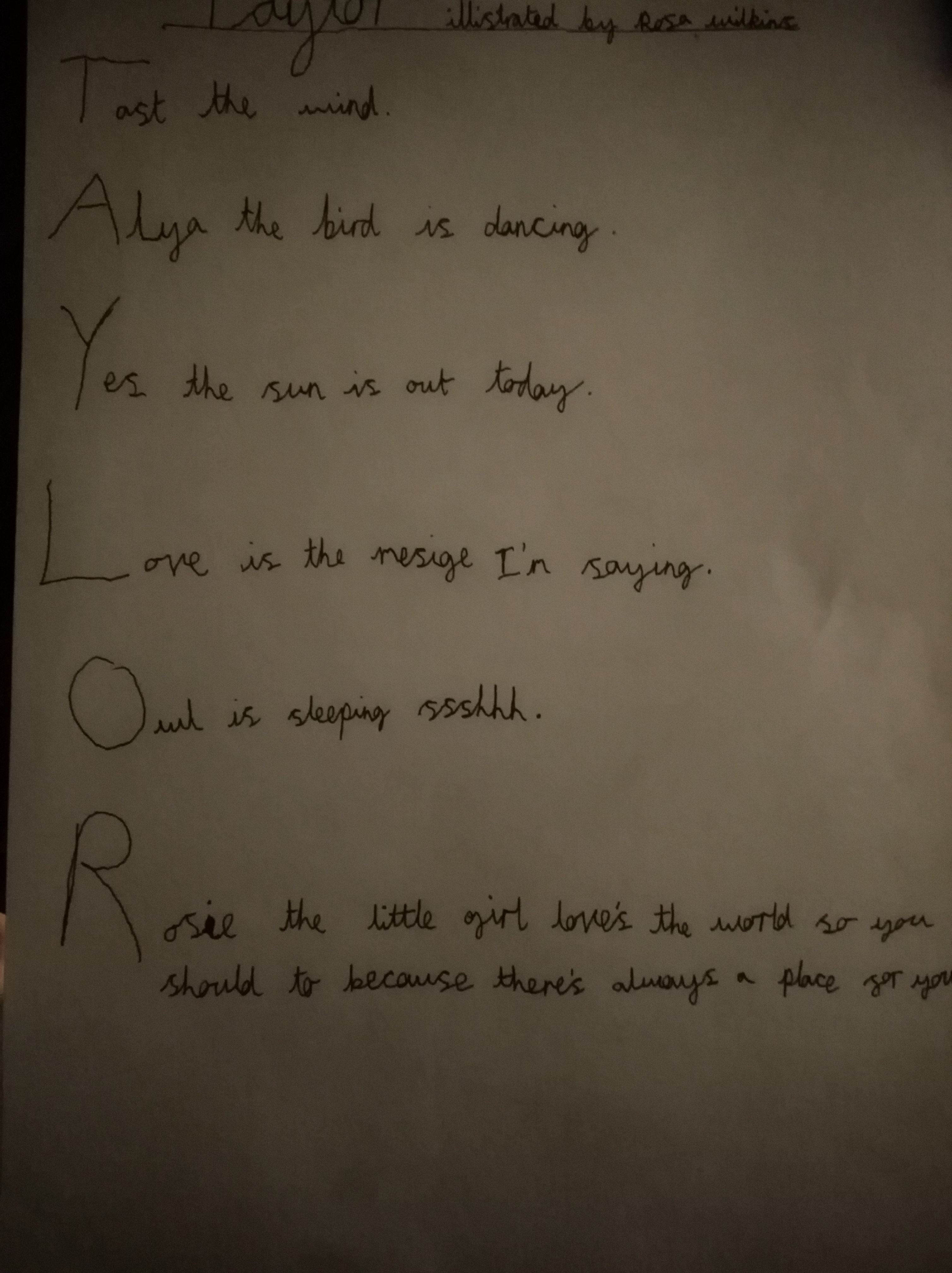
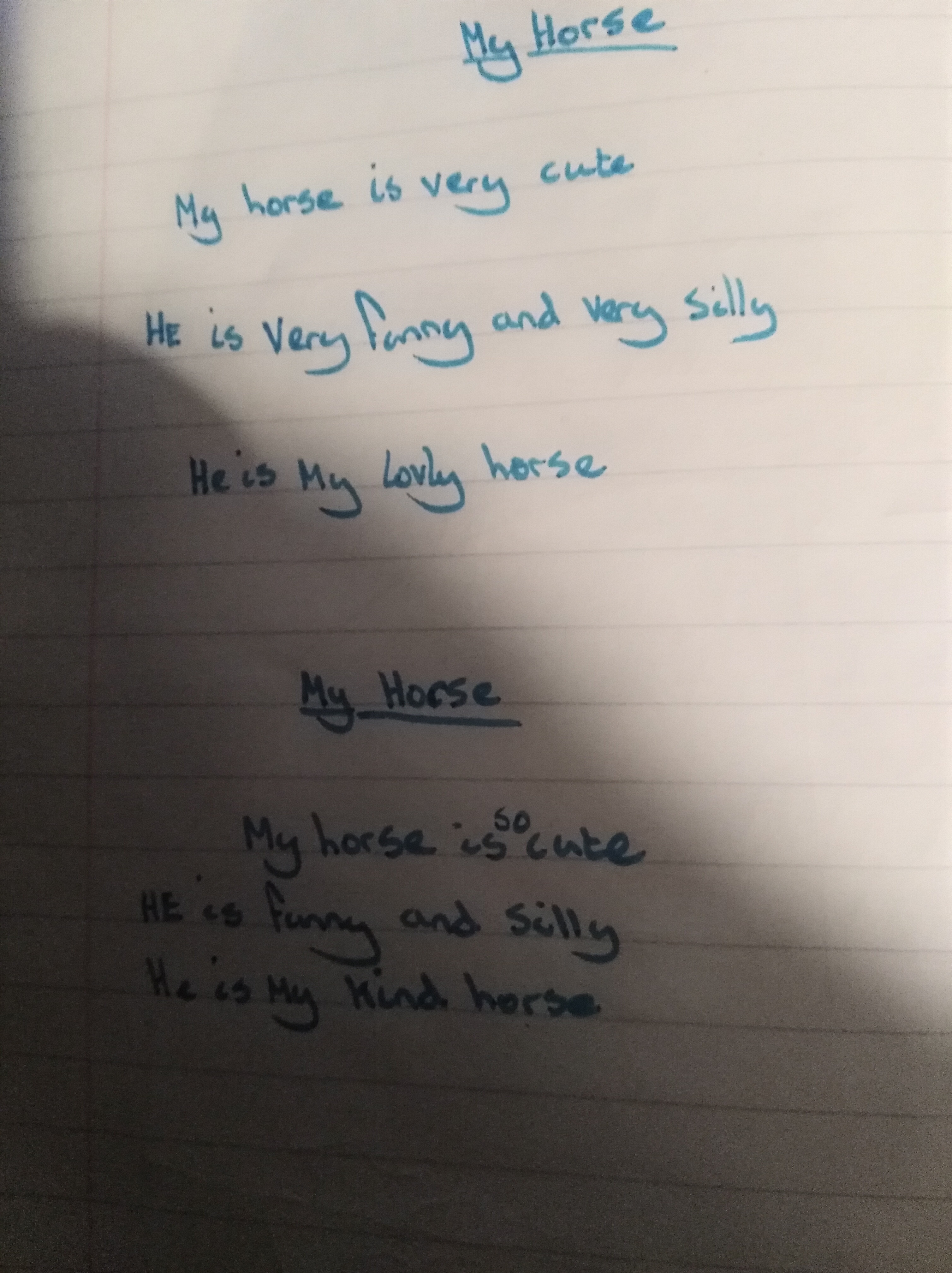
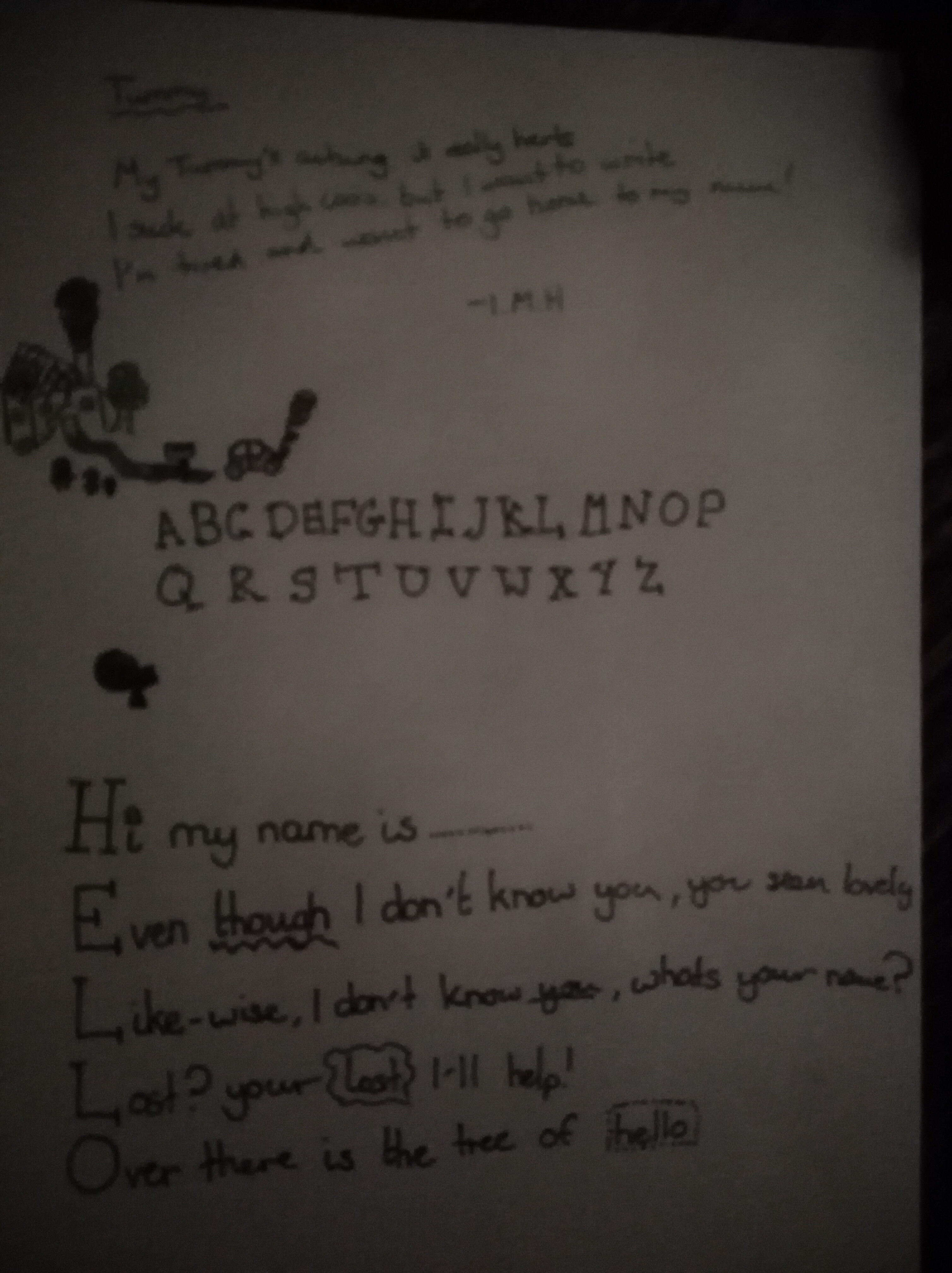
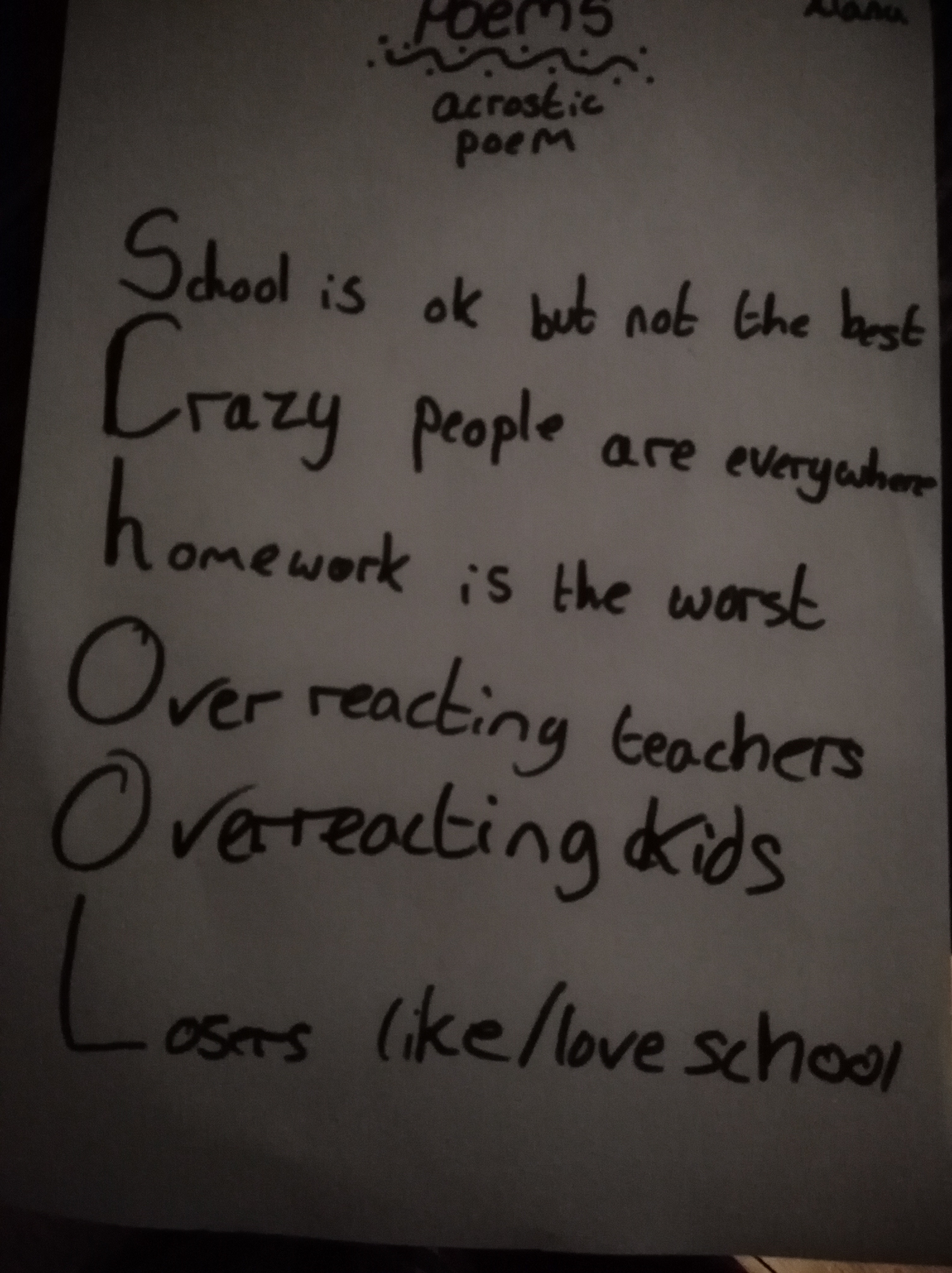
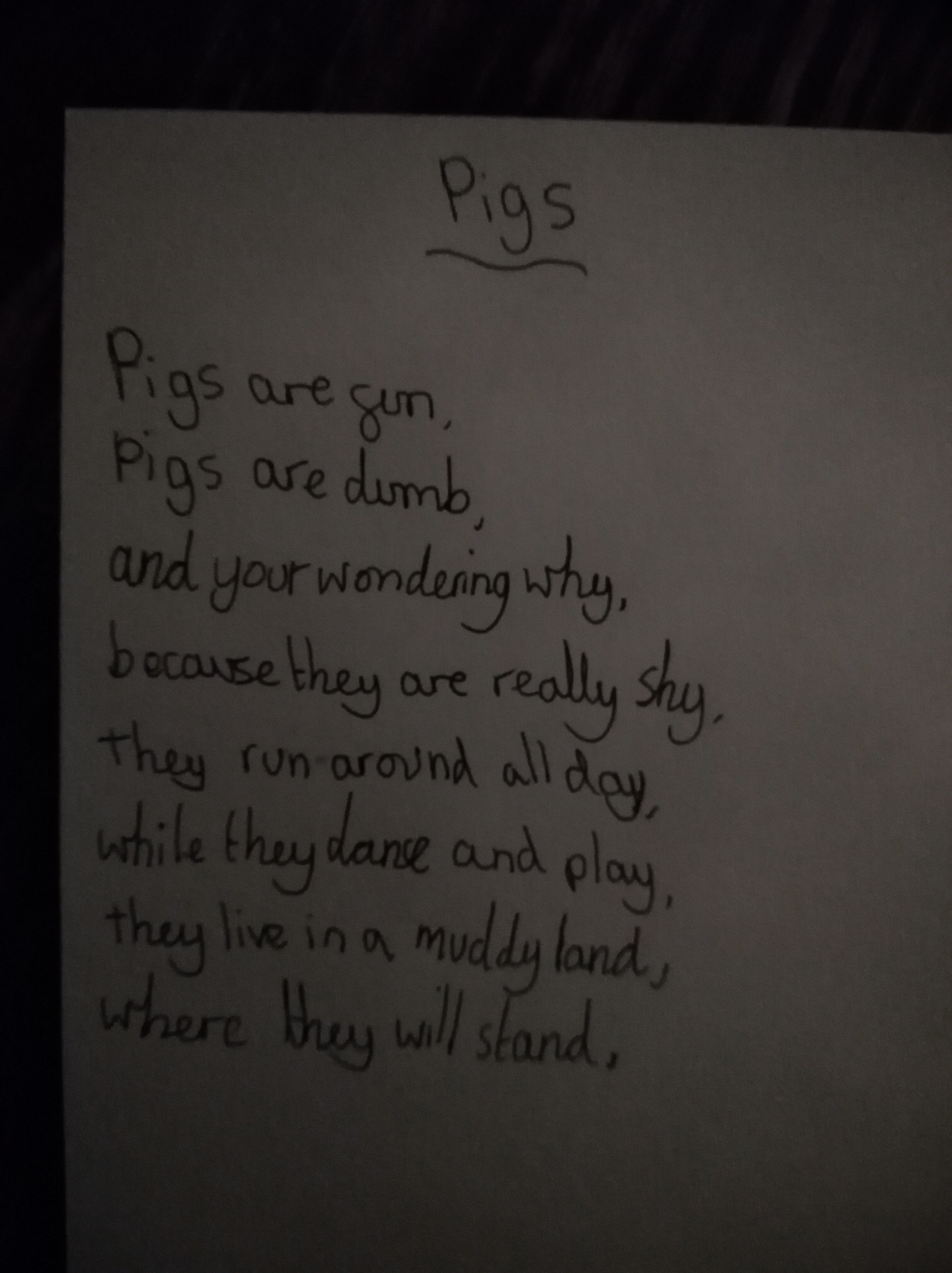
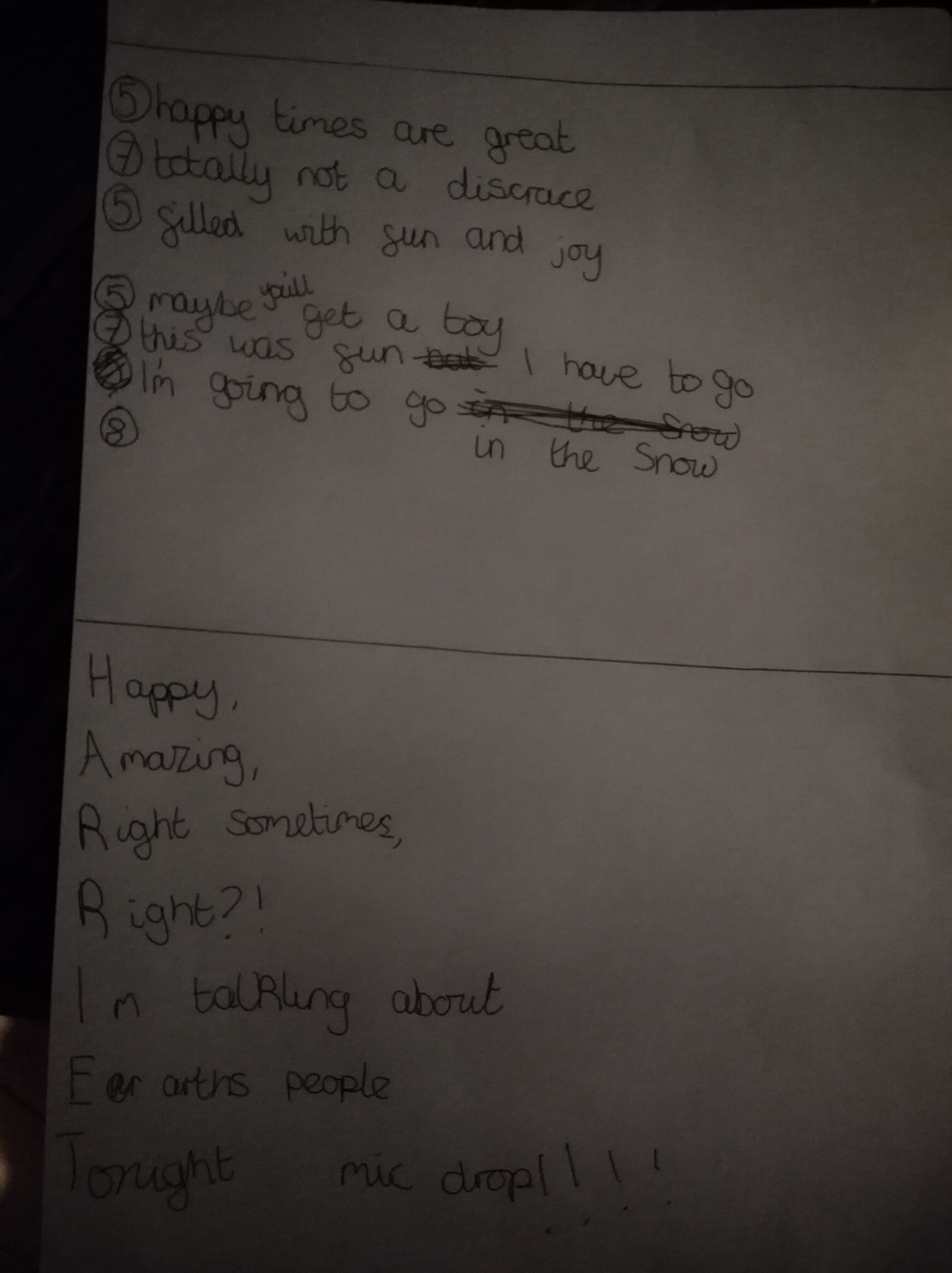
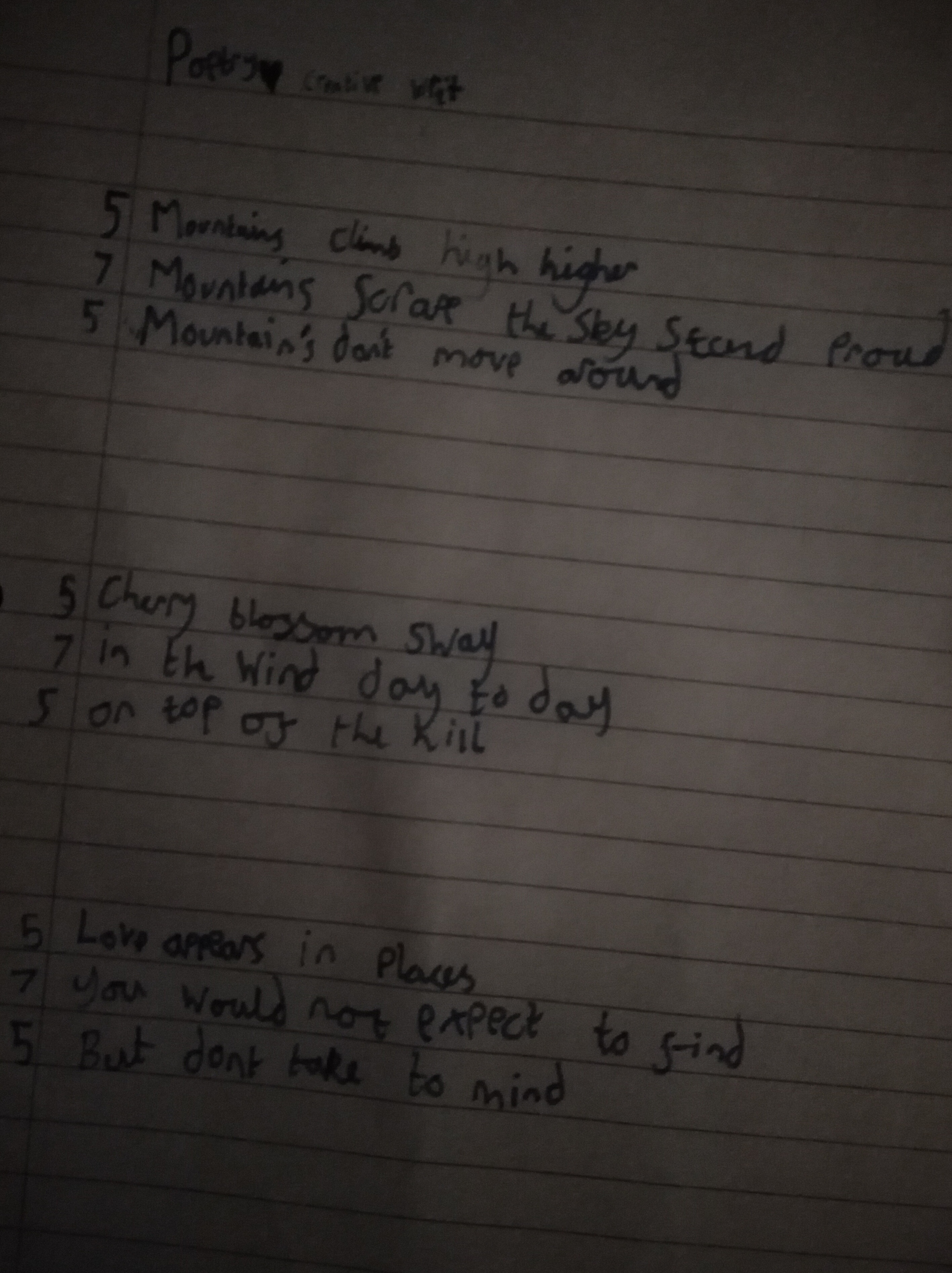
Monday CJS Club: We looked at poetry today and they could choose between list poetry, Haikus and acrostic poems. I talked them through each type of poem first and it was great that we had a real mix of different responses. I took in The Lost Words, by Robert Macfarlane and Jackie Morris to show them such beautiful examples of more complex acrostic poetry. Here are some examples:
Tuesday
Tuesday Zoom Club: They chose to tackle pacing rather than imagery and came up with some great examples of slow and fast paced writing.
Tuesday Bransgore C of E Primary: Back to poetry for the after school group! A choice of acrostic, haiku and list poems and again we had a lovely mix of all. I absolutely loved the three nature based poems one child wrote after being inspired by The Lost Word! We had also had some very good rhyming poems!
Wednesday
Wednesday 11 plus Zoom club: We discussed both pacing and imagery today – in particular ‘showing’ vs ‘telling’ in writing. Everyone had a go at either writing a random scene that was slow, fast or mixed, or carrying on with a on-going project and sharing an extract to discuss whether the scene is fast, slow or mixed. Fantastic work!
Wednesday 8-11 Zoom club: We looked at imagery, and in particular ‘showing’ vs ‘telling’. This was a new concept for some of them and they handled it brilliantly with plenty of curiosity and enthusiasm! They managed to liven up my boring ‘telling’ sentences by rewriting them into ‘showing’ sentences that were far more engaging! Well done guys!
Wednesday CJS club: back to poetry again! We had a lovely mix of rhyming poems, acrostic poems, haiku and list poems from this group today! Absolutely brilliant. Here are some examples:
Great work everyone!
Have a lovely half-term and I will see you all the week after!
What did we get up to this week? Creative Non-Fiction!
Welcome parents, carers and young writers. Every week I will post here what we have been up to in writing clubs. The clubs are categorised by day so if your child attends a Tuesday club, for example, simply scroll down to Tuesday to see what we covered this week!
Monday
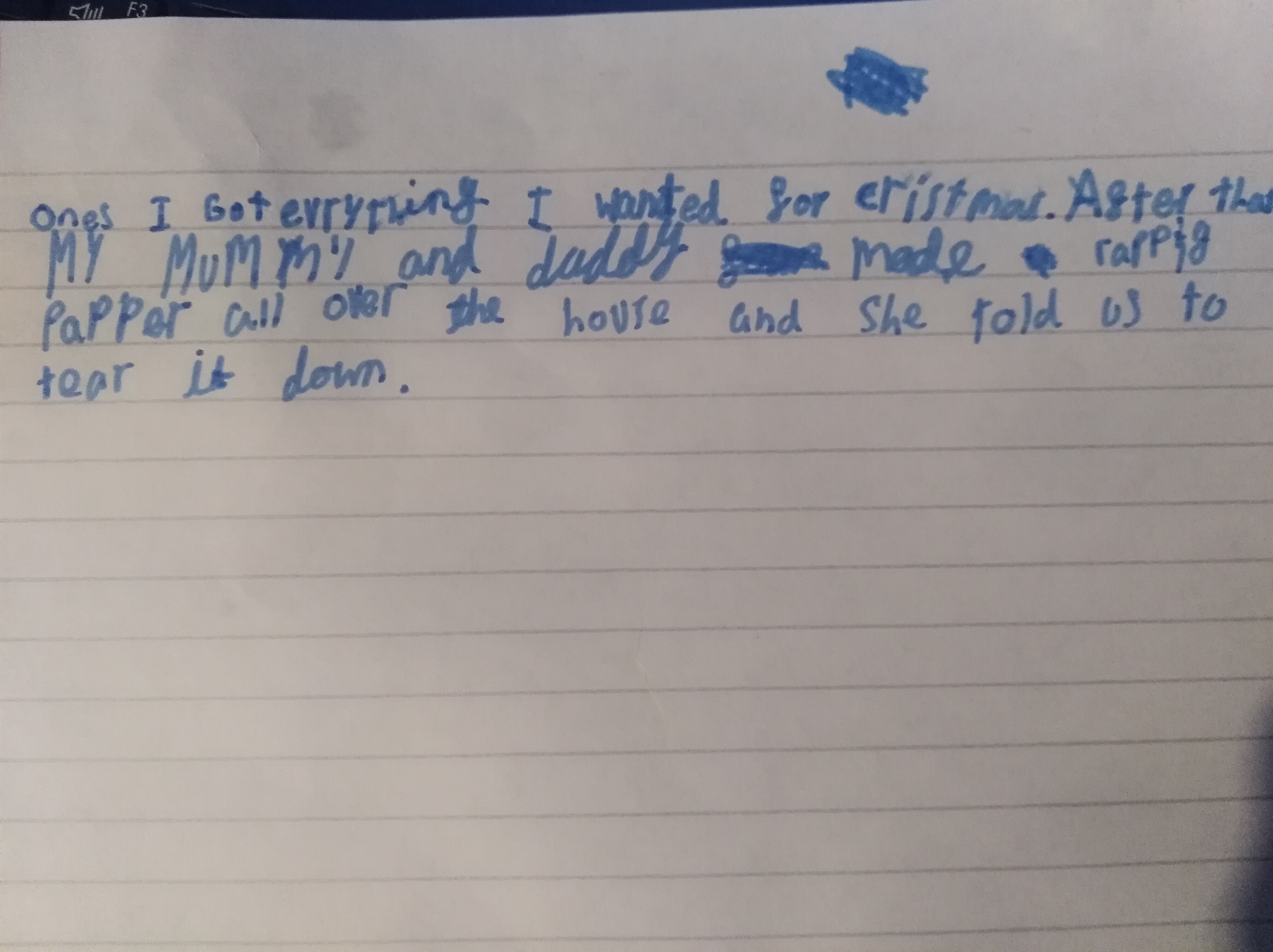
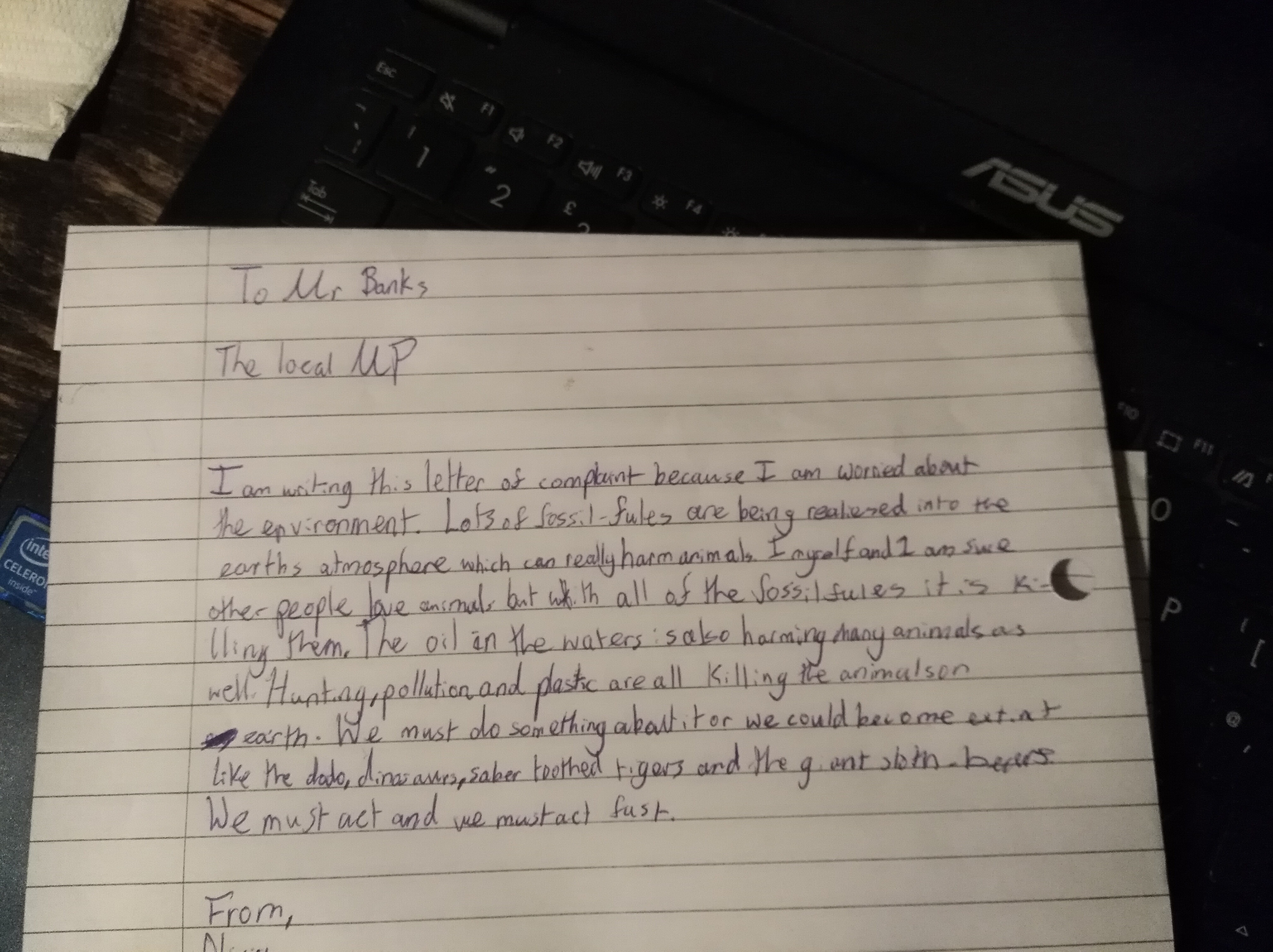
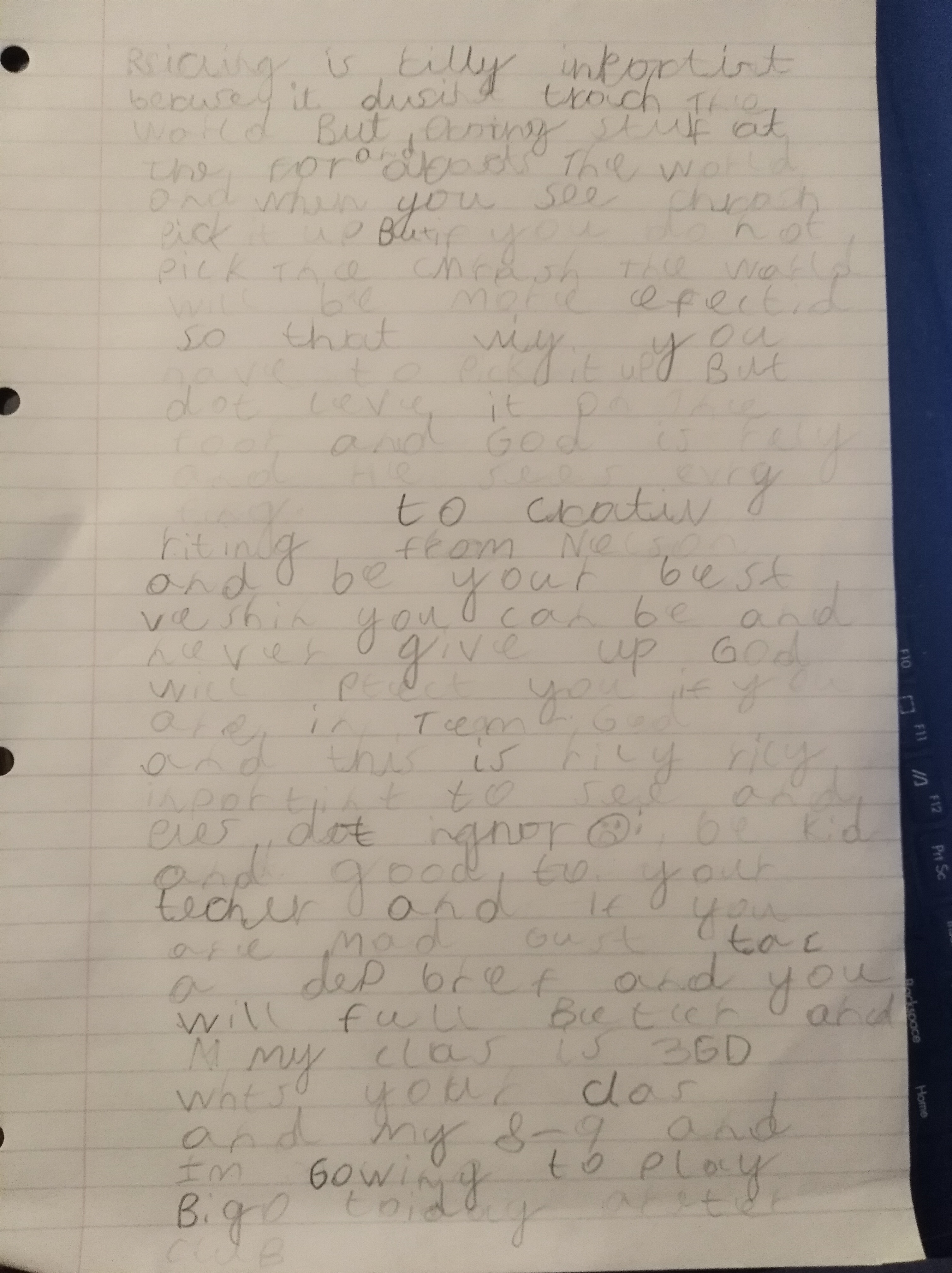
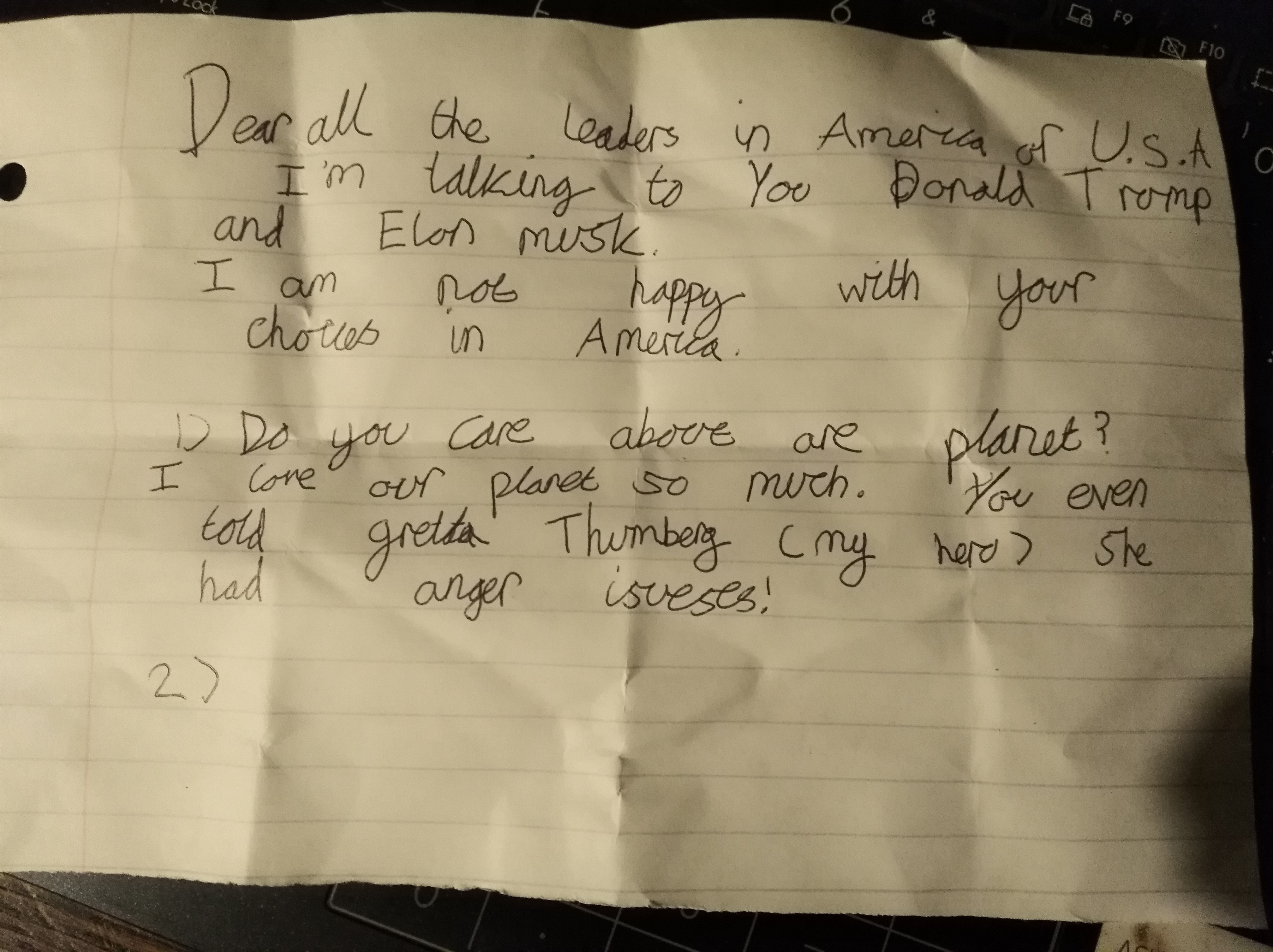
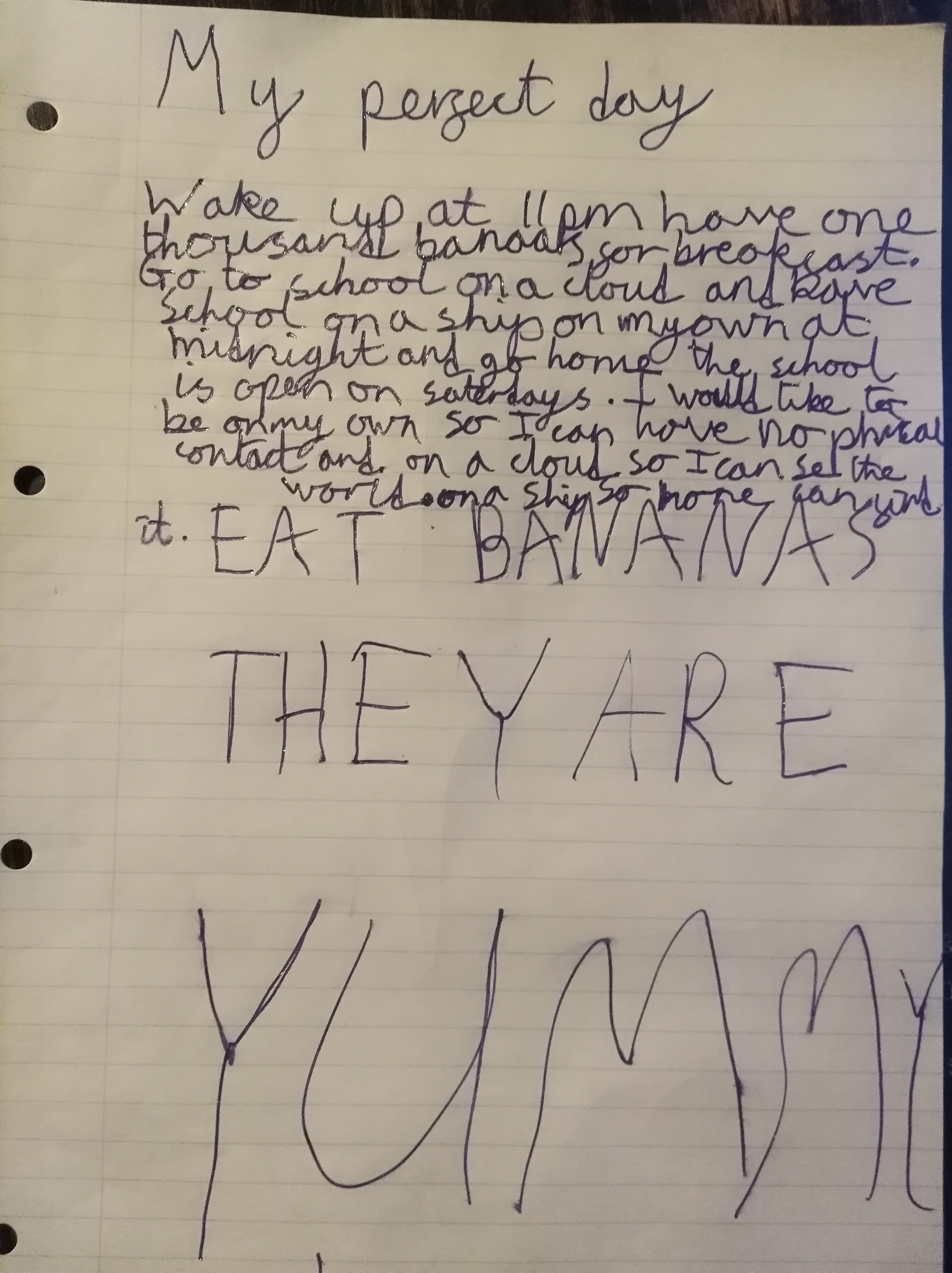
This week we tackled creative non-fiction. This is partly because I am specifically looking for creative non-fiction pieces for the anthology we are putting together.
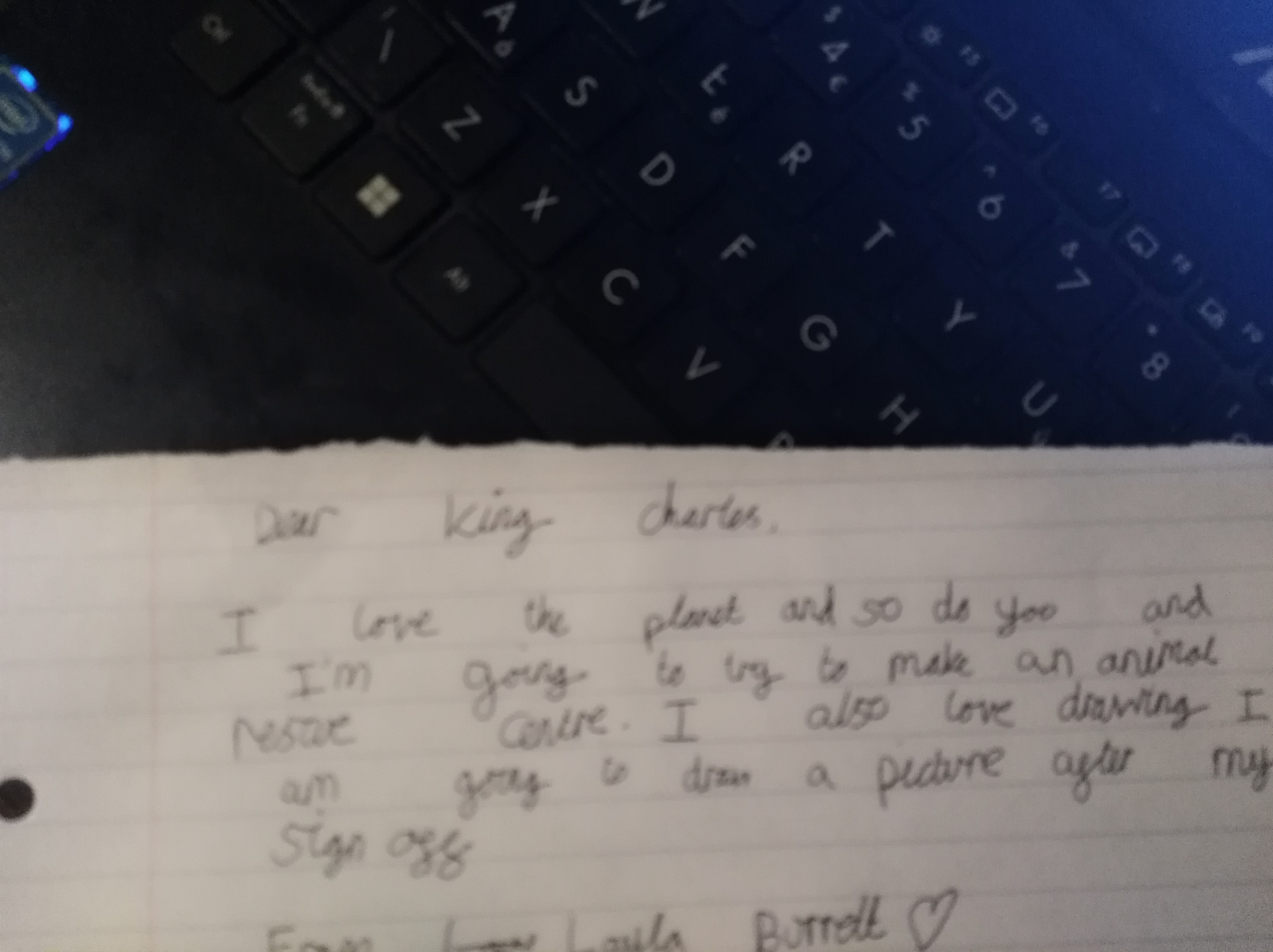
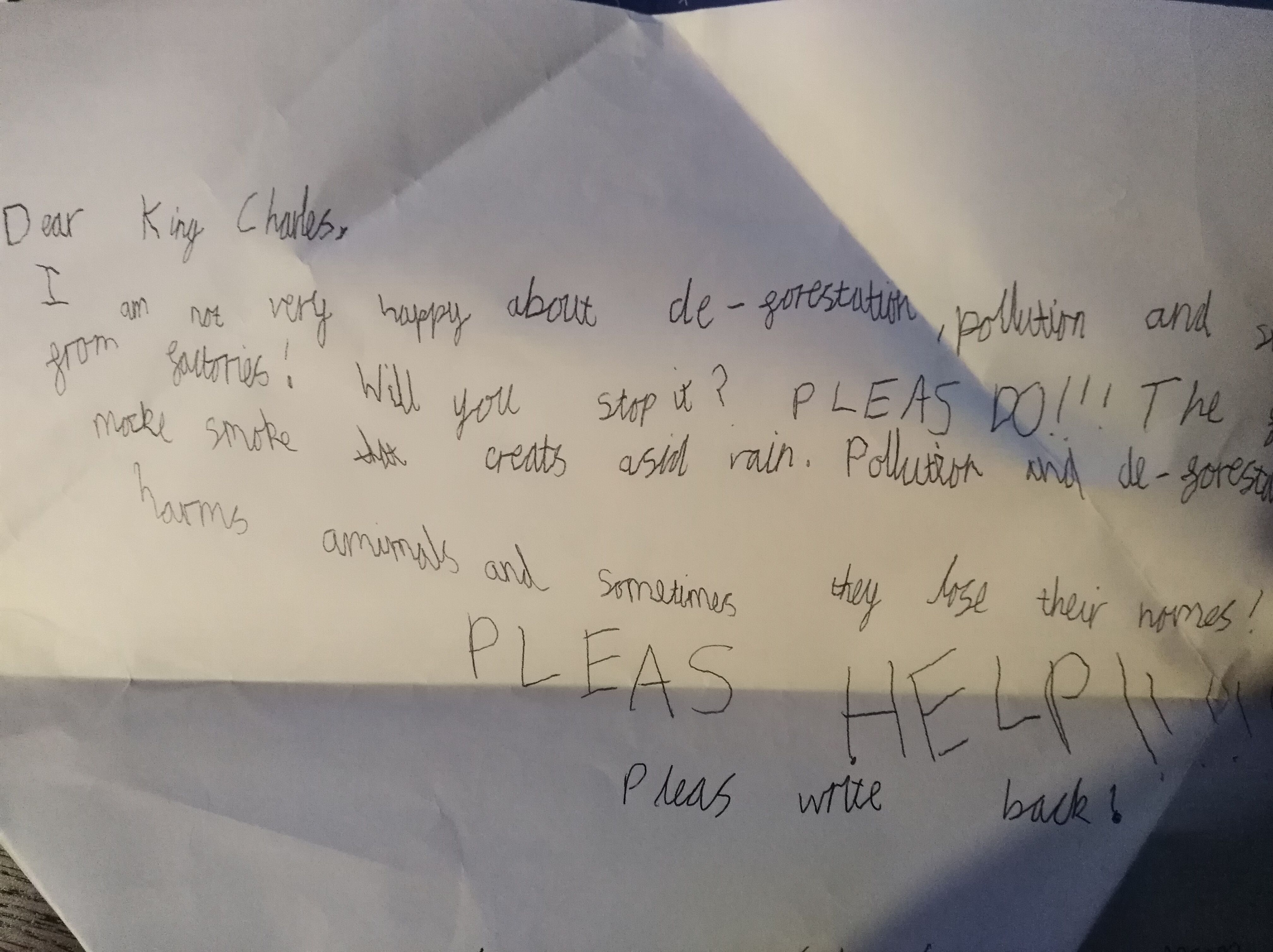
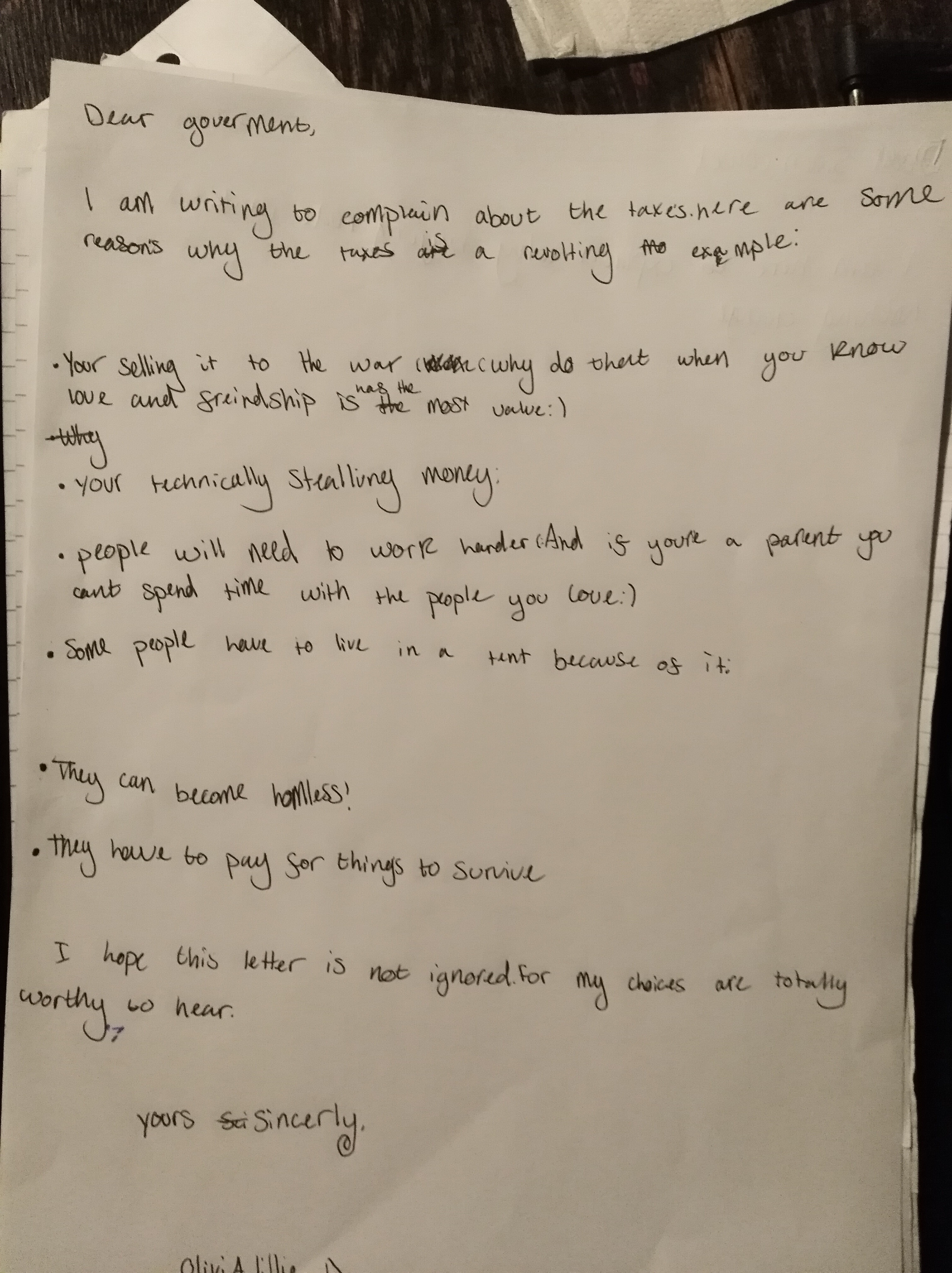
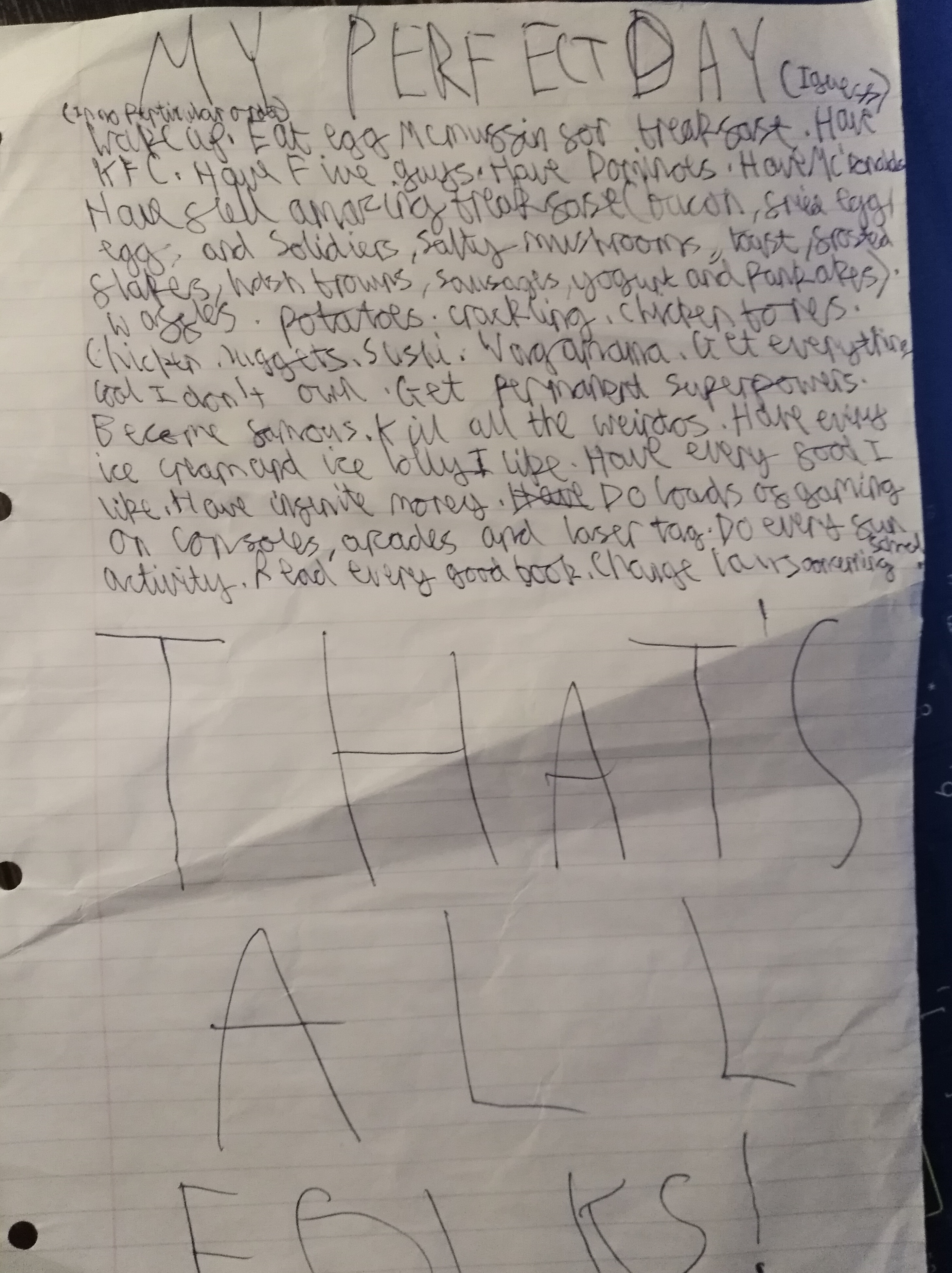
Monday Zoom Club – They tackled several creative non-fiction writing prompts including, write a letter to someone in power about something that you want to change / Write about an unusual and/or memorable event in your community /Share a memory of a perfect day/ reflect on a time you surprised yourself / Write about an unusual hobby or interest and why it fascinates you/Reflect on an instance where you found beauty in an unexpected place / Share your thoughts on tech advances and their impact on society.
This was a little bit tricky and I think it’s because as writers, we are often so used to making things up that it’s a little harder when we are asked to write about things that are true. We had some wonderful responses though, including a very powerful poem, a very angry letter about traffic, and some lovely family stories and memories which had been perfectly fictionalised and presented as engaging little stories! Well done everyone!
Monday CJS Club – I offered three creative non-fiction prompts and they were: write a letter to someone in power about something you want to change/ write a story about a memory or experience you have had / describe a perfect day
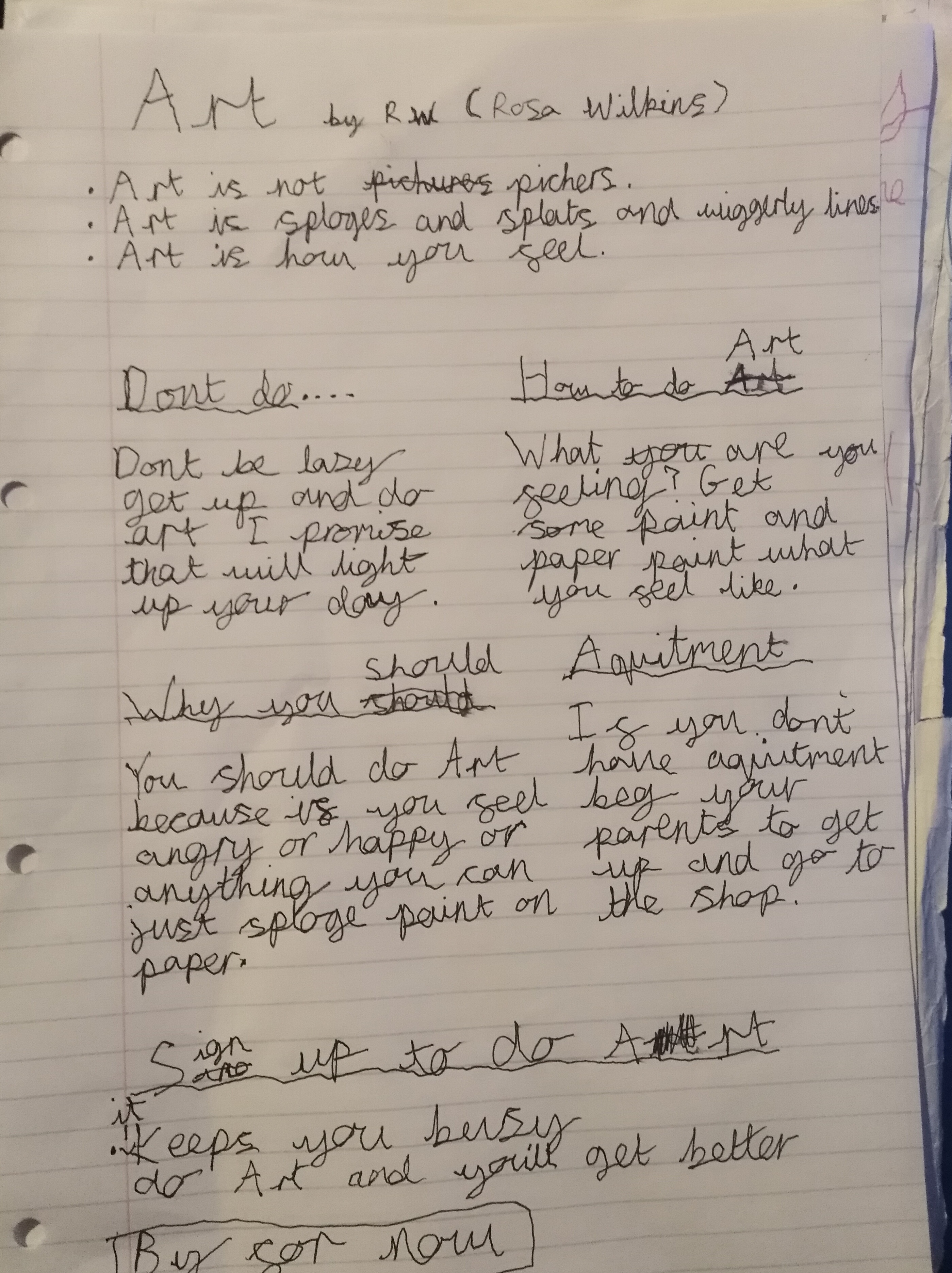
Again, this was a bit tricky when they are so used to story writing but I encouraged them to view it as writing a fictionalised version of something that is true. We had a few letters and some lovely memories too! There are some examples below.
Tuesday
Tuesday Zoom Club : The Tuesday group also had the same creative non-fiction prompts as the other Zooms this week. They did really well, approaching it with curiosity and enthusiasm. We had some wonderful happy memories described from one writer,
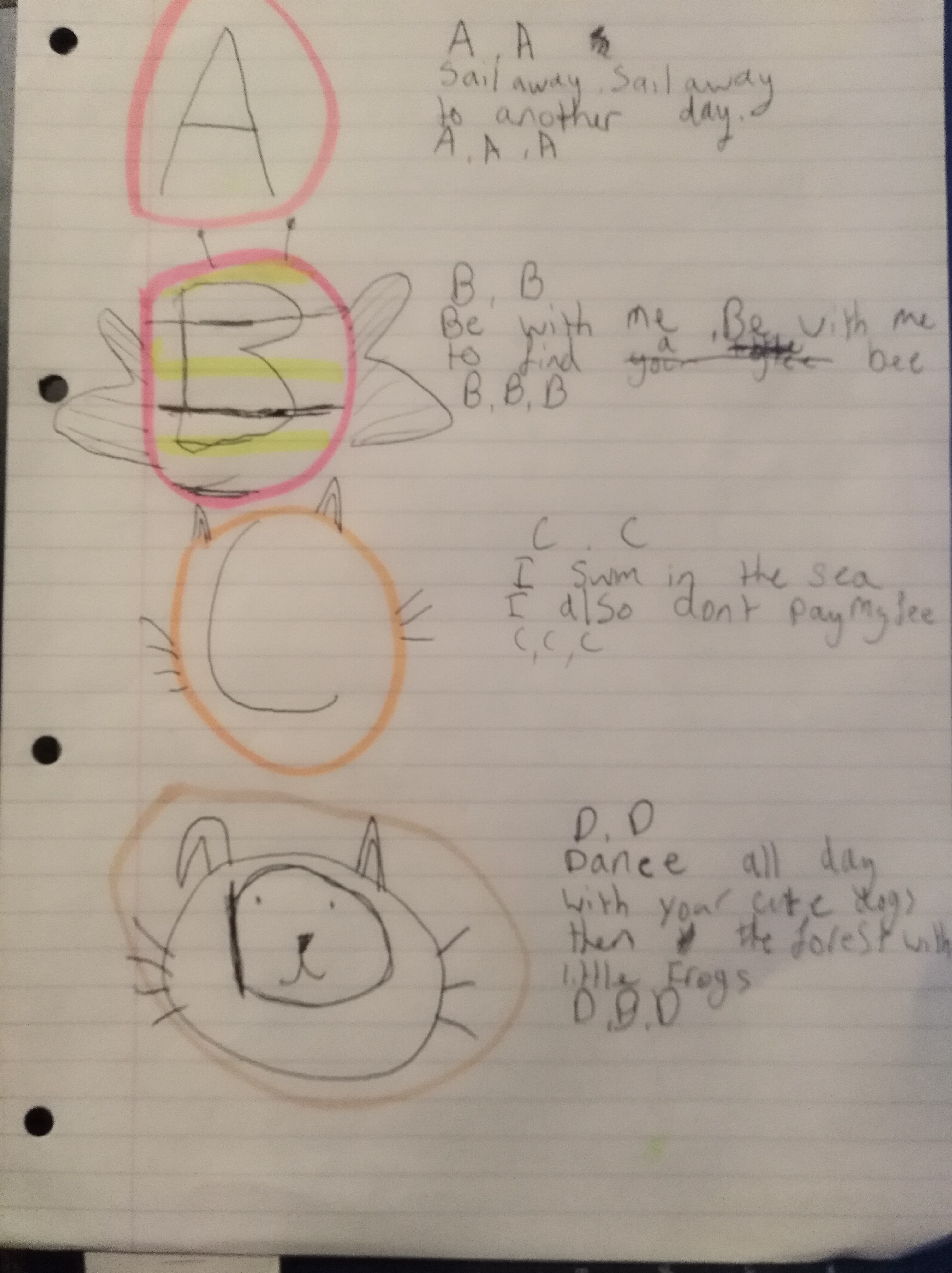
Bransgore C of E Primary School: These guys showed a lot of enthusiasm for the creative non-fiction prompts which was very much appreciated! Everyone had a go and we had some very angry letters aimed at powerful people and expressing genuine concerns, we had non-fiction poems, true stories and a lot more. Well done to you all because you all listened and responded beautifully! Here are some of the things they produced:
Wednesday
Wednesday 11 plus group: Another wonderful response to the creative non-fiction prompts1 A very well argued response to the benefits and drawbacks of AI in the creative environment, plus another very passionate essay on the effect of technology on people, particularly children. Amazing!
Wednesday 8-11 group: This group tackled the same creative non-fiction prompts and were more than willing to give it a go. We had a poem, a letter, a memory of a beautiful day, and a piece about what things inspire them to write.
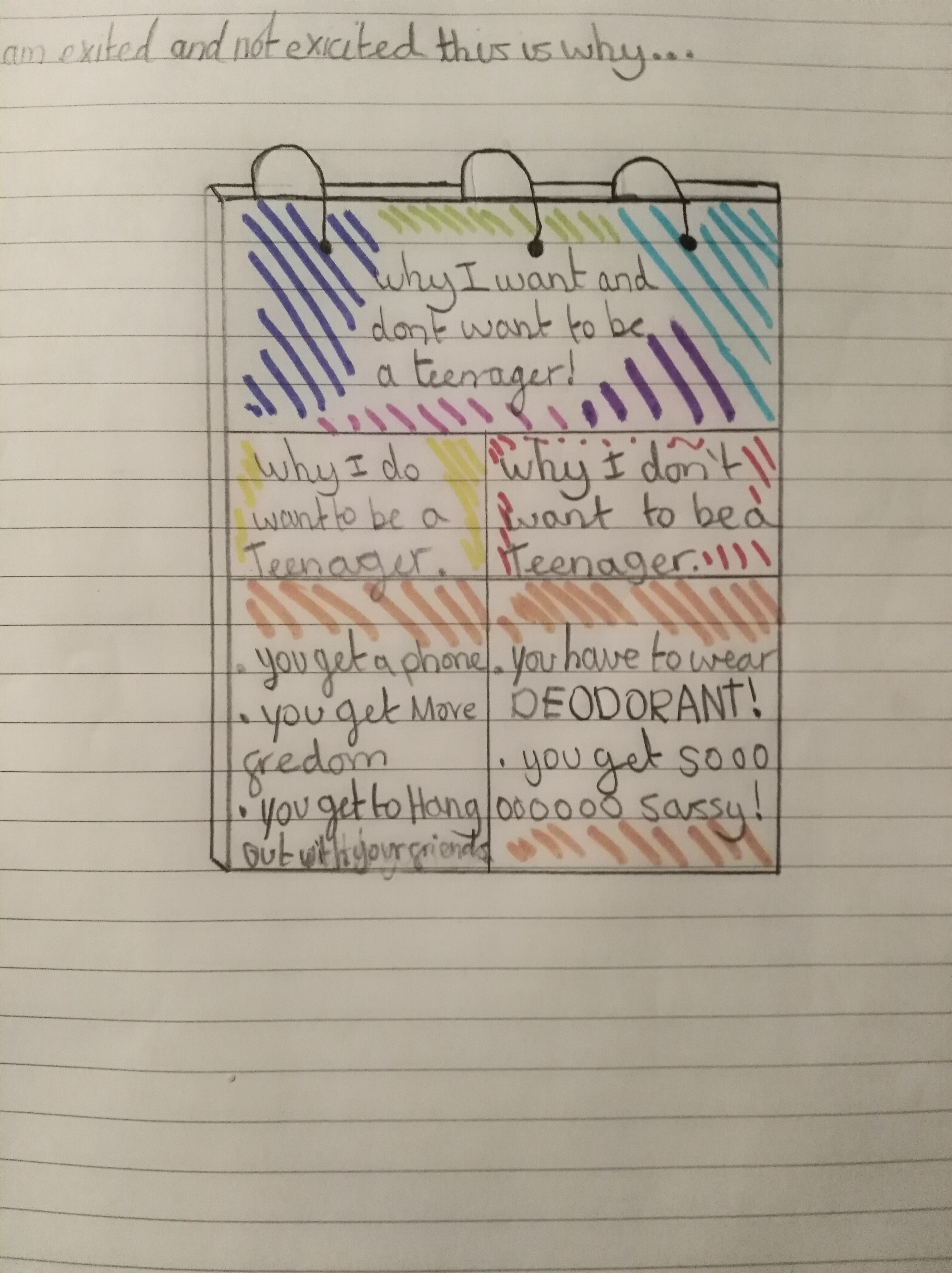
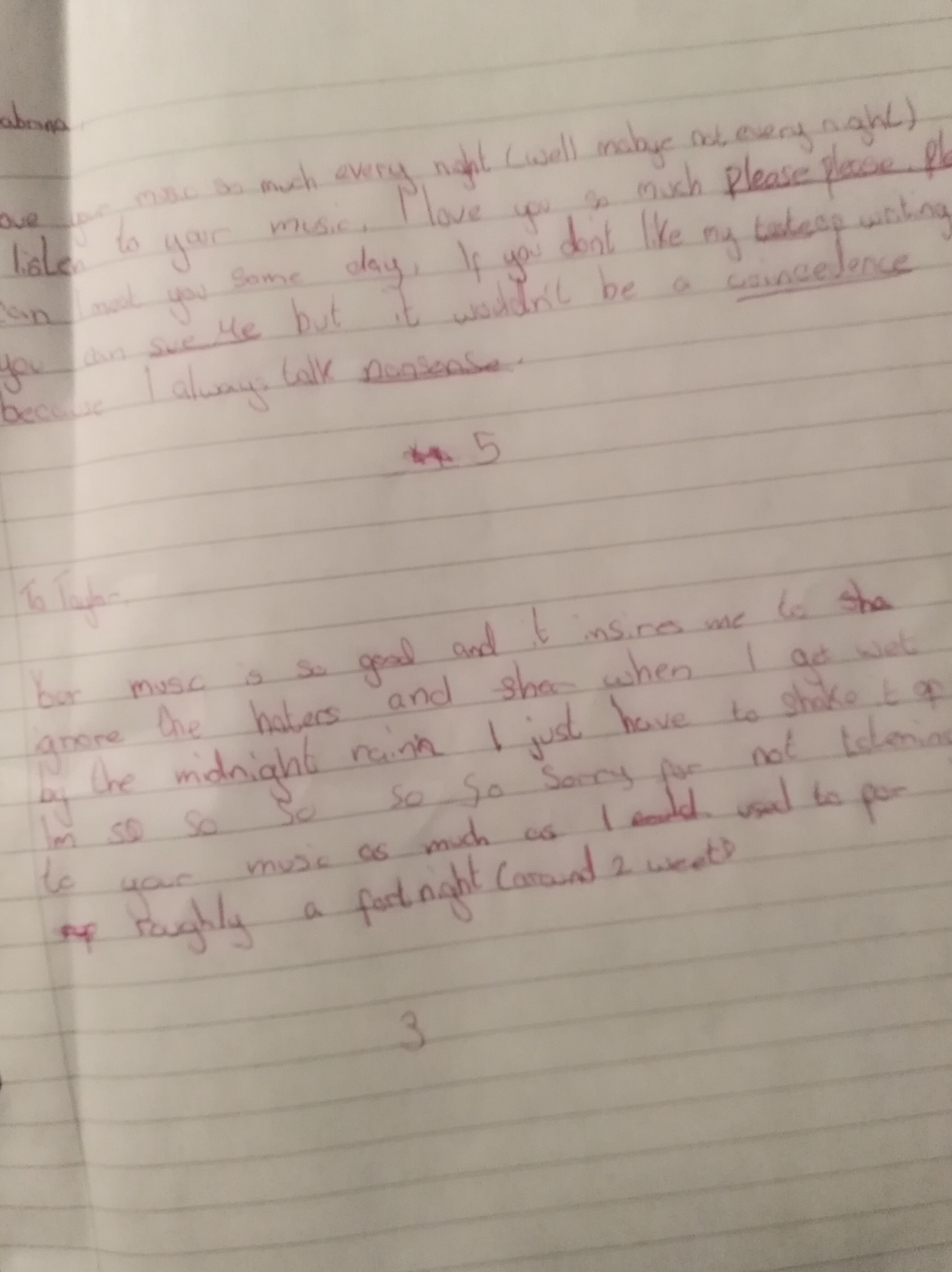
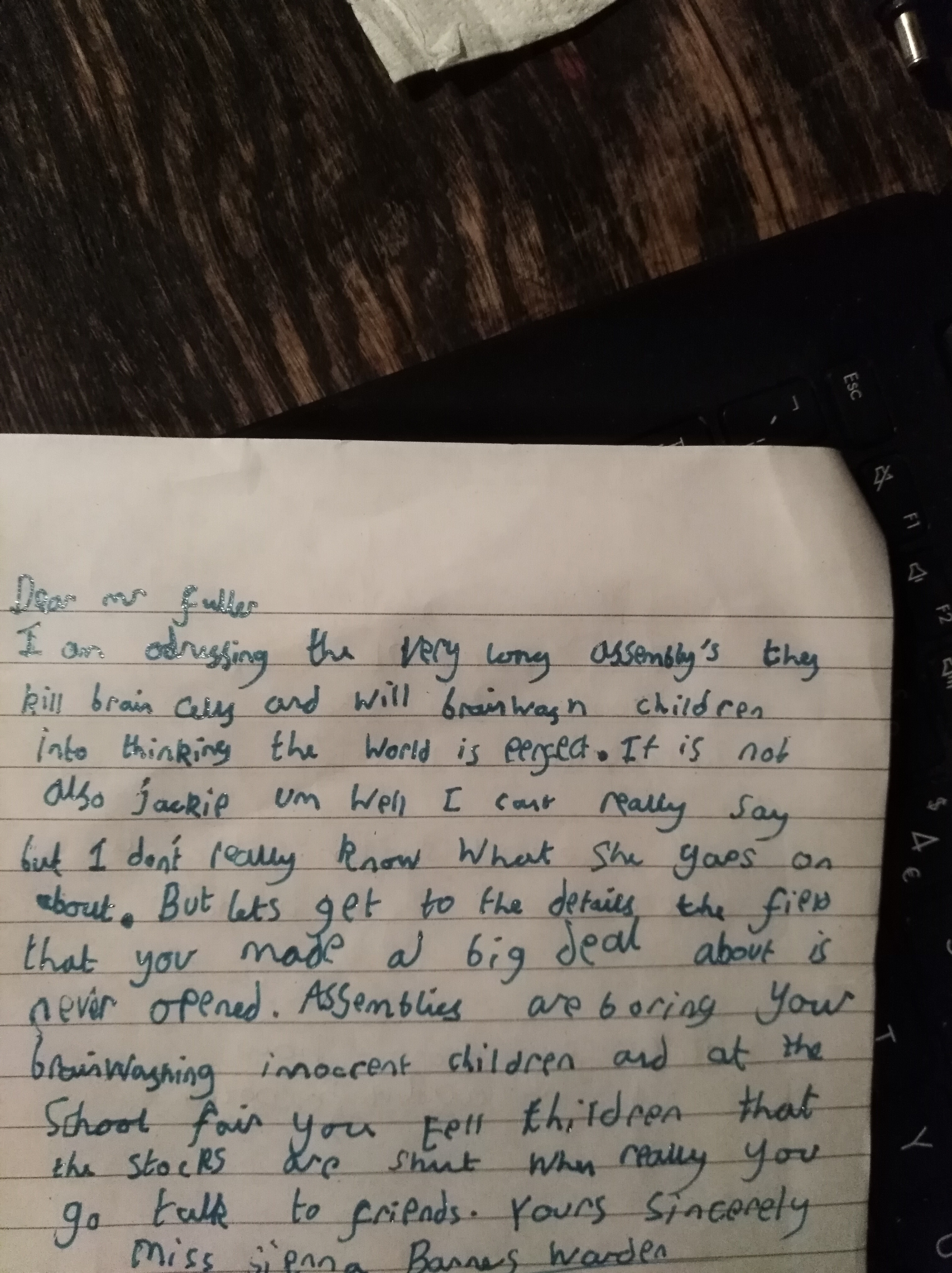
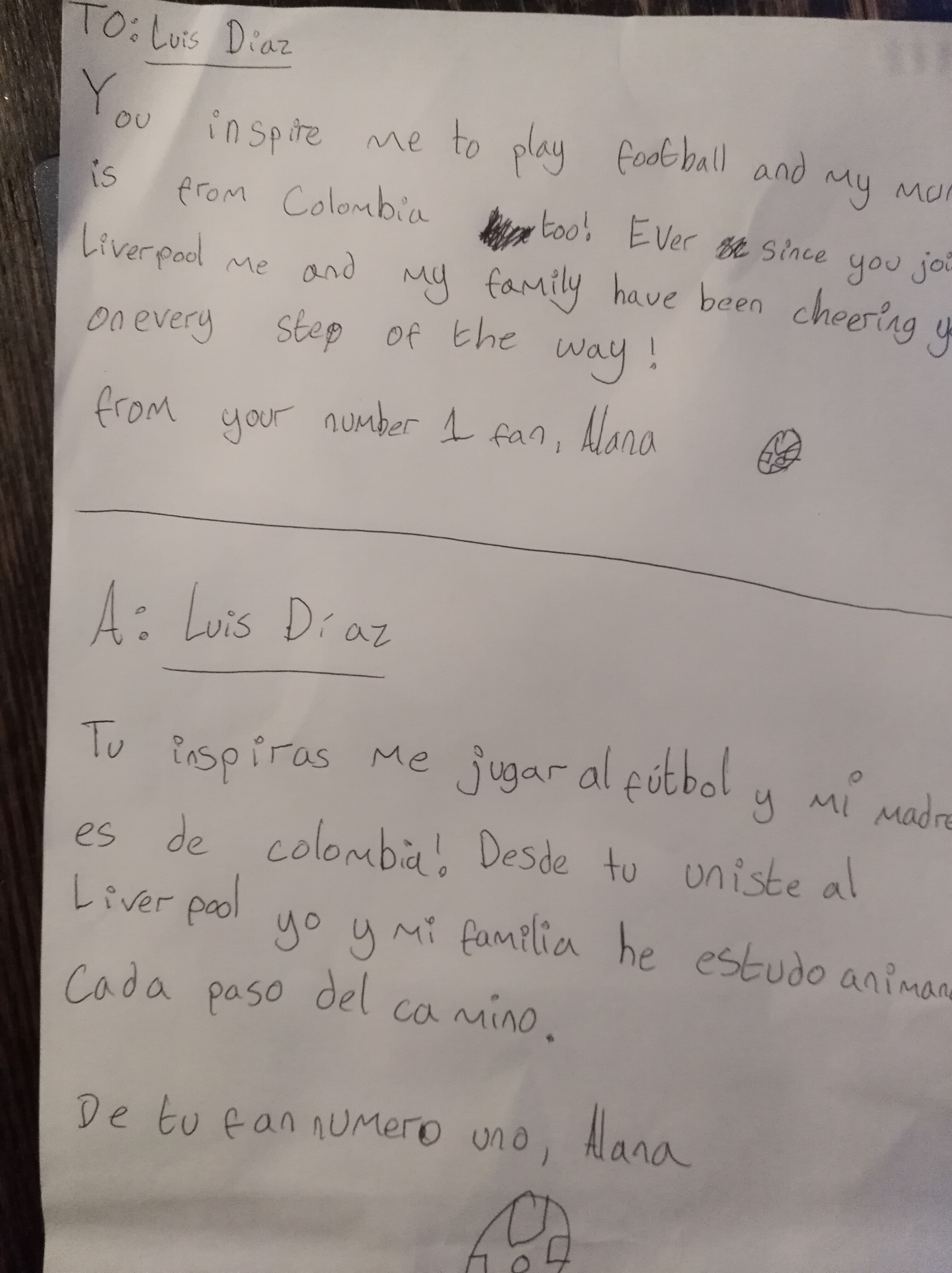
Wednesday CJS group: Well done everyone for having a go at creative non-fiction this week! Again, we had some wonderful letters addressed to people in power, we had some non-fiction and very educational poems, we had a list of things someone is looking forward to (and not) about being a teenager one day, a few fun true stories and some letters to Taylor Swift! Fantastic. Here are a few examples.
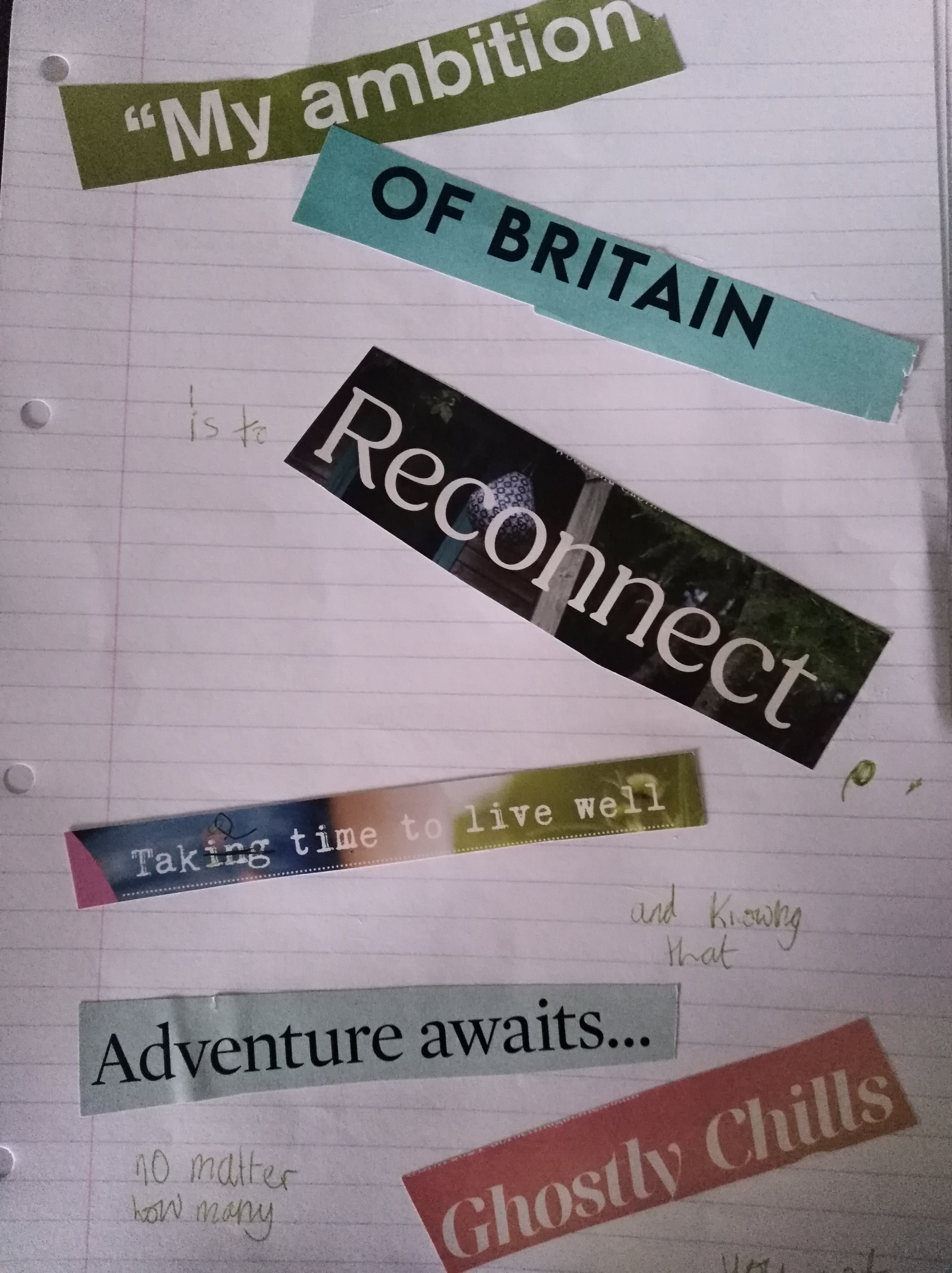
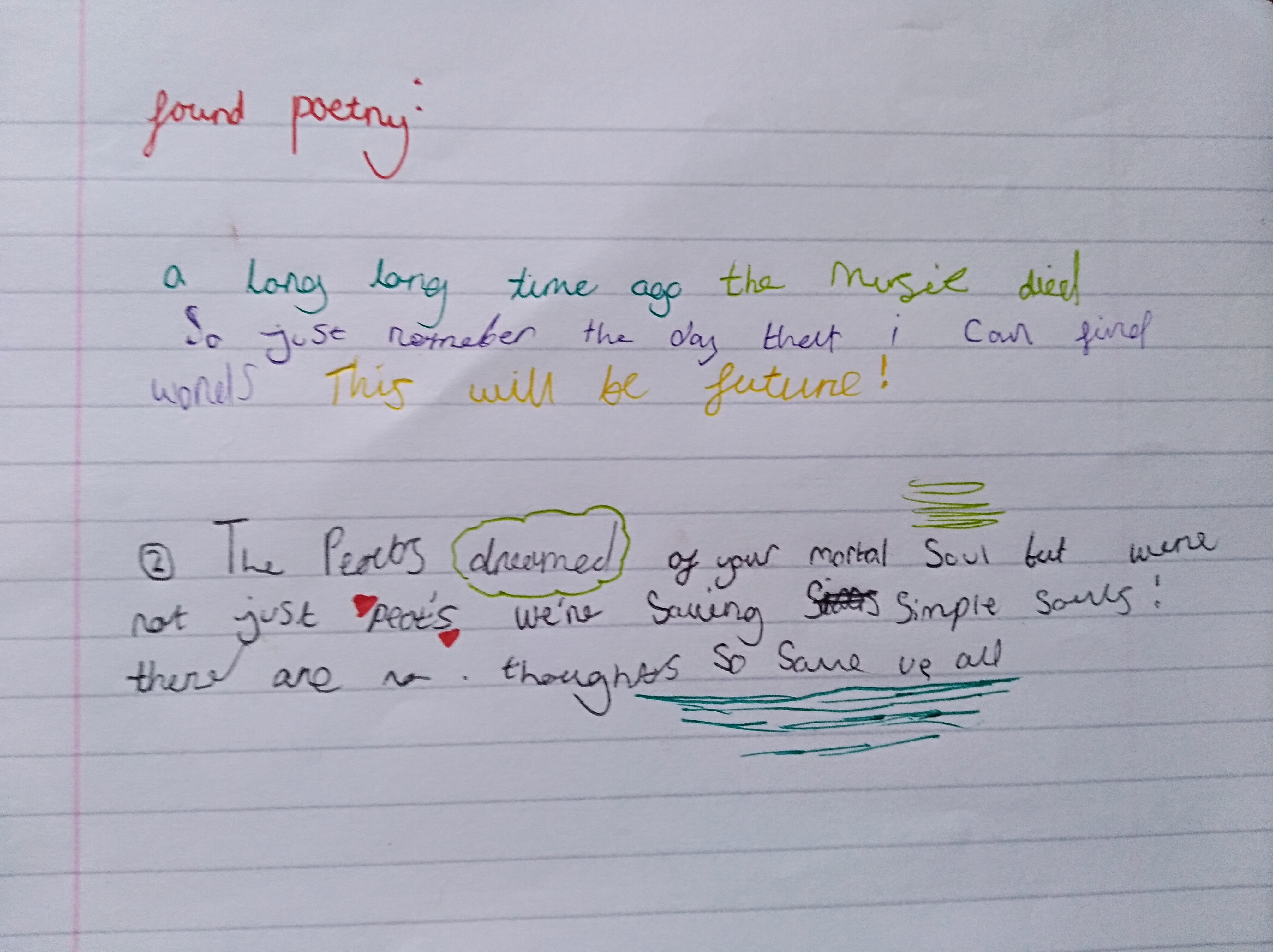
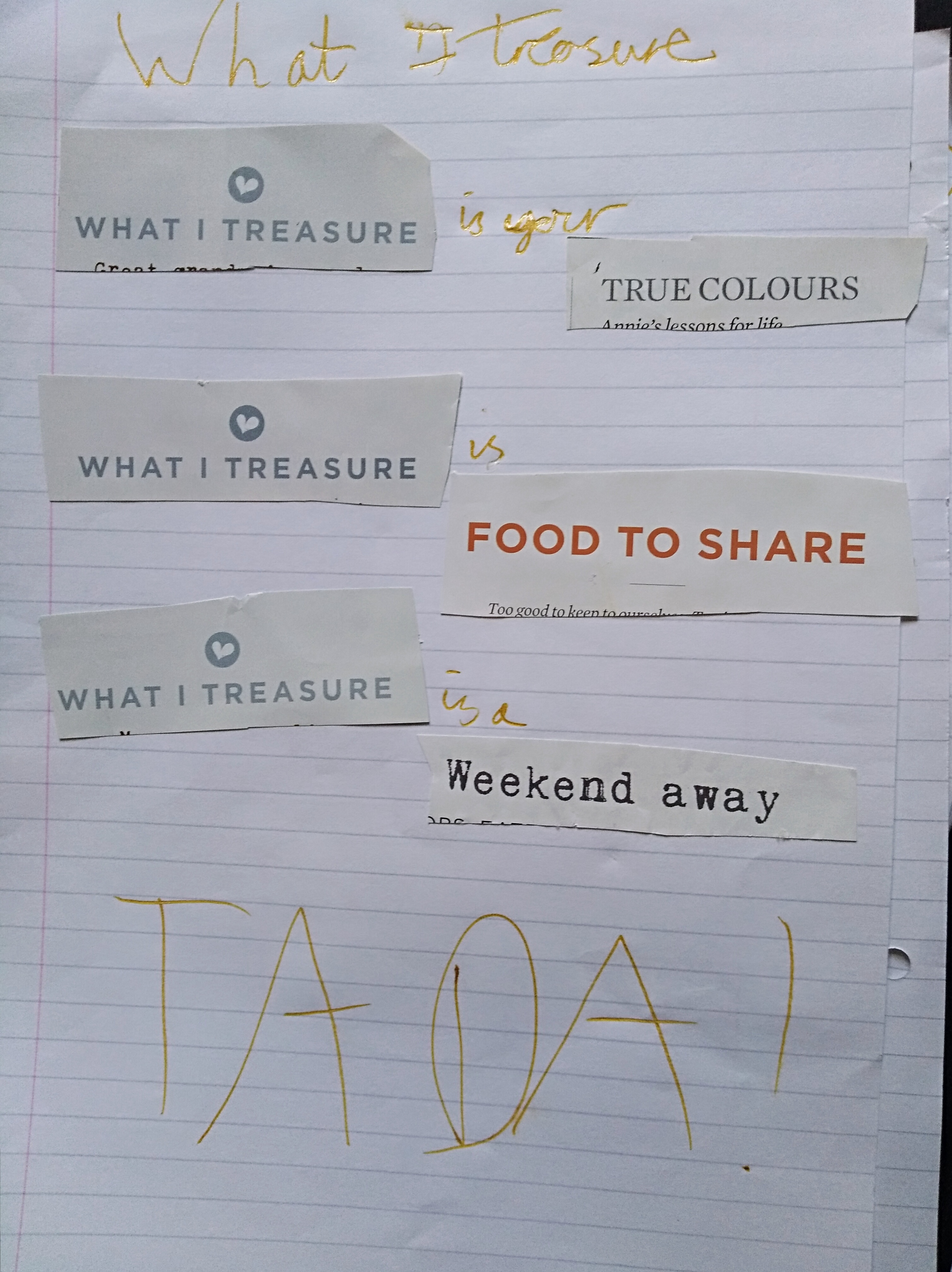
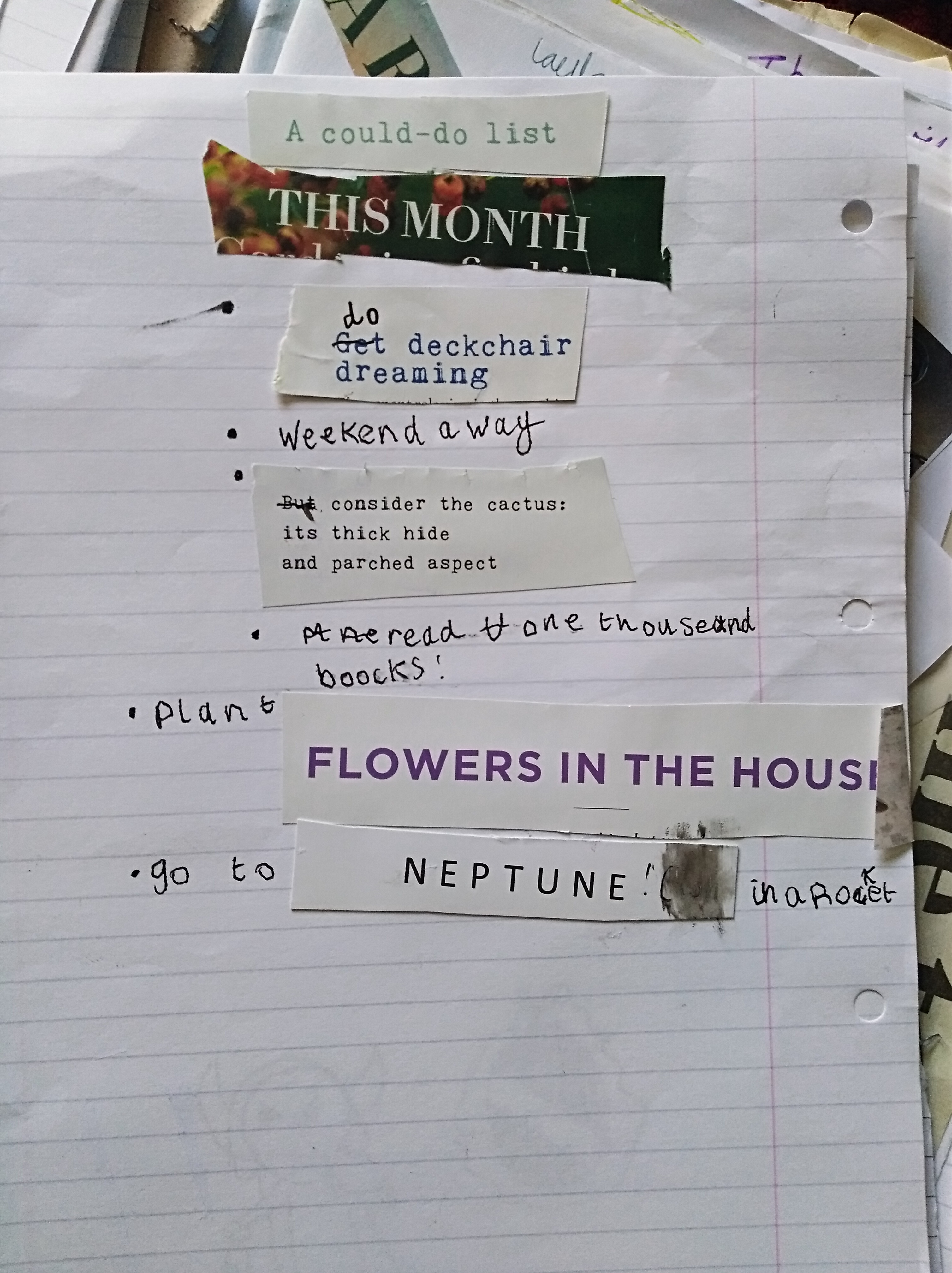
What did we get up to this week? Found poetry and found song-writing!
Welcome parents, carers and young writers. Every week I will post here what we have been up to in writing clubs. The clubs are categorised by day so if your child attends a Tuesday club, for example, simply scroll down to Tuesday to see what we covered this week!
Monday
Monday Zoom Group: This week our Monday Zoom group were the first to kick off the found poetry/song-writing topic. Most of the children are familiar with found poetry and the many different ways you can do it, but we started with a brief explanation and reminder. Today they had a few options available.
I copy and pasted random cut-up lyrics from real songs and put them in the chat. They could then use it to create either a poem, a song or a piece of flash fiction if they preferred. They could take whole sentences from the chat and rearrange them to create something new, or they could take single words, or just ideas.
They could go around their house and look for words and phrases to construct a piece of writing from. Examples could be book titles, newspaper headlines, snippets of news and radio conversations, posters and signs etc.
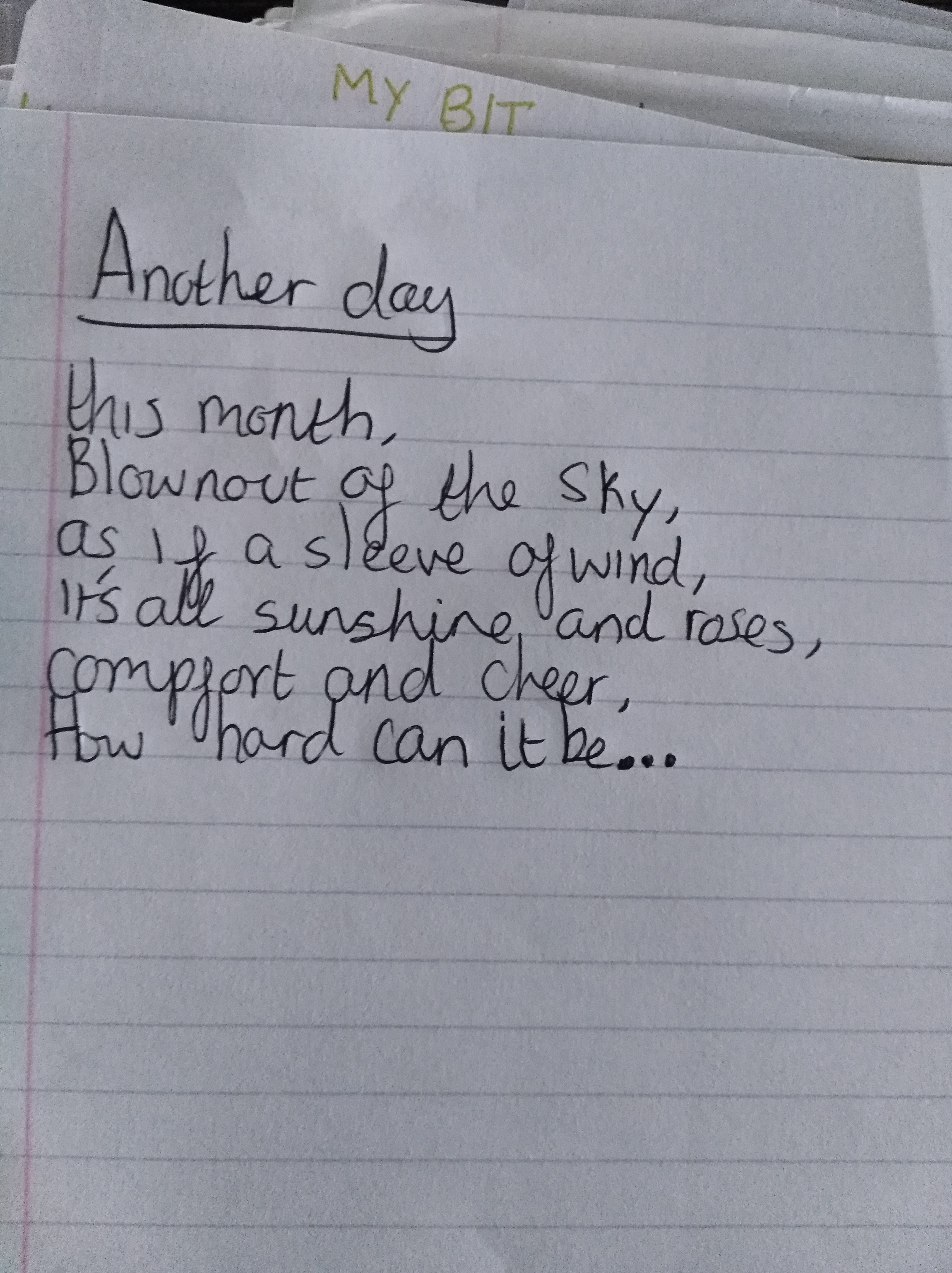
I rather threw them in at the deep end with slightly too many lyrics in the chat, which I ended up reducing for the rest of the Zoom clubs! But we had some fantastic results, including a number of inventive limericks, and some wonderful poems/songs using lyrics from the chat to inspire .
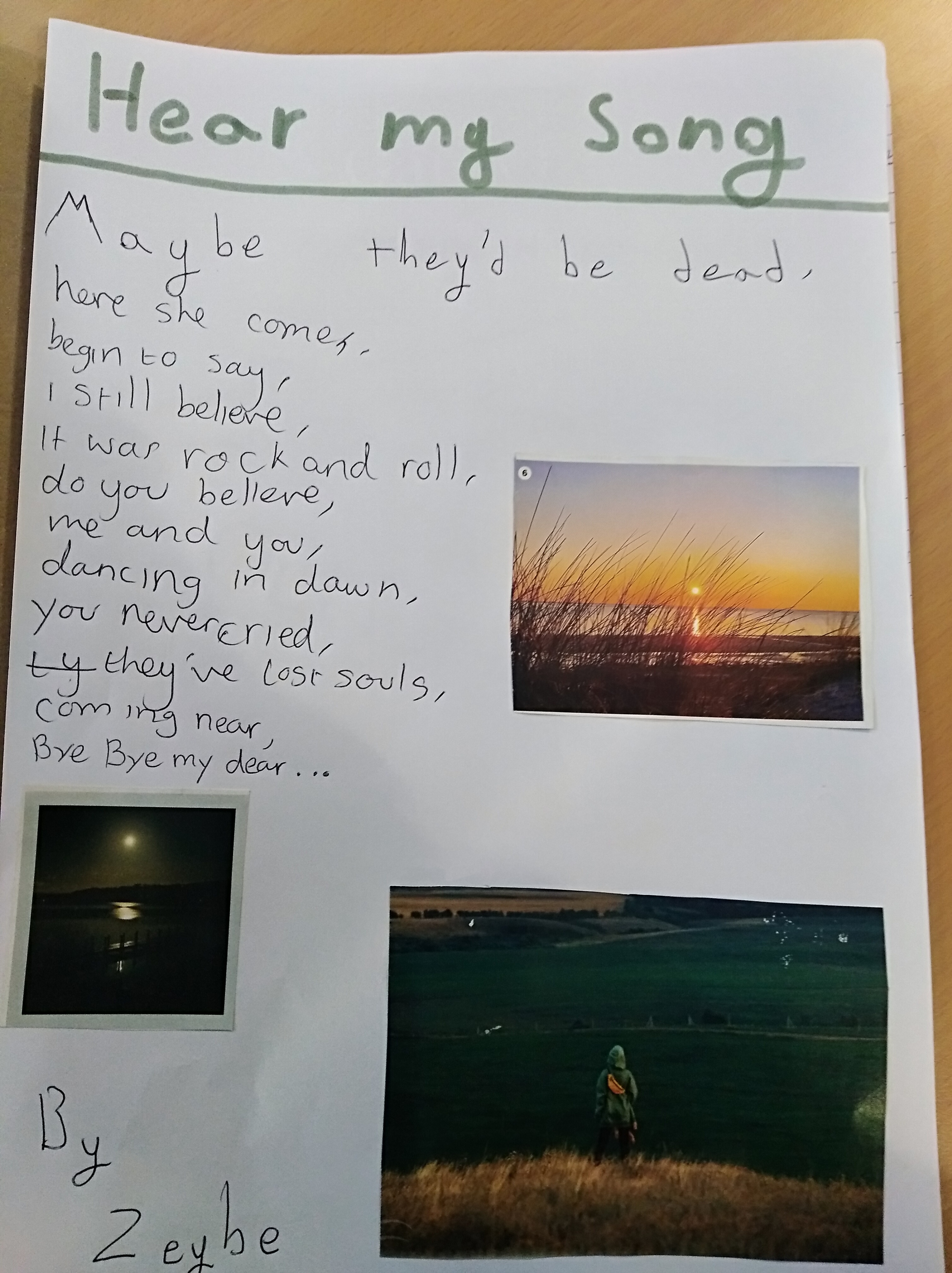
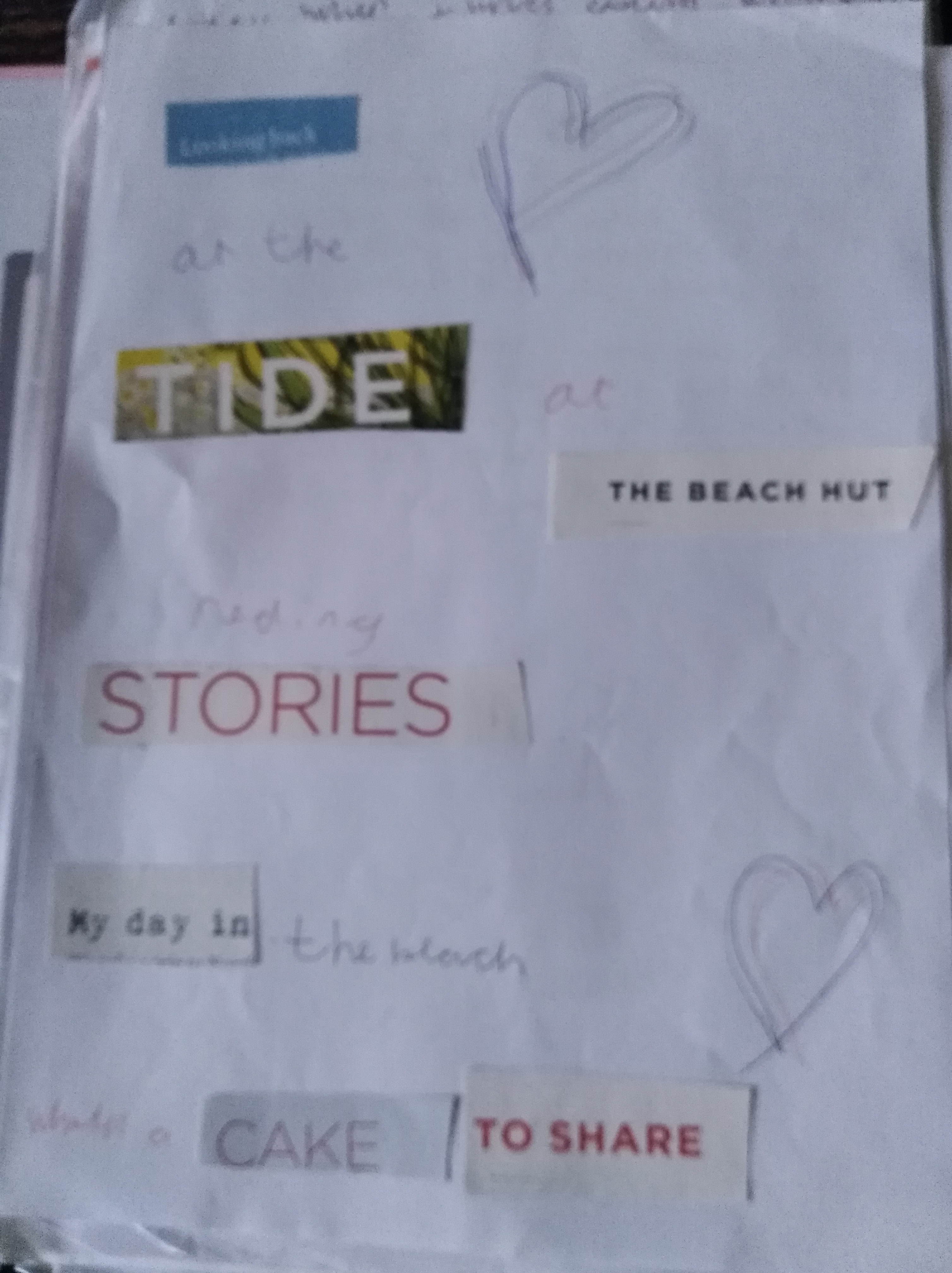
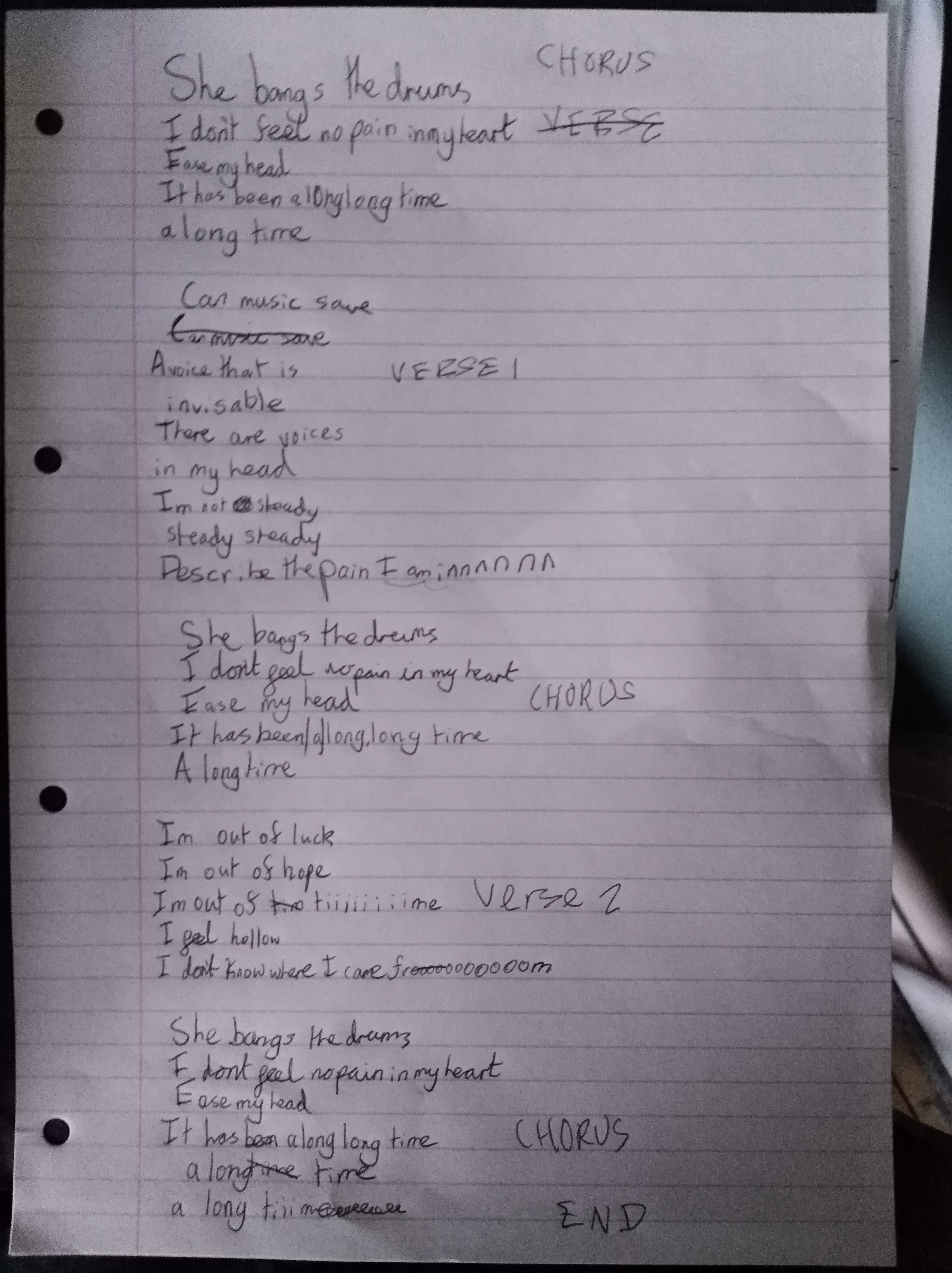
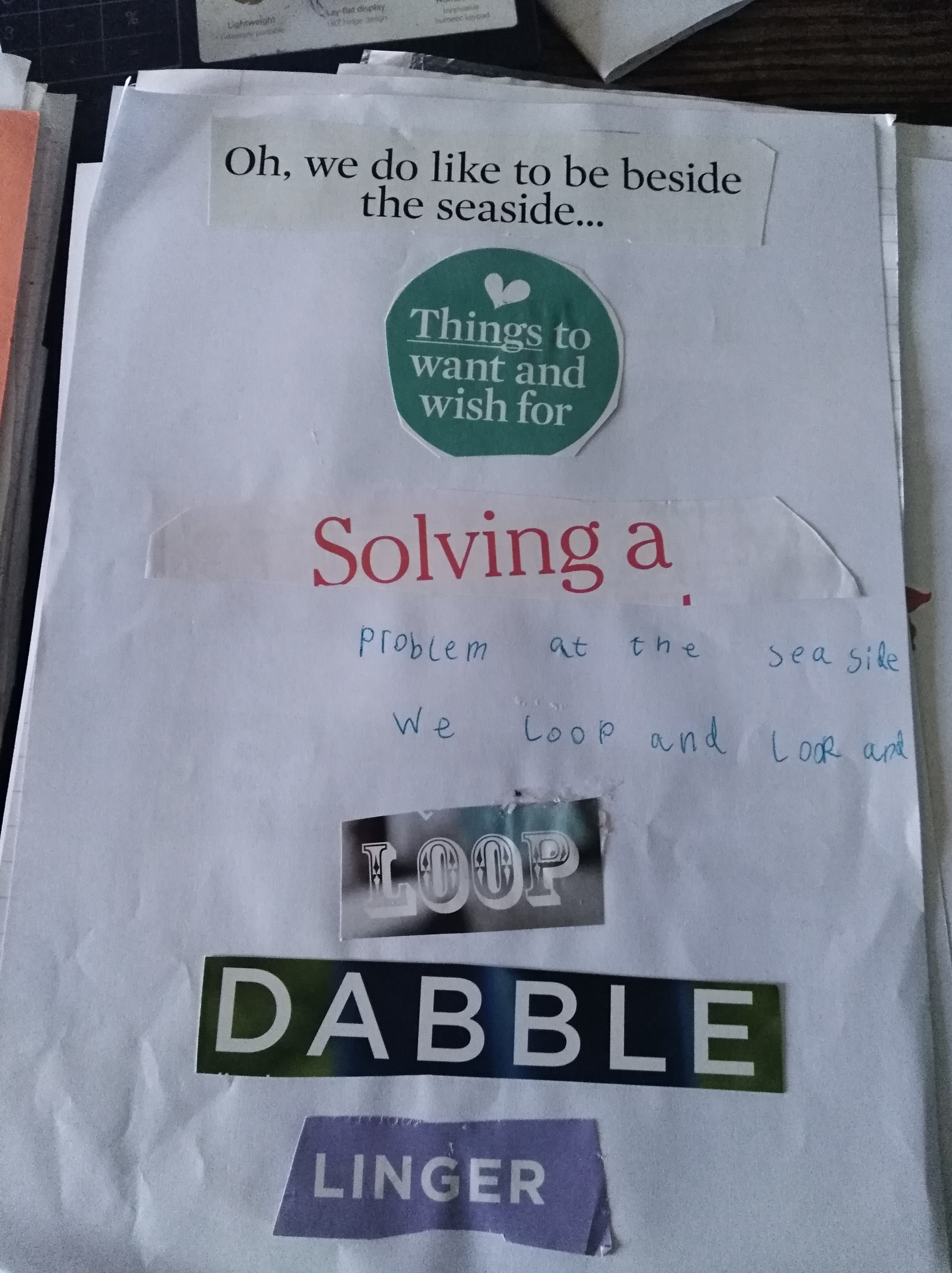
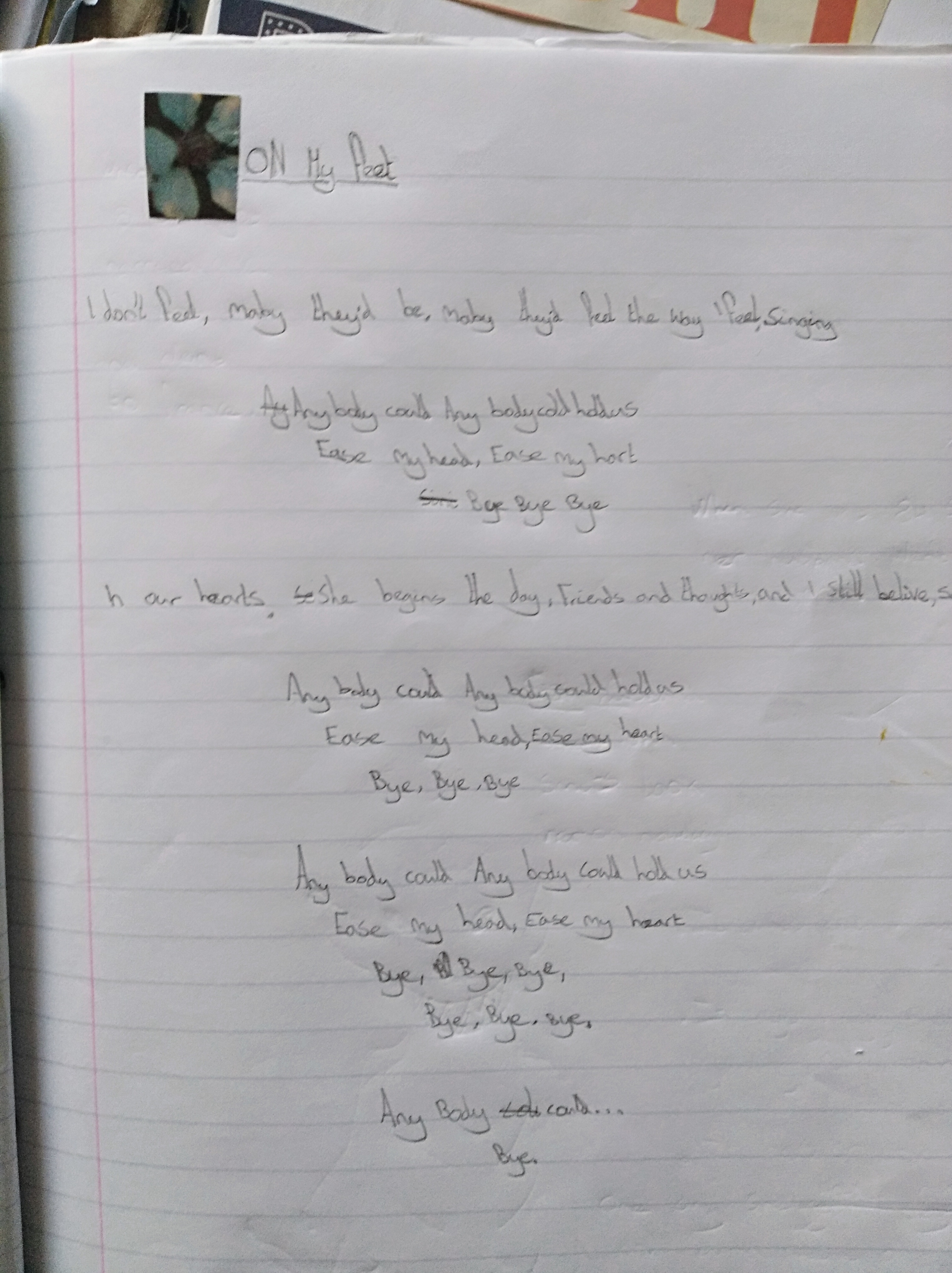
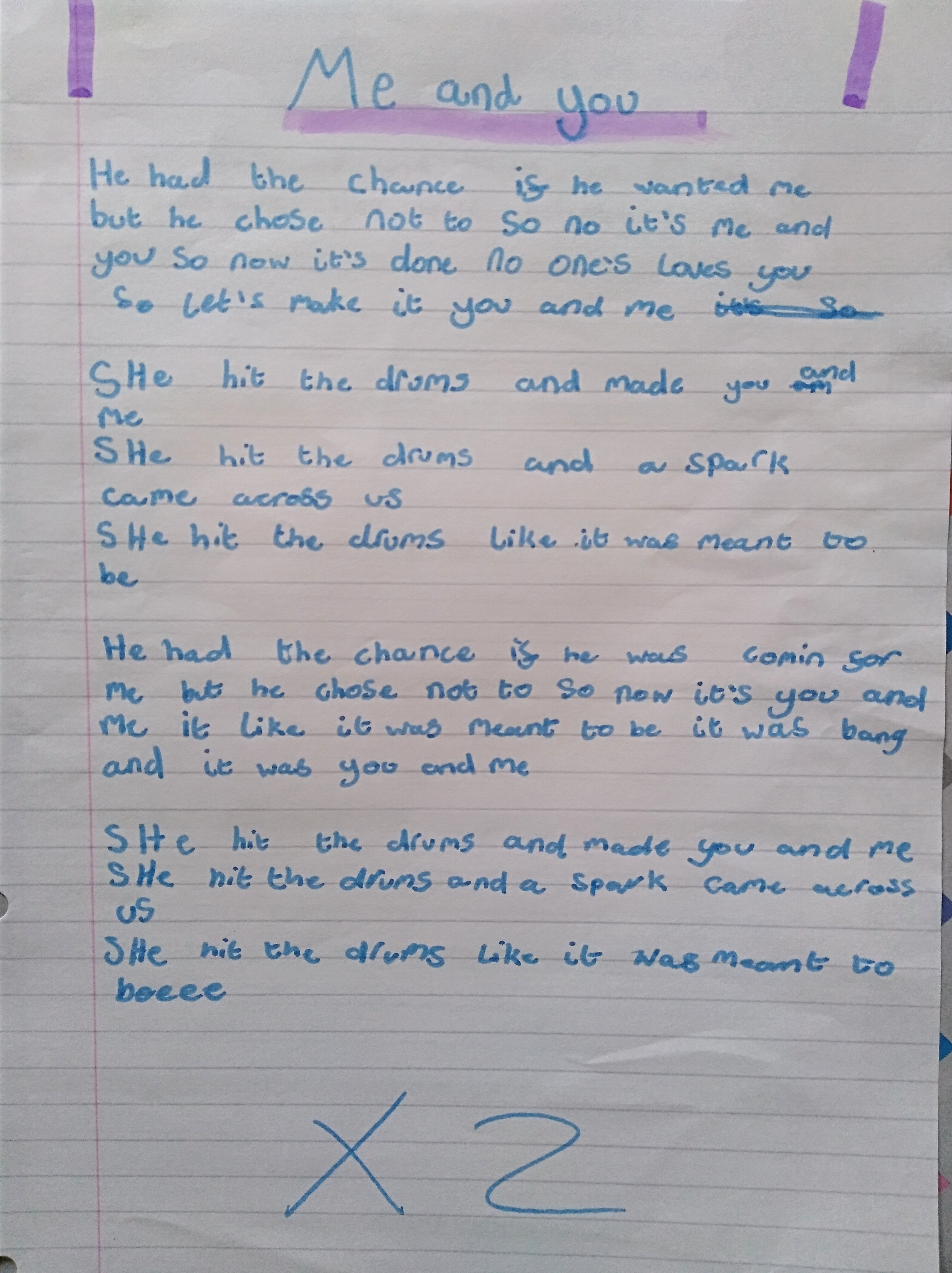
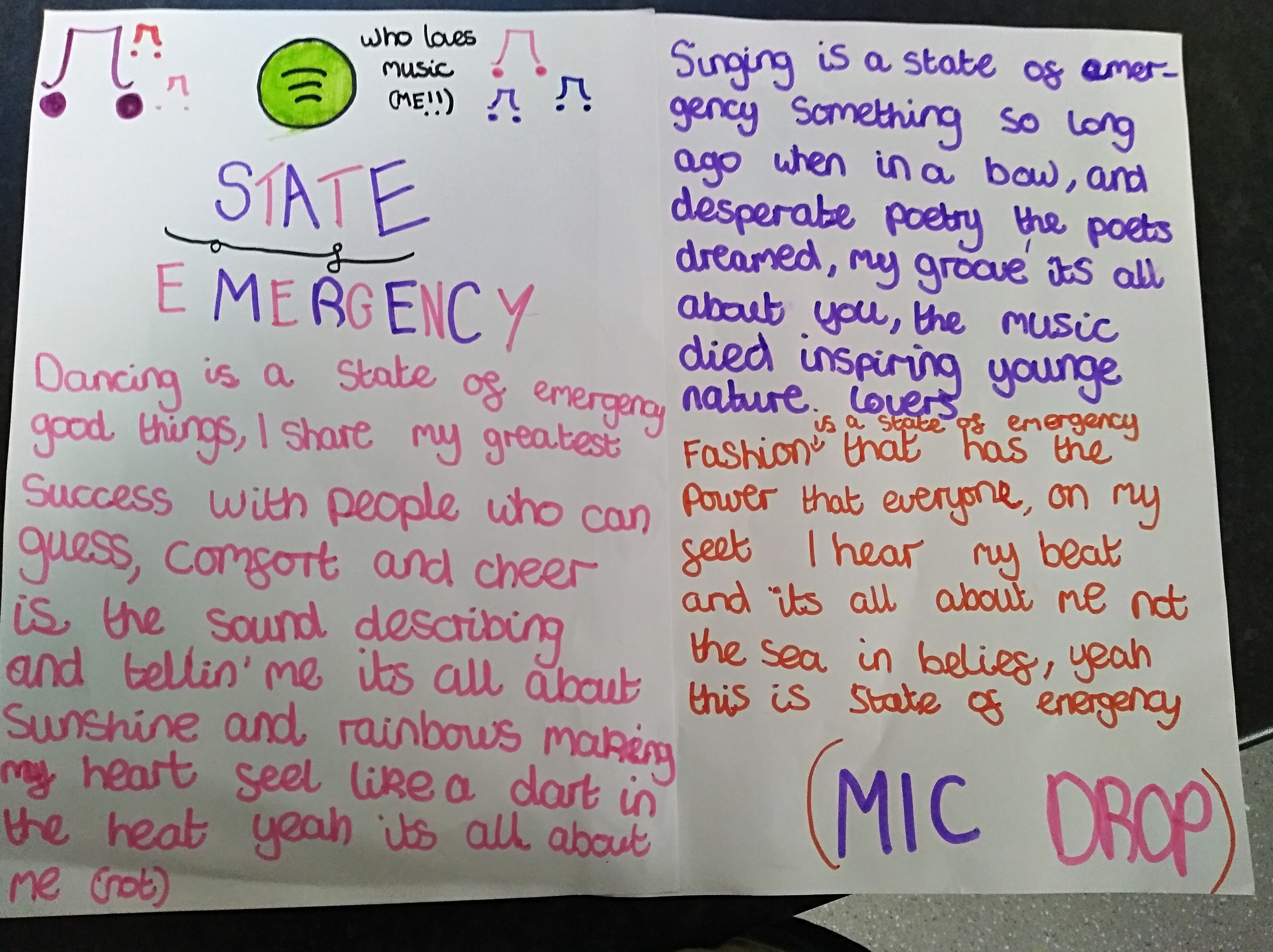
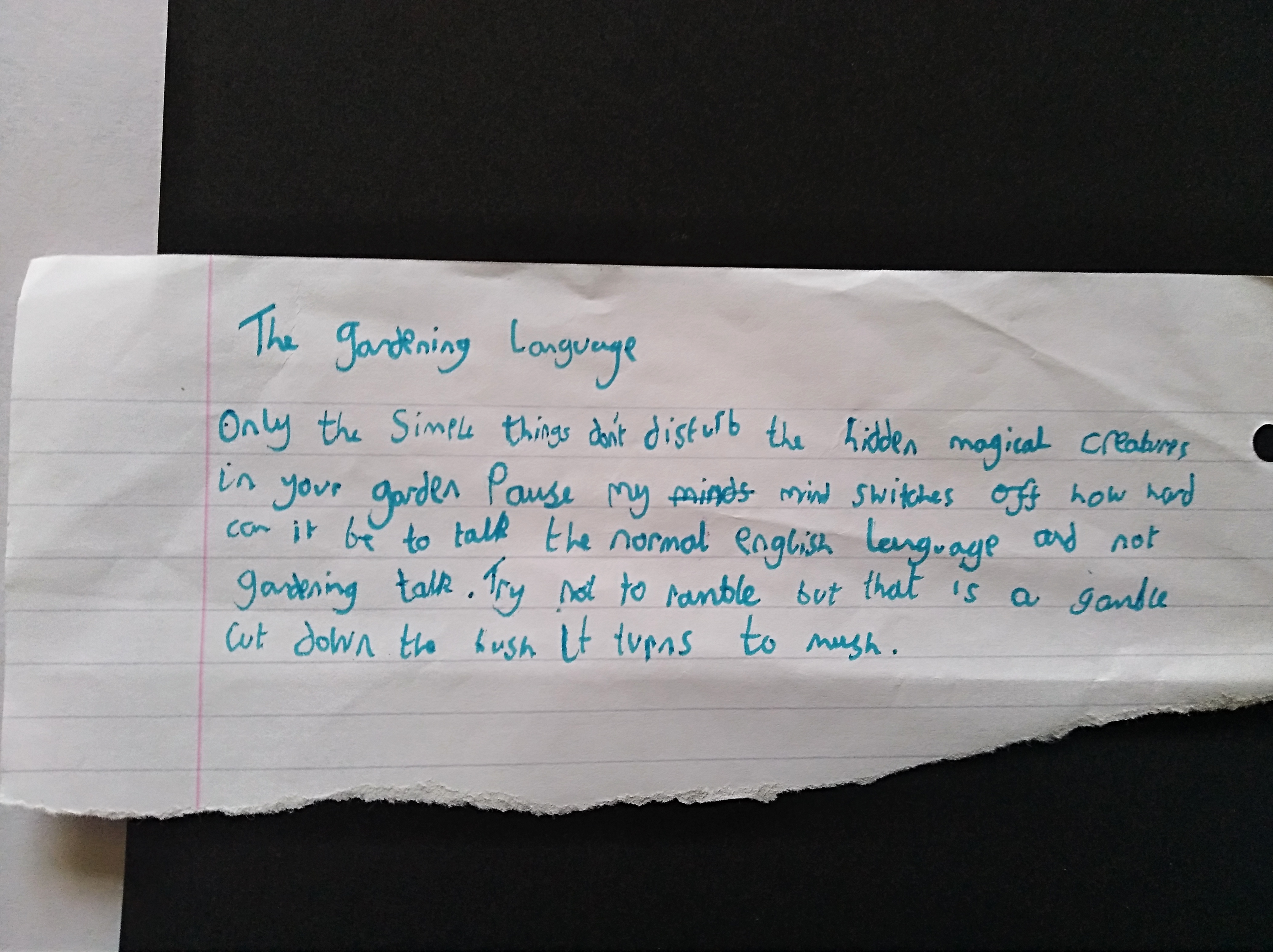
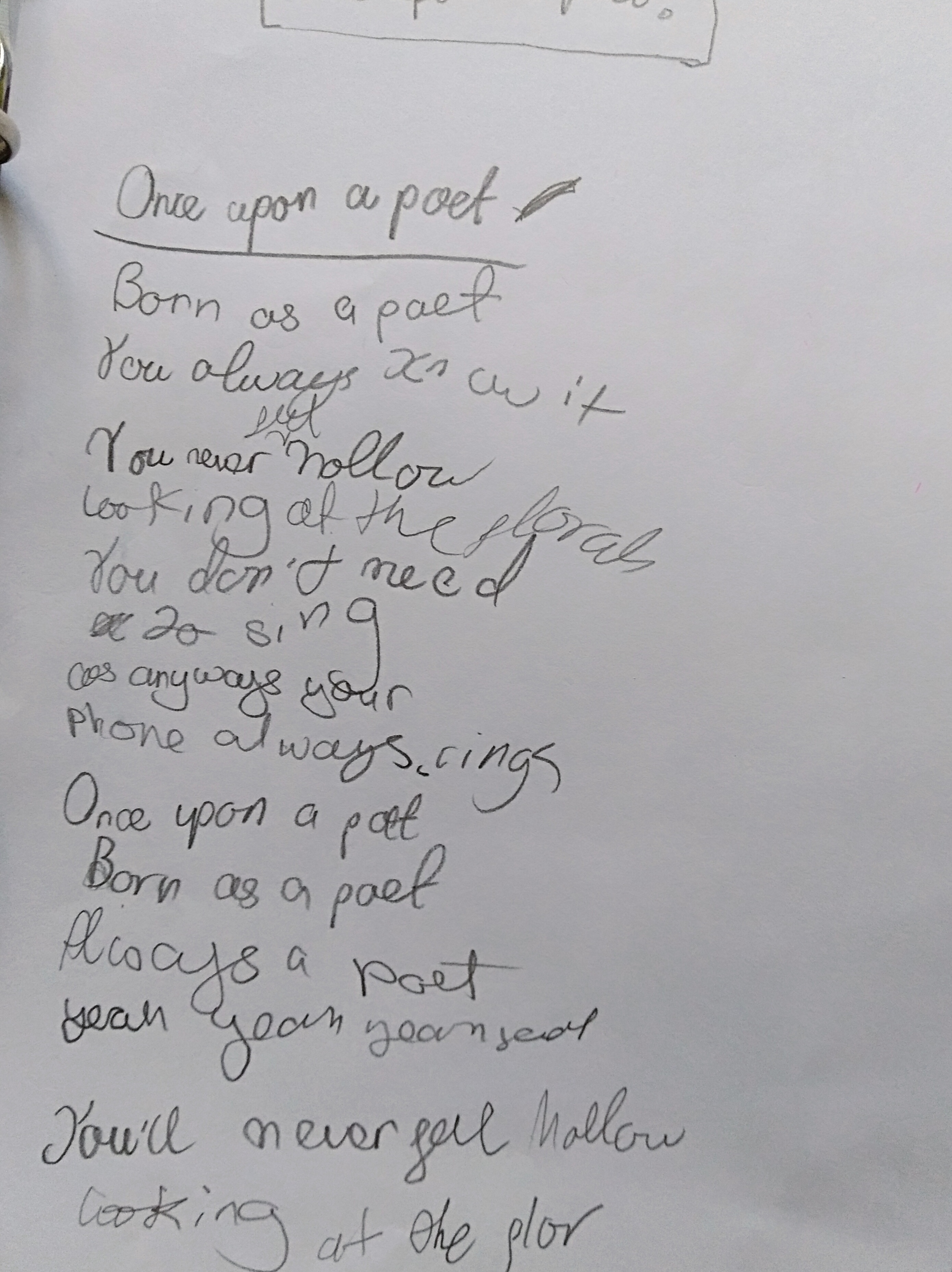
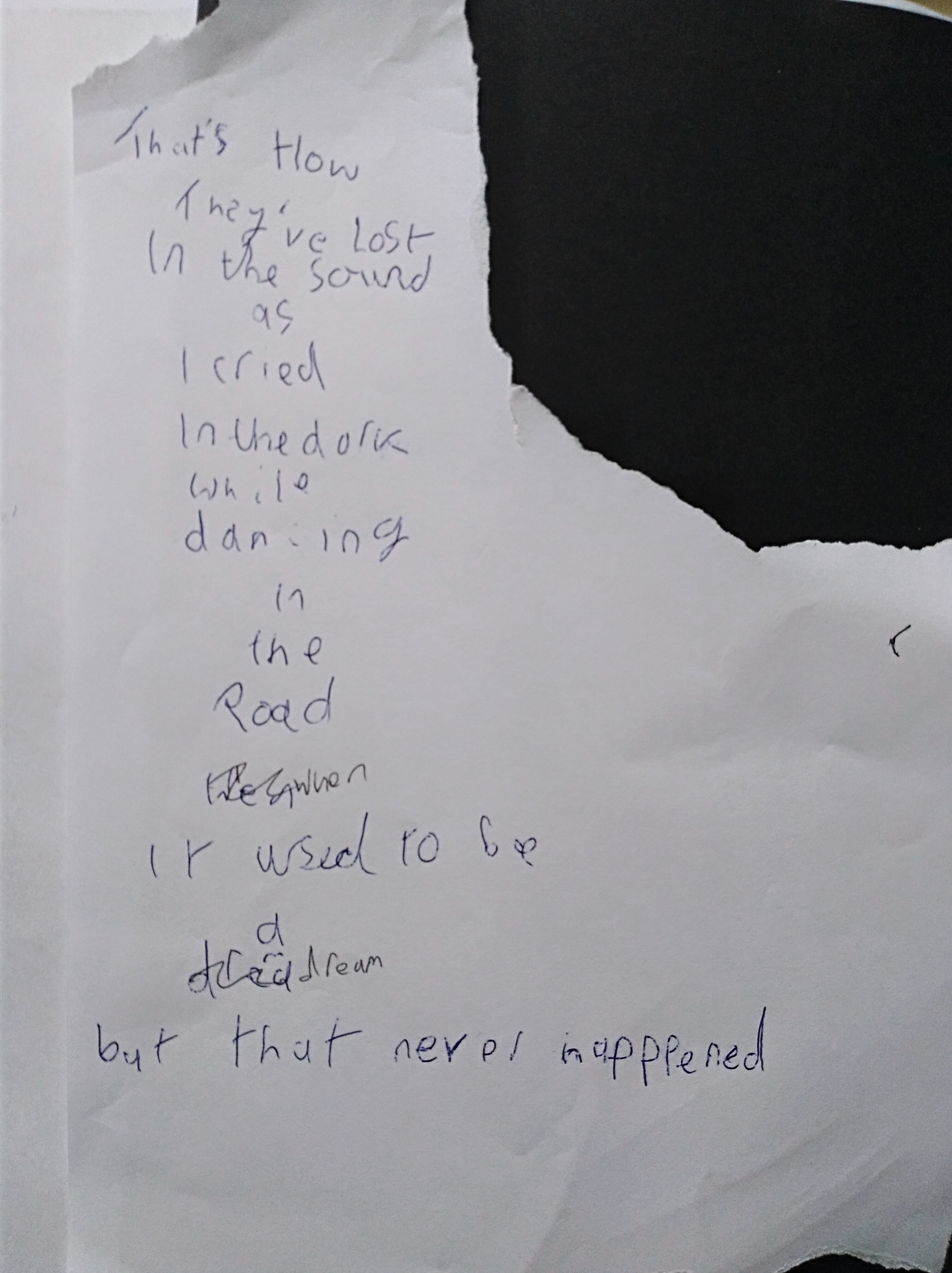
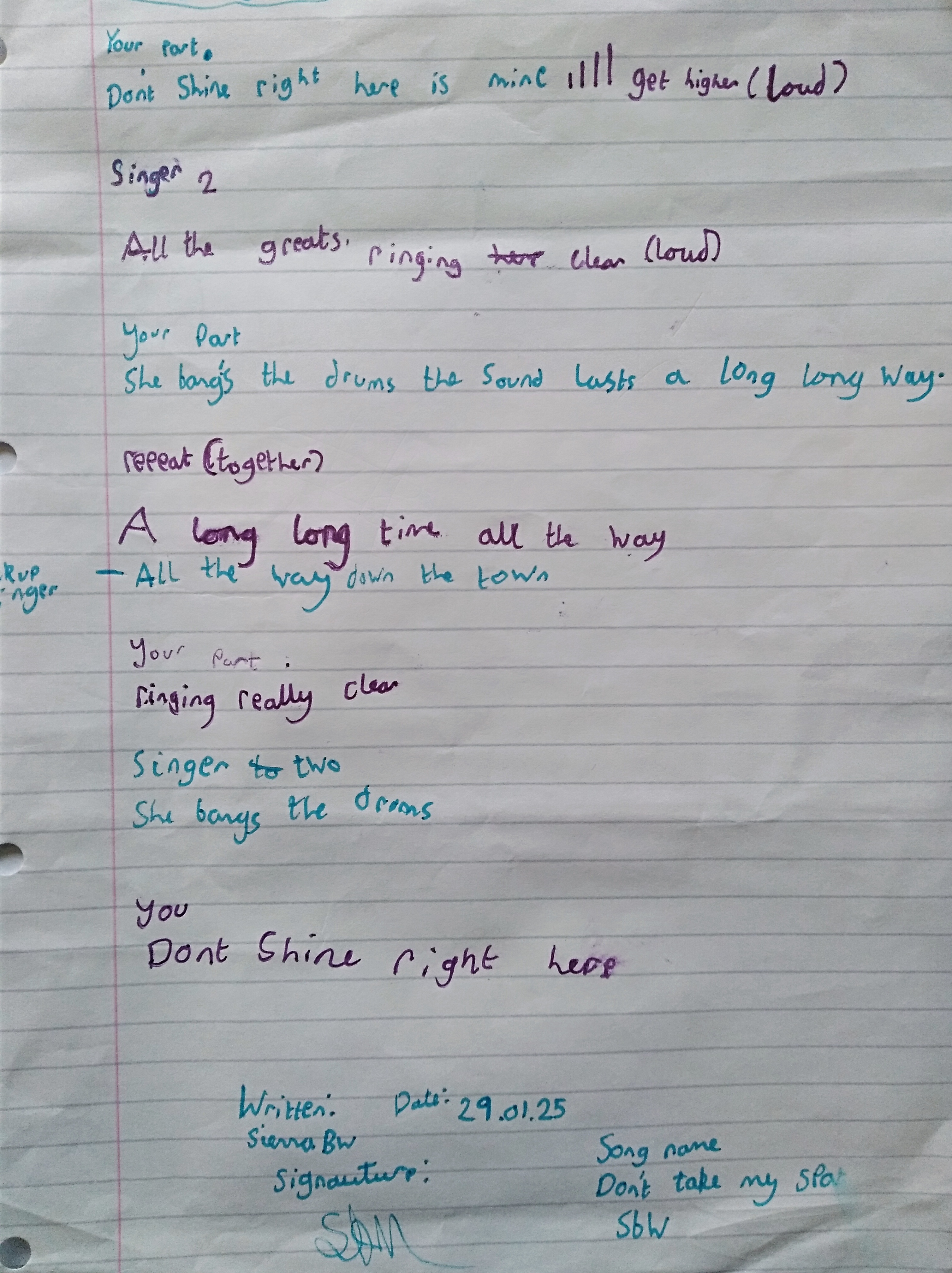
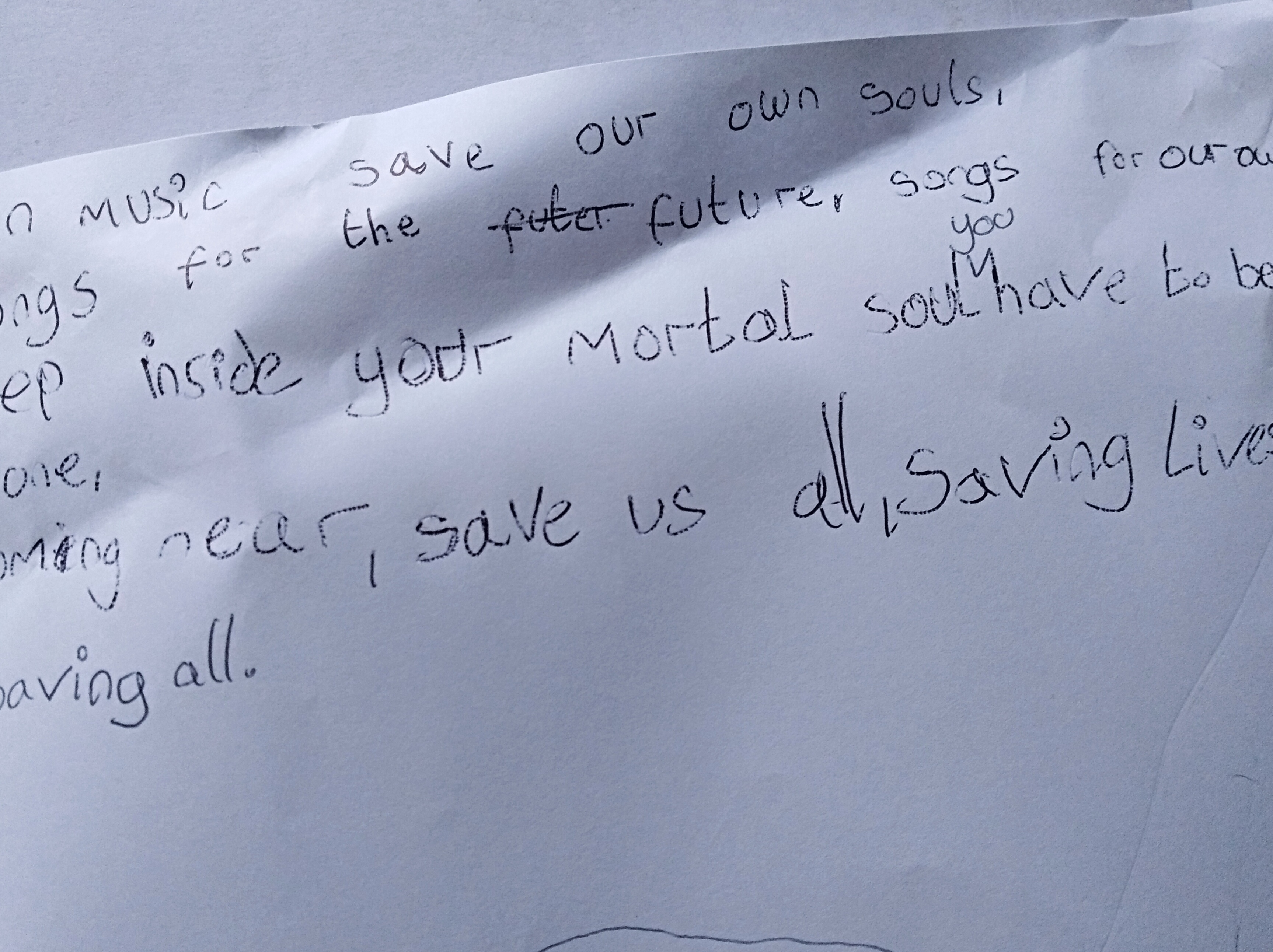
Monday Christchurch Junior School: A slightly different approach for the school clubs. I took in a box of cut up words and phrases from magazines which they could use for found poetry or song-writing. Most of them are also familiar with this technique. But to inspire song-writing I wrote out random lyrics from a few songs about music (I Still Believe by Frank Turner, She Bangs The Drums by The Stone Roses and American Pie by Don McClean) These were written on larger strips of coloured paper they could then move around to suit themselves. Several children armed themselves with piles of strips and found a quiet corner or floor space to construct a song or poem with. We also had some lovely found poetry and it was notable how much better they were having done it before. For example, many were not just choosing random words now, they were choosing words that went together or created a theme. Check out some fantastic examples below!
Tuesday
Tuesday Zoom Group: The 11 plus Zoom group also responded to the lyric challenge and all of them chose to use the random lyrics in the chat to create something new. We had a wonderful poem, a very atmospheric song, and an eerie piece of flash fiction that cleverly connected to previous ones by the same author. Well done everyone!
Tuesday Bransgore C of E Primary School: Bransgore also had a play with strips of lyrics spread out on tables and the floor plus the usual found poetry snippets of words and phrases they are used to. We also had a lovely combination of songs, poems and small pieces of fiction. Here are a few examples.
Wednesday
Wednesday 11 plus Zoom group: A huge well done to this group, who all tackled the lyric found poetry/song-writing challenge with great curiosity and enthusiasm. We had a wonderful mixture of songs, poems and pieces of flash fiction from taking random lyrics and using them to spark off ideas! Well done everyone.
Wednesday 8-11 Zoom group: Some of this group are new to found poetry but took to it with an open mind and gave it a go! Fantastic attitude. They had the same lyrics as the older and mixed age groups and did a truly spectacular job. We had several small and very thought-provoking poems, a song that the author hopes to write piano music to go with, a piece of flash fiction that showed true mastery of language, pacing and atmosphere and a really fun little poem created from the objects and words around them. Everyone did so well!
Wednesday Christchurch Junior School: These guys had the same strips of lyrics and random words from magazines and the option of writing songs, poems of pieces of flash fiction. We had a lovely selection of all and I was very impressed by everyone! Here are a few examples.
A huge well done to everyone! See you all next week!
Writer’s block is something most writers experience at some time or another and it is something that writers tend to dread. I’m not a fan of the phrase ‘writer’s block’ because there is something about it that sounds so hard and final, like a literal brick wall. I prefer to think of it as simply being ‘stuck’. And writers get stuck all the time and for many different and complex reasons. Here are just a handful of ways writers can get stuck along with tips to get unstuck again!
1.Plot Stuck #1- one of the most common and one of the hardest to get through. There are a number of ways you can get stuck when it comes to your overall plot and we will discuss two of them here. The first is the most frustrating and it happens to me a lot. You know exactly what you want to happen in your plot because you have planned it all out, created your character bios and maybe even written all your chapter outlines. You know what is going to happen, so it should be simple, right? Nope. The most frustrating thing about writing a story or a novel can be knowing what you want to happen but not knowing how to do it. I think one of the reasons we feel like this sometimes is a lack of confidence in our writing. We have a good idea, a solid plot but think maybe someone else could write it better. That’s not usually the case. You just have to accept it’s going to be hard work and a long slog to get it right. Eventually, you will bring in beta readers and editors to help point out where things could be improved and believe me, as further drafts are written and rewritten, you will eventually figure out the best way forward. Writing is largely rewriting after all!
The Solution – sadly there is no easy fix for this problem. It may involve lots of long walks and time spent thinking about your plot and how to move things forward. Sometimes the answers come when you least expect it. It may mean you have to go back to your chapter outlines and remind yourself of the plot, perhaps inspiring a way forward. Sometimes you just have to write it anyway. Put the characters where they need to be, write the dialogue, advance the story and worry about fixing it later. When you know what to do but not how to do it, the important thing is to just push through and get it done. It will probably be ugly and clumsy and you may very well figure out a better way to do it later on but don’t let that stop you.
2. Plot Stuck #2 – This is when you simply don’t know what to do next. This mostly happens to writers who don’t plan or outline their stories before they start. There is nothing wrong with that approach at all. It can be really fun and invigorating to just start writing and see where the story and the characters take you. But it does increase the risk of getting stuck eventually. You run out of steam. The plot trails away or misbehaves. You don’t know what these characters are doing. You’ve run out of ideas. It can be really scary to feel this way and many writers will give up at this point and start something else, but there is a way to solve it!
The Solution – Sometimes the only way to solve this one is to embrace planning and plotting. Go back to the start and remind yourself why you wanted to write this story, what the driving idea or concept was. Remind yourself of any important themes you wanted to explore. Take a look at your characters. Are they developed enough? Maybe they need more work to bring them to life, which again means giving in and embracing some planning. If this fails, there are other things you can try. I am a strong believer that taking long walks in nature dislodges ideas in our brains. Any time I have every been stuck with a book or a story, I have usually found the solution during a walk with my dogs. Some people find taking a long bath or shower can help or maybe another immersive task such as gardening or cleaning. Get away from the screen or the notebook and do something else for a while. Another thing worth trying is asking other people. Ask your friends and family or even people online what they think about your plot so far. This has also worked well for me in the past. I’ve often used a family member for a sounding board of everything that is annoying me with my work in progress. Often they will mention a few things or suggest something that actually really makes sense. Don’t be scared to ask for help or find inspiration around you.
3.The elusive ‘right’ words – another really common one and one I can sympathise with. Sometimes you’ve got everything else in place – the characters are fully formed, the plot is advancing well and you know what to do but then words and phrases start to elude you. When writing a first draft we want to get it right, it’s only human nature to want to try our best and achieve something good first time around. The words hide from us and its like we are looking for those perfect, right words to make our sentence really fly off the page, and they just won’t come. I hate it when this happens as it can really disrupt a good flow of writing. It’s a case of partly knowing what to say but not how to say it and partly being a bit of a perfectionist who wants to get it right first time.
The Solution – You can try some practical things like asking for help, consulting a thesaurus or dictionary or bringing in a beta reader or fellow writer to help you find the ‘right’ words. Or you can do what I do…use the words you have and move on. At some point you will come back to this passage and rewrite it. As we have already established, writing is mostly rewriting! Sometimes we just have to write the best sentence we can at that moment, shrug it off as imperfect but at least done, and move on. Remind yourself that you will come back later to fix it and more than likely the right words will be there as if by magic!
4.Not Enjoying It Stuck – Sometimes we get stuck because something is wrong. It may be a mix of all the things mentioned above or it may be something bigger. As writers, when we have already committed many hours to a story we are sometimes reluctant to admit it is just not working. I recently experienced this. I was writing a book, dedicating myself to a chapter every night, but it felt very forced. I was forcing myself to do it and that didn’t feel right to me, because writing should be fun! It took me a while but I finally figured out what the problem was, and yes it is going to involve a heck of a lot of rewriting but I am not stuck anymore! I had to admit what was wrong and set about fixing it. If you are not enjoying your writing, you will continue to get stuck or blocked so you need to work out what the problem is.
The Solution – Don’t give up. Don’t bin it just yet! You might need a break from it, in which case put it somewhere safe and come back to it another time. Write something else. Write a short story or a blog post or a poem. Give your frazzled mind a break from what has been frustrating it. This can work because if the idea is strong enough it will eventually push back through. But also, you need to figure out and admit what is wrong with it. Very often it lies with the characters. Perhaps they are not strong enough, not believable enough or developed enough. Go back to scratch with them and put more work into developing them into real people with flaws, quirks, wants, needs, mannerisms and back stories. Sometimes it might be the point of view. Try switching from third to first person or vice versa. Sometimes it might be the tense. Try it in present tense if it’s in past, and so on. Sometimes it is the audience – did you set out to write a thriller or a mystery or a romance? If you did, the chances are all the other books in that genre are sitting on your shoulder watching and adding pressure, along with the perceived tropes and expected elements of that genre. It is useful to know your audience before you write, but it can also sully the writing and make it feel like you are writing to order. Write for yourself first and foremost. Write the book you would like to read. This will bring the enjoyment back and you can figure out the rest later!
Over to you! Have you ever experienced writer’s block and if so, what was it like for you? In what ways do you tend to get stuck with your writing and have you figured out a way to get unstuck?
We hope you have enjoyed our post about writer’s block or being ‘stuck’ and have found the tips useful. If you have anything to share or add, please feel free to leave a comment!
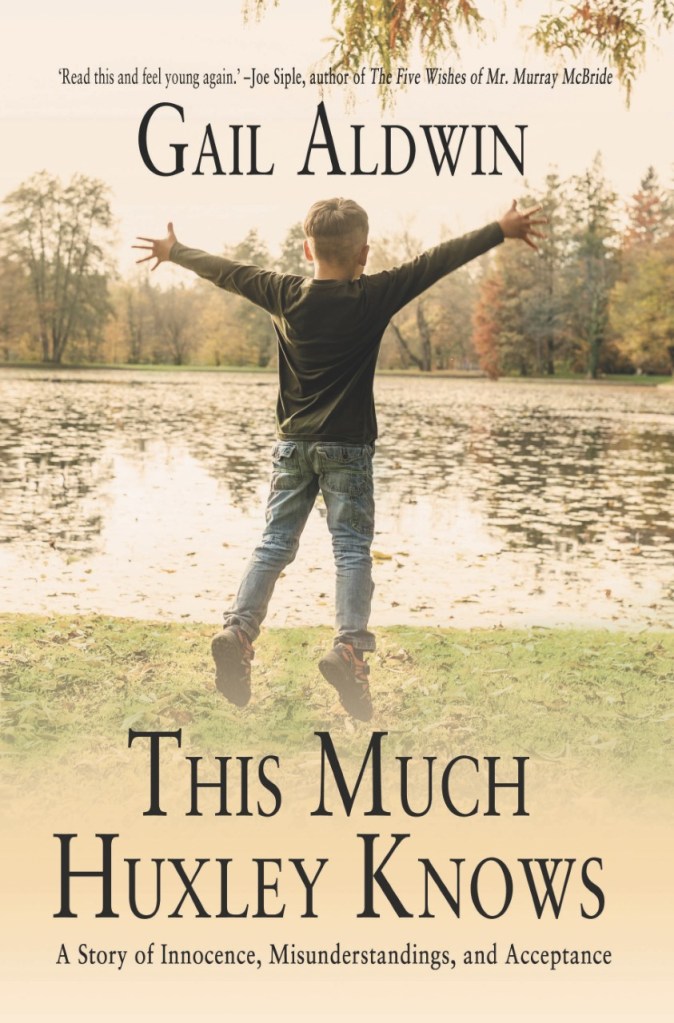
As you have may have seen on the Chasing Driftwood Facebook page, it is Indie Author Week UK all this week so we are trying to highlight a few local indie authors who we think deserve the shout out! Gail Aldwin is a Dorset based author with some fantastic titles to her name. Her latest release, This Much Huxley Knows is available from the 8th of July. She kindly agreed to an interview with us – so here it is. Enjoy!
Can you tell us a bit about yourself – introduce yourself to anyone dropping by!
I’m Gail Aldwin, a Dorset writer currently on sojourn in Cambridge. I like to get about and was volunteering at a refugee settlement in Uganda before repatriation in 2020 due to Covid-19. I’ve been writing for over a decade and am continually fascinated by the ideas that pop into my head.
2. Do you have a preferred genre to write in and if so why?
My passion is for writing contemporary fiction. A novel is the biggest undertaking of all writing projects and perhaps the most rewarding. Pandemonium a children’s picture book I wrote with illustrator Fiona Zechmeister was great fun to create and involved in-depth collaboration – a whole different process from writing a novel independently. I continue to dabble in short forms of writing alongside drafting a new work in progress, as I find this exercises different creative muscles and like cross training, helps to build the stamina to complete a long project.
3. Where do your ideas come from?
Ideas are like dandelion seeds floating in the air. You just have to reach out and grab one. Now I’m more experienced as a writer, I usually know how to develop an idea. If it’s a fleeting moment or thought, that works for poetry. Where I can develop a story arc, it might be right for short fiction. Sometimes, ideas prompt questions and considerable thought. Those are the ideas I want to explore in a novel.
4. What kind of reader do you think likes your books?
This Much Huxley Knows targets readers who enjoy an uplifting novel. As it’s set in a London suburb and is going to be published in America, anyone who is an Anglophile or likes British humour won’t be disappointed.
5. What are you working on right now?
My work in progress is called Little Swot. It’s a dual timeline novel initially told from the viewpoint of a menopausal and redundant journalist in 2010. Stephanie decides to create a podcast which looks into the disappearance of sixteen-year-old Carolyn in 1978. Through the alternating structure of the two viewpoints, readers engage with Stephanie’s investigation and also connect with Carolyn’s experience of infatuation for a teacher and exploitation. This is a new venture for me, into the realms of crime fiction.
6. What sort of books do you like to read yourself? Any favourites or recommendations?
Lots of my reading recently has supported writing friends who have been published. One of them, Paula R C Readman, has written a remarkable novel Stone Angels which has been described as a why-done-it rather than a who-done-it. The story relates to an artist who requires beautiful models to satisfy his muse.
7. Can you tell us about your writing process? Are you a plotter or a pantser? How many drafts do you tend to do before you are happy?
My debut novel The String Games was written as part of a PhD and this involved using the novel to experiment with different ideas, techniques and strategies linked to the research. As a result, the novel went through about fifty drafts. Since then, I’ve plotted each novel to the ninth degree to try to avoid going down fictional dead ends. I’m sure This Much Huxley Knows went through loads of drafts but certainly not as many as fifty!
8. How often do you write?
I write every day. Since lockdown, I’ve joined writers’ hour each weekday morning at eight o’clock. It’s a zoom call with hundreds of other writers who share a concentrated fifty minutes of writing. We are welcomed by hosts at the London Writer’s Salon and offered a few inspiring words before we begin. At the end, there’s a chance to debrief. It works well for me, helping to separate the week days from the weekends (when I shouldn’t be writing so much but spending time with my family).
9. Did you always want to be a writer?
I came to the idea of writing much later than most although the seed was planted in my twenties when I lived overseas and wrote letters home. As a mature student, I worked on pieces for performance and then much later, when my children were teenagers, I was able to really focus on writing fiction.
10. Can you tell us about your publishing journey so far? Why did you take the indie path?
All of my books are published by small presses and in this way, I am regarded as an indie author. I started by getting interest in my collection of flash fiction Paisley Shirt and this was followed by a competition win with the offer to have a pamphlet of poetry based on the theme of siblings published. There is a huge growth in publication of such work by small presses, so this seemed the obvious place to start. I continued on my journey with independent presses in 2019 with my debut novel The String Games where the catalyst for the story relates to a missing child. Victorina Press also published a children’s picture book Pandemonium which tells the story of a purple panda. My latest novel This Much Huxley Knows found a home with a small press in America. I’m working hard to ensure my current work in progress is commercial so Little Swot may stand a chance of gaining literary representation and publication with a more established press.
11. What do you like about being an indie author?
Working with a small press means I’m involved with every stage of the process. It’s fun collaborating with cover designers and marketing assistants to try to help the work reach a wide audience.
12. What would you say are the struggles or hard parts of being an indie author?
Getting your book noticed when published by a small press is really hard. I actually enjoy the marketing aspect but it does take a lot of time and effort to get any recognition.
13. What advice would you give to anyone thinking of taking the indie route?
Try it! I’m very proud of the work I’ve had published to date. Small presses produce quality books that look attractive and professional.
14. How do you tackle marketing your books and what has been the most successful?
I’ve arranged a blog tour for This Much Huxley Knows. I’ll let you know how successful this has been after publication day on 8 July!
15. What has been your proudest moment so far?
Completing my second half marathon in 2019 – but that has nothing to do with writing!
Thank you so much to Gail for agreeing to this interview. If you would like to find out more about her and her books, her links are below. This Much Huxley knows is released on 8th July!
About This Much Huxley Knows
I’m seven years old and I’ve never had a best mate. Trouble is, no one gets my jokes. And Breaks-it isn’t helping. Ha! You get it, don’t you? Brexit means everyone’s falling out and breaking up.
Huxley is growing up in the suburbs of London at a time of community tensions. To make matters worse, a gang of youths is targeting isolated residents. When Leonard, an elderly newcomer chats with Huxley, his parents are suspicious. But Huxley is lonely and thinks Leonard is too. Can they become friends?
Funny and compassionate, this contemporary novel for adults explores issues of belonging, friendship and what it means to trust.
‘Read this and feel young again’ – Joe Siple, author of The Five Wishes of Mr. Murray McBride
‘Moving and ultimately upbeat’ – Christopher Wakling, author of What I Did
‘A joyous novel with the wonderfully exuberant character of Huxley’ – Sara Gethin, author of Not Thomas
For me, creating characters is one of the most enjoyable and challenging aspects of writing. I adopt the same approach to creating characters as I do to choosing books to read. When I read a book, I appreciate the writing style and voice, the plot and the genre, but it’s the characters I am really interested in. If the characters are good I will enjoy those other aspects so much more. The same goes for TV shows. I’ll watch anything in any genre if the characters are memorable! Creating characters is something writers often struggle with so here are some top tips to creating characters your readers will believe in.
Startpeople watching – how much attention do you pay to the people around you? If you want to create memorable and believable characters you must get into the habit of people watching. I don’t just mean watching people from afar or eavesdropping on conversations (although both will give you valuable insights into tone, voice, body language and mannerisms), I mean paying attention to everyone. Your friends, your family, your work colleagues, parents at the school gate, strangers on the street and in cars, people who serve you in shops, other customers, neighbours and so on. What should you be paying attention to? Everything! Hairstyles, dress sense and what it might reveal, nervous habits and tics, facial expressions, tones of voice, types of laughter, phrases and so on. You can take bits and pieces from everything you have observed to create realistic characters.
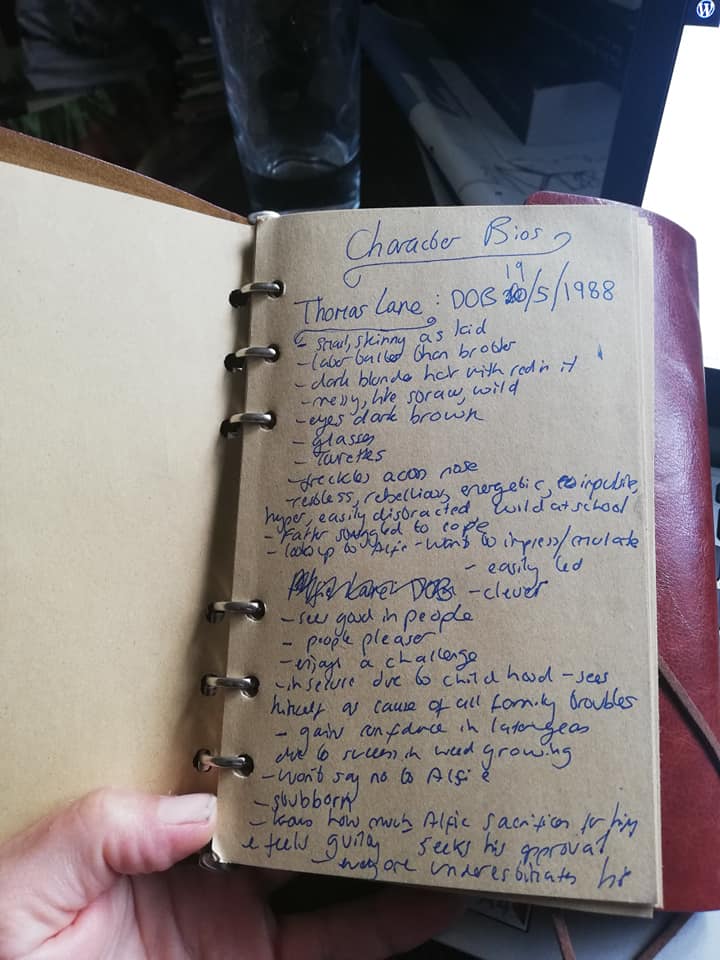
Start a basic bio – Everything starts small. Start a basic character bio and allow it to breathe and grow. The basics will include name, age, gender, occupation, physical appearance and character traits. You might want to draw your character or find images on the internet that feel right, or you might want to imagine them looking a bit like someone you know or have seen. Keep the bio safe in a specific notebook for the story you are working on and add to it whenever something new comes to you.
Allow them to evolve – sometimes you have to be patient and resist the urge to force it, but as the character starts to grow in your head, you can start adding more and more detail to your basic bio. Back story is an important factor to consider. Where have they come from? What has happened to them? Do they have a family? Friends? Are there any important events in their history that might be relevant to the story? Start adding anything that comes to you.
Devise personality traits – in order to create multi dimensional and human characters the reader can believe in, you need to give your character a personality. Ask yourself questions. What kind of person are they? Are they basically good or mostly bad? What are their personality traits? Are they an extrovert or introvert? Are they pleasant to deal with or obnoxious? Are they impatient or easily frustrated? Do they have a temper? The reader will want to know but remember NOT to TELL all the reader these things. Allow the character to SHOW who they are through dialogue, action and reaction.
Make them flawed – This is so important. Flaws are what make us human. No one is perfect, just as no one is all bad or all good. Most people are a mixture of both. What are your character’s flaws? Do they have any bad habits? You can think up small ones like biting nails or interrupting people, or bigger ones like flying into a rage or holding grudges. Even if your character is the protagonist and you want the reader to like them and root for them, they must have some flaws. Flaws actually make us like characters more because they make them more relatable. Maybe they are nervous around strangers, maybe they are shy and come across as rude, maybe they are not very good at asking for help, maybe they assume the worst of people or put up walls to keep people out. Maybe they are messy, forgetful, impulsive or easily bored. If you get stuck think about the people you know in your life. Even the ones you love the most have annoying habits and character flaws!
Know what they want – this is also very important. Characters in stories all want something. The plot is often about what they want and how they are trying to get it and what is in their way. You must know what your character wants and you must also know why they want it. Maybe they want to overthrow the government because they don’t like the way their society is run? Maybe they want to find someone from their past because they have a mystery to solve? Maybe they want to find true love because they don’t feel complete without it? Maybe they want to fight back because they are sick of being frightened? Know what they want and know why and you will be closer to creating a character the reader can engage with and believe in.
Make it hard for them – in order to create characters the reader is really going to root for, we need to make the journey tough for them. Set up obstacles and don’t make it too easy. The obstacles they face must be ones they cannot walk away from or ignore. Ensure they are forced to react to the conflict they encounter. Throwing conflict at characters is a great way to reveal who they are. Every character will react differently to conflict and its important to think about this from your character’s point of view. For example, not every character will react in the same way to a dilemma or an obstacle. Make sure their reaction makes sense with regards to the personality you have given them but also use the conflict as an opportunity to reveal more. Back story, family relationships and conflict, personal trauma, regrets, all these things can impact how a character reacts to conflict and as these very human things are revealed to the reader, they will become more empathetic to them.
Give them an inner and an outer journey – This sometimes gets neglected when writers create characters but it is important to be aware of. All characters will go on an inner and an outer journey. Think of the outer journey as the main obstacle, conflict or dilemma they have to face. Their partners affair, their lost child, their creepy neighbours, a hurricane, fire or explosion – these are all outer journeys, big events that make up the plot. But you also need an inner journey and by this we mean how and why the character changes as the story goes on. What is their inner journey? Think of it as their inner demons. Perhaps they have always been too shy, too scared to stand up for themselves but the drama of the outer journey forces them to react. Perhaps they have always been a loner who keeps people at bay, but a post-apocalyptic world forces them to learn to work alongside others. Perhaps they have a mental health issue that affects everything they do or a childhood trauma they are trying to deal with.
Practice dialogue out loud – this goes back to people watching. When writing dialogue for your characters it’s vital to pay attention to how people speak. What they say and what they don’t say, how they say things with body language and facial expressions, what mannerisms they display when they talk, what phrases they might use, what things they might be likely to say. When you have written some speech try reading it out loud as if you are an actor playing the part – you will soon be able to tell if it sounds natural and flows well.
Finally, allow the characters to speak and interact with each other – now that you have created a realistic character, don’t leave them mute. It’s tempting sometimes as writers to fill the reader in on important information using narrative but too much of this can really pull the reader out of the story. Rather than telling the reader what the character has done, where they’ve been, what has happened and what has been said, allow the character to! Scenes where characters interact with each other, talk to each other and respond to each other and to events are far more engaging for the reader and can also be used to reveal character traits.
We hope our top ten tips for creating believable character has been useful. Perhaps you have some of your own? Please feel free to comment and share!
A question we often get asked at writing clubs or workshops is how do you write a book? Often someone will have a good idea for a story, and possibly some characters developing but are unsure where to go from there. It’s an intriguing question and one I personally love to talk about so we figured it would make an interesting blog post. It’s different for everyone and if you research how to write a novel you will find a mountain of advice, tips and strategies to use online. Not every approach will work for you. Part of the fun of writing is working out what suits you and your idea. So this is mine. This is how I write a book.
Start with an idea – This is the most important ingredient. You need a solid idea OR a character. For some people the plot comes first and then they have to create and develop characters to go with it, and for others, it’s the characters they think up first. Either is fine and you might find it works differently each time. For me personally it is usually the characters that come first. They will start to develop in my mind and as their personality comes alive, they will start to suggest their back story and their main story and the plot will start to grow from that. Sometimes it works the other way around and I will get an idea for a story first and then have to devise the characters to fit it.
Let it grow – To start with, I let the idea percolate in my mind for a bit. I write down anything I don’t want to forget, but most of it stays in my head. It will swirl around in there for a while, popping up when I least expect it, developing and swelling and growing tendrils! I think it’s important to let this process take its course. I don’t want to force anything. Usually I will already be working on another project so there is no hurry to jump to this new idea. I leave it be and let it grow naturally.
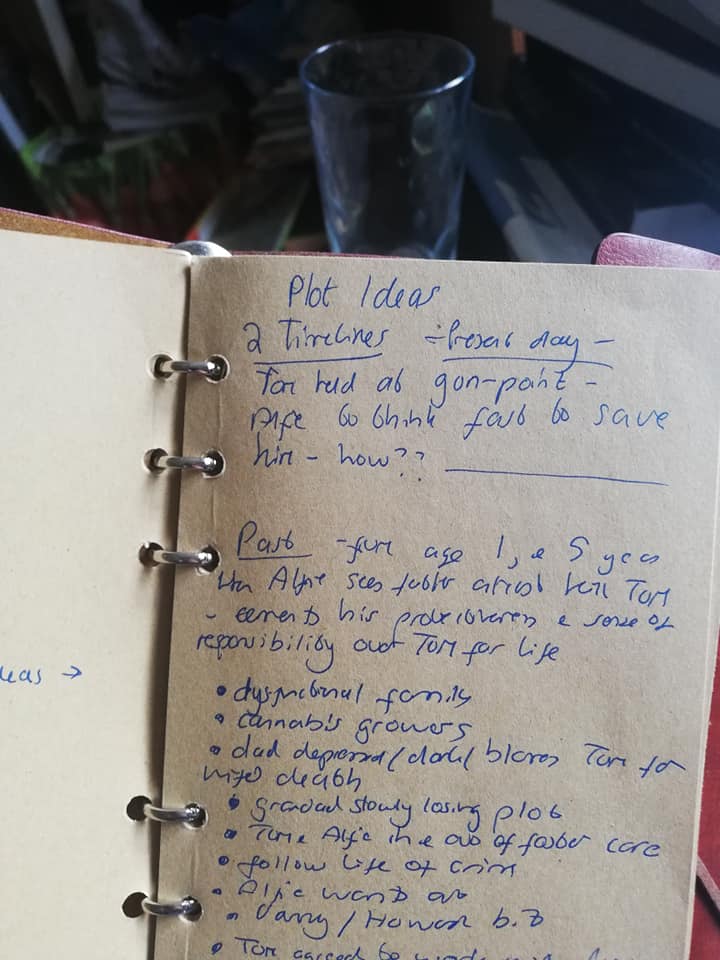
Get a notebook – Now, when the real ideas start to flow, and by this I mean characters, personalities, back stories and possible plots and storylines, it becomes too much to contain in my head. I must start writing things down or something will get lost. I might start off tapping a few thoughts into my phone but eventually I get a new notebook and dedicate it solely to this idea. I start off writing down any notes I already have and everything else that has been growing in my head. Character bios, dialogue, action scenes, possible titles, character arcs, possible endings and so on. It won’t be a full plot yet and the characters will not be fully alive either, but I am paying attention to this idea now. It has its very own notebook.
Work on characters – For me, the characters are always the most important aspect of books I read and books I write. It’s different for everyone, but I want to love the characters, feel fully engaged by them, root for them and care for them. I can’t enjoy a book if I don’t care about the characters and equally I can’t write a book if I am not fully in love with these people I am creating. So, I will start to write detailed character bios into the notebook. They might start with the basics: name, age, physical appearance, occupation, home, family etc and then they will get more complex. What do they want? Who do they love? Have they been hurt? What are their regrets? What are their flaws? I want to get under their skin and know them inside out. This will be a long process and I won’t fully know them until maybe draft three, but I want to put the work in now.
Write a basic plot outline – This will start as a kind of mind-map of possible ideas. Ideas tend to spark of other ideas or questions, so I will note this all down. It all goes in the notebook. It’ll be messy and chaotic but it is all safely in one place. I’ll also bullet point what I consider to be the main storyline and jot down any ideas for sub-plots and character development. Most of my books are quite character driven so developing the characters alongside the plot is important to me.
Write basic chapter outlines – I won’t usually know everything that is going to happen but I will outline as many chapters as I can in the notebook so that I have a starting point and something to refer back to. Inevitably, extra, unexpected chapters and scenes will work their way in between what I initially lay out and once I get past a certain point I will probably then know the next few chapters. I then work a few chapters ahead, so I will usually always know what I want to happen in the next few chapters at least.
Start writing! – The fun bit. Also the scary bit! But by now I will be desperate to get going. If I have been working on another book, this idea may have had to wait for a while so by the time I get to it, I am very keen and excited to get started. I won’t know exactly where I am going and I don’t plan or plot every detail. I like to see what happens to a certain extent.
Write a chapter a night – Obviously, life gets in the way sometimes and sometimes the writing just doesn’t flow but my goal is always a chapter a night. That’s roughly 2-3 pages of a Word document. I treat it like work, like a commitment and push through the tough bits and the bits that don’t flow too well and I just keep going. I don’t mind how messy or awkward the first draft is, I just aim to get the gist of it, the basics of it done. This usually takes three months.
Second draft – I read it through, reminding myself of what I have done. I amend glaring typos but I don’t really edit much on a second draft, it’s more of a read through to see what I have got.
Third draft – a more serious read through and edit. I add bits, delete bits, amend typos and errors. I will know the characters better by now so might add bits to them, their speech, their back story and so on.
Fourth draft – I keep a list as I read through and edit and make notes of bigger things to fix like plot holes or inconsistencies in character or storyline. Whenever I go over another draft I check off these things on the list until there is nothing left.
Fifth draft Kindle read – by now I feel like I can’t do much more, so I send it to my Kindle and read it on there. It’s amazing how many typos and errors are picked up when you read your book on an ereader! You feel a bit less connected to it and can tackle it in a different way. I keep the notebook handy as I read and write down notes for each chapter in turn, typos, grammatical errors, plot holes, questions, anything.
Sixth draft – back to the laptop to amend the edits picked up on the kindle read
Beta readers – I am very lucky that I have some fantastic people available to read my work at this stage and tell me what they think. I might want specific feedback ie is it fast paced enough, is this character interesting enough etc, or I might just hand it over and say very little.
Seventh draft – editing based on beta reader feedback
Send to editor/proofreader
Eight draft/final – amend anything they picked up and that’s it. Done!
The amount of drafts will very much depend on the type of story, the length of the book and the feedback from beta readers. Sometimes my first draft attempt will evolve into something very, very different and sometimes it basically stays the same!
Feel free to add your thoughts on how to write a book. Everyone has a different process and there is no correct way to do it.
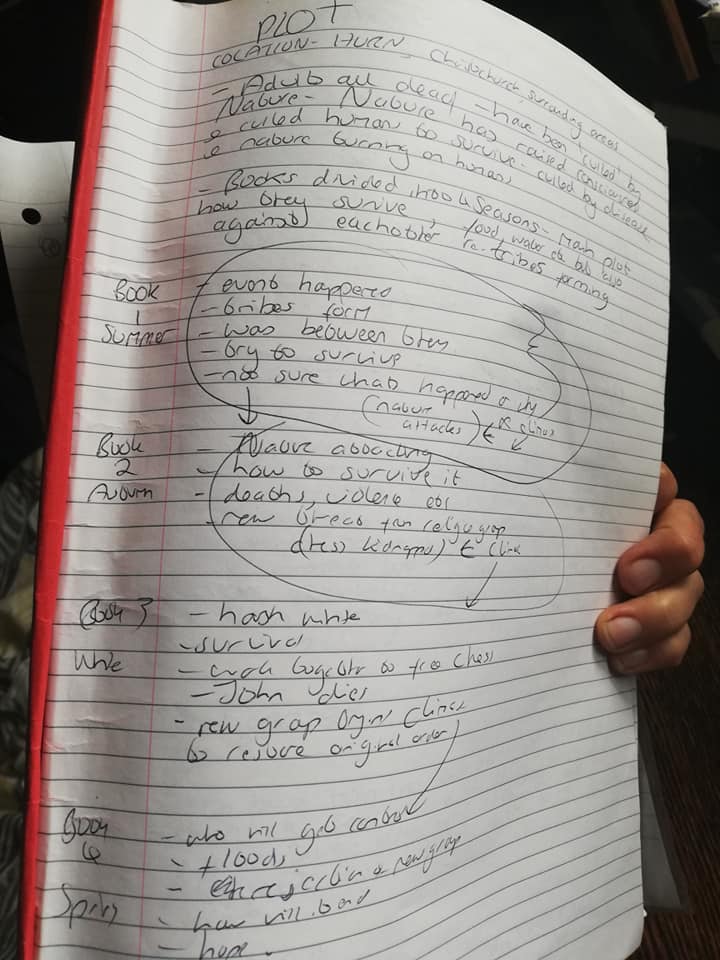
The first page of my notebook for a four-book YA series I am working on
2020/21 have been historical for all the wrong reasons. Covid-19 has impacted us all – halting life as we know for most of us. For creative people, it has been hard to concentrate on writing with so much turmoil and uncertainty around us. During the fist lockdown here I was unable to work with any of writers in person, but we managed to stay in touch online to some extent. A common complaint I heard from them was the inability to write. There were multiple reasons for this, including stress and exhaustion. I think the pandemic has affected writers in different ways. Some have written more – turning to the written word to help express the thoughts and feelings in their heads. Some have written less – unable to find the time, space, or emotional energy to put pen to paper. For me, my normal writing routine was a welcome distraction and escape from the virus, the lockdown, and the home schooling of my children. I also found I was blogging more than usual, recording my day-today thoughts and feelings on what was happening across the world. For those struggling, I offered the following advice on how to keep writing during unprecedented times and for the most, it seemed to work;
Meeting online – I was surprised by how keen people were to do this. It seemed like they craved the connection and some part of their old life carrying on, despite the restrictions of lockdown. If you are a writer struggling to put pen to paper now, try finding a writing group that has moved online. It involved a bit of adjustment for us and sometimes the technology lets you down, but overall, we found just talking about writing again, even if it was talking about the lack of writing, was incredibly helpful. We all came away from each meeting feeling energised and understood. We were not alone in our difficulties and sharing our frustrations was cathartic and productive. Often, members of the group came up with advice for others. Sometimes just talking about writing with other writers is all you need to reignite the passion.
Sign-up to regular writing prompts – you can find these all over the internet, but I would strongly suggest making sure you have a good supply of them if writers block is becoming an issue. Not all of them are going to help but some of them undoubtedly will. Photo prompts can be great – I recently wrote three stories from one photo prompt I found online. It might be that work on your novel has stalled but a random writing prompt will inspire a poem or a piece of flash fiction. Often, the act of writing can shift the gears in our heads and help us claw back enthusiasm for struggling projects.
Take part in writing challenges – if you can’t find any online try setting your own or see if a writing group is sending any out. These can really vary from word sprints, to themed poetry marathons, to flash fiction competitions – anything that gets you writing.
Look out for guest posts on blogs – these are always a good idea for getting your name out there and picking up new followers, but I saw a lot more features being offered to writers during lockdown and beyond. Again, it’s a chance to connect with other writers who may be experiencing the same issues as you. I took part in a lockdown themed guest post which ended up becoming a published collaboration. It inspired me to offer slots on my own blog and I am also hoping to get enough responses to put a collection together.
Write anything! -A list, bullet points, an angry rant, a sad poem, one line, one thought, a doodle, a sketch, anything. You never know what could come from it. Try writing your own writing prompts or sorting through old photos for inspiration. Again, being part of a writing group can really help during times when the writing stops flowing. We often set each other prompts or create characters for each other to write about, or first lines and so on. It can be fun and even if the writing does not go anywhere, it may be all you need to get things moving in the right direction again.
Pick up a pen – if you usually write at the laptop try picking up a pen and a notepad and seeing what happens. You could pop the notebook in your pocket and take it out for walks, jotting down what you see, hear, feel, and smell, as well as what you think. Perhaps find a spot to people watch and construct characters out of people passing by. Again, you never know what tiny random things can set off a story idea.
Try a different form – during lockdown I was working on edits for a novel but found myself blogging a lot more than usual and this was very therapeutic for me at the time. For some reason, I can only write poetry when I’m feeling down, so lots have been written during the pandemic. The same goes for short stories – they are not normally my thing, but for some reason I had the urge to write in different forms. I would highly recommend this if you are getting stuck or distracted. If you mostly write short stories, then try a script. If you mostly write novels, have a go at poetry and so on.
Collaborate – again, I saw a lot of this during lockdown and beyond and I think it’s a great idea. This could involve featuring on other people’s blogs, taking over their social media page or inviting them to take over yours, working on a joint story where you pass it back and forth between you, writing a short film script with a group and so on. Writing can be a lonely occupation at the best of times and during lockdown it is even more so. But there are ways around the loneliness thanks to the Internet and there are many other writers out there feeling the same. Reach out – who knows what exciting project could come of it?
Give yourself a break – I think this is the most important piece of advice. I have had to remind myself at times that these are unprecedented times. We’ve all been experiencing something we never imagined we would. We have all had our lives disrupted, our incomes affected, and we have all felt afraid for our loved ones. We have all missed normal life and we have all experienced fear, isolation, and boredom like never before. It is perfectly understandable that writing ideas and the urge to write might dry up with all of this going on around us. Don’t beat yourself up if the words won’t flow like usual. Don’t try to force it. Don’t be too hard on yourself. It might simply be your brain and your body telling you to take it easy for now. Hopefully, some of the advice above will help inspire some writing ideas or habits but if not, don’t worry, it is sure to come back in time.